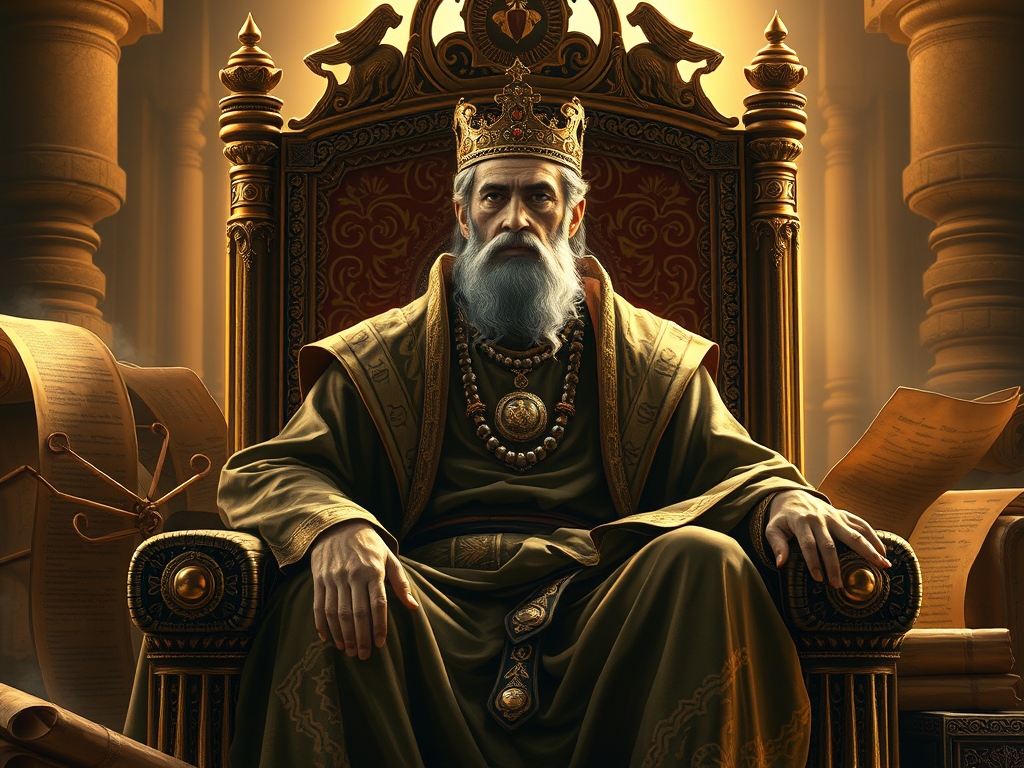
“Wisdom is not proven by what a person knows, but by what that knowledge allows him to govern without corruption.” – D. L. Dantes
Introduction
Throughout history, few figures have carried the symbolic weight of wisdom the way King Solomon has. Whether one approaches him through scripture, literature, tradition, or philosophy, Solomon remains more than a religious figure. He represents a question that every age must answer for itself: what does it mean to rule, judge, and live with understanding rather than impulse? That is why his legacy continues to matter. It is not simply about ancient kingship. It is about the moral burden that comes with perception.
In a time when many people confuse confidence with wisdom and power with maturity, Solomon offers a different image. He is remembered not first for conquest, wealth, or spectacle, but for asking for understanding. That detail is more than symbolic. It reveals a principle that still matters in public life, leadership, and personal development. Real strength begins when a person values discernment more than domination.
Wisdom Is Heavier Than Power
The most compelling part of Solomon’s legacy is not that he possessed authority, but that he understood authority required judgment. Many people want influence because they imagine influence gives them freedom. In reality, influence gives a person responsibility. The more power a person holds, the more dangerous a lack of wisdom becomes. That is why discernment matters so deeply. To see clearly, judge carefully, and weigh consequence honestly is far harder than simply acting with force.
This is one reason Solomon remains philosophically important. He symbolizes the idea that leadership without wisdom becomes corruption waiting for a stage. A person may have charisma, intelligence, and reach, yet still fail because he does not know how to govern his own impulses. If readers have also reflected on your piece about love and knowledge, the connection is clear. Knowledge alone does not make a person wise. Wisdom begins when knowledge is disciplined by humility, responsibility, and moral restraint.
Discernment Must Serve Justice
Another reason Solomon endures is that his image is tied not only to insight, but to judgment. Wisdom that never enters the realm of justice remains decorative. It may sound profound, but it does not yet serve humanity. The deeper lesson in Solomon’s legacy is that understanding must become action. It must shape how a person judges conflict, protects dignity, and responds when competing interests demand a decision.
That principle matters beyond kings and courts. It applies to parents, supervisors, teachers, writers, and anyone whose words affect others. The question is never only whether a person sees deeply. The question is whether that depth leads to fairness. Wisdom that does not protect human dignity becomes vanity dressed in noble language. Justice requires more than intelligence. It requires the discipline to apply understanding without self-interest distorting the result.
The Tragedy of Wisdom Without Self-Government
Solomon’s legacy also carries a warning. A person may begin with wisdom and still decline if self-government fails. This is one of the reasons the figure remains so powerful. He does not merely represent idealized wisdom. He also represents the fragility of wisdom in a human being who remains vulnerable to excess, attachment, and contradiction. That makes his story more useful, not less. It reminds us that insight alone does not save a person from moral drift.
This is where the philosophical lesson becomes personal. Many people seek wisdom as if wisdom were an achievement that, once gained, secures the self forever. But wisdom is not static. It has to be practiced. It has to be guarded. It has to remain joined to humility, or it begins to decay into rationalized pride. The human condition is full of brilliant people who lacked moral steadiness. Solomon remains relevant because his legacy forces us to ask whether we are pursuing wisdom as truth, or merely as prestige.
“Power without discernment becomes noise. Discernment without self-government becomes tragedy.” – D. L. Dantes
The value of Solomon’s legacy is not that it gives us a perfect man to admire. It gives us a difficult standard to measure ourselves against. Wisdom is not the possession of answers for their own sake. It is the discipline of seeing clearly, judging justly, and governing the self before attempting to influence others. That is why Solomon still matters. He reminds us that the deepest form of leadership begins not in authority over others, but in responsibility toward truth, justice, and one’s own inner life.
By D. L. Dantes, The Resilient Philosopher
Leave a comment and share this article with others who may benefit from the reflection.
Leave a Reply