Tag: justice

  • Restoring Moral Order: The Need for Stewardship in Law

    Restoring Moral Order: The Need for Stewardship in Law

    “A society does not collapse only when laws fail, but when conscience fails before the law is ever needed.” – D. L. Dantes

    Where Civics and Values Collide

    There is a dangerous point in public life. At this point, civics and values stop working together. They begin pulling against each other. That point usually appears when leadership loses its sense of stewardship and starts governing through reaction instead of responsibility. Laws are then written and promoted. Their greatest purpose seems to satisfy emotional hunger. This occurs rather than preserving moral order. In that environment, justice becomes easier to advertise than to understand. The result is a society that feels morally loud while becoming ethically shallow.

    We live in a time where slogans move faster than thought and outrage travels farther than reflection. A law can be shown to the public to evoke a sense of righteousness. This happens before people have even examined what the law says. They do not consider why it was written or what deeper failure made it necessary. This is what moral clickbait looks like in civic form. It takes a real evil. It wraps the evil in emotionally charged language. It sells the appearance of seriousness. This requires no discipline of understanding. The law still addresses something real, but the public conversation around it becomes performance.

    That is where stewardship becomes necessary. Stewardship leadership does not only question a law’s popularity. It questions whether it will actually strengthen the moral center of a people. It does not feed on emotional momentum alone. It understands that a society can’t stay stable by living in a permanent state of reaction. Order is not restored by spectacle, even when the spectacle is aimed at something truly evil. Order is restored when law, conscience, and culture still know how to speak to one another.

    The Age of the Victim Is Not the Measure of Evil

    The age of the victim does not make rape less wrong when the victim is older. It does not become morally smaller because the person harmed is no longer a child. An elderly person can be as defenseless as a baby in certain conditions. A person with physical disabilities can be vulnerable in ways the strong often fail to understand. A person with mental or cognitive limitations can be exploited with the same cruelty. This cruelty outrages the public when the victim is young.

    The deeper principle is vulnerability, not simply age. A victim is any person who is knowingly used, abused, or violated. They can be overpowered by someone who understands the act is wrong and chooses it anyway. That is why the moral weight of the act can’t be reduced to a narrow category. Doing so leaves behind serious contradictions. Society often chooses categories that are easier to market emotionally. Nonetheless, evil does not always organize itself according to those categories. Sometimes the law draws lines that are legally strategic while morally incomplete.

    This does not mean that children are not uniquely vulnerable. They are, and any honest civilization should say so without hesitation. It means that vulnerability can’t be discussed honestly if we refuse to see it wherever it shows up. Once we admit that truth, the public conversation becomes more demanding. It can no longer rely on simplified outrage alone. It must now ask whether we are truly defending the vulnerable. Are we only defending the versions of vulnerability that are easiest to package for mass reaction?

    Law Can’t Replace Moral Formation

    Punishment has a role in society, but punishment is not the same thing as formation. A society can increase penalties and still fail to produce better human beings. It can become more severe in its language while remaining weak in its ethical foundations. This is one of the hardest truths for modern culture to face because reaction feels more powerful than prevention. It is easier to condemn a monster after the act. Asking how a culture keeps producing people with broken moral boundaries is more challenging.

    The problem extends beyond the courtroom. A person must understand why it is wrong to rape another human being. That failure began in the formation of conscience. It originated in the family and in the culture. It is found in the examples set by authority. It also stems from the moral emptiness that grows when people are taught to crave without discipline. By the time law arrives, something deeper has already decayed. Law can restrain behavior, but it can’t by itself restore a soul. It can’t carry the entire burden of a civilization that has neglected its moral apprenticeship.

    This is why stewardship matters so much in leadership. A steward does not merely manage the aftermath of social collapse. A steward helps cultivate the conditions that make collapse less likely in the first place. This involves moral seriousness. It also requires civic education and personal accountability. Additionally, there is a refusal to treat human beings as disposable instruments for appetite or power. When leadership forgets that duty, the law is left trying to patch wounds that culture keeps reopening.

    Where Did We Go Wrong?

    We went wrong when freedom was separated from responsibility and rights were treated as instincts rather than obligations. We went wrong when moral language became something people performed in public while abandoning discipline in private. We went wrong when attention became more important than truth. Every issue had to become emotional theater to be noticed. We went wrong when people learned how to signal outrage more easily than they learned how to cultivate conscience. A culture can survive disagreement, but it can’t survive long without moral seriousness.

    We also went wrong when leadership stopped seeing itself as stewardship and began seeing itself as branding. A branded leader asks what will provoke, trend, and mobilize. A steward asks what will preserve, teach, and strengthen. Those are not the same questions, and they do not produce the same society. One creates cycles of emotional consumption. The other creates moral architecture that people can actually live within.

    The hardest part is that many people want justice without wanting the burden of introspection. They want to punish evil while refusing to examine the conditions that allow evil to keep appearing. They want condemnation without diagnosis. Yet a society that never diagnoses itself will keep mistaking reaction for wisdom. Before we pass judgment with confidence, we should be educated enough to ask. What civilization forms people who can commit acts they know are ethically wrong?

    The Work That Still Remains

    The answer is not to become softer on evil. The answer is to become deeper in how we confront it. A serious civilization must manage to punish, protect, educate, and form at the same time. If it can only react after the damage is done, then it is already admitting that it failed upstream. The law still is necessary, but it should never become a substitute for the moral labor that society neglected.

    This is where each of us has a responsibility that goes beyond commentary. We have to ask what examples we are setting. We must consider what language we normalize and what leadership we reward. We should also contemplate what moral confusion we excuse because it is politically useful or emotionally satisfying. Stewardship begins long before legislation. It begins in the refusal to let conscience decay in everyday life. It begins in the discipline of teaching that no human being exists for the exploitation of another.

    Closing Reflection

    A society does not reveal its health only by how harshly it punishes evil after it emerges. It reveals its health by how seriously it forms people before the law is ever needed. When leadership loses its stewardship, law becomes spectacle and outrage becomes currency. That will satisfy the emotions of the moment, but it does not heal the deeper fracture underneath. Justice that is not rooted in moral formation will always arrive too late.

    D. L. Dantes
    The Resilient Philosopher

  • When Justice Becomes Permission

    When Justice Becomes Permission

    The Resilient Philosopher | D. L. Dantes

    “Justice that needs a body count to feel complete is not justice. It is appetite wearing a robe.”

    Introduction

    I have noticed how quickly a community can drift from naming harm to craving punishment. The shift is subtle because it often arrives dressed as moral clarity. People believe they are protecting something sacred, when in reality they are negotiating a feeling they cannot tolerate. That feeling is powerlessness, the ache of knowing that a loss cannot be undone.

    Once that shift happens, justice stops being a principle and becomes an emotion. Then the requirement for killing is no longer an objective standard. The requirement becomes a story strong enough to make violence feel clean. This is how a society learns to justify what it once condemned.

    Justice Requires a Definition

    When people say “justice,” many of them mean “closure.” Closure is real, but it is psychological, not legal. A sentence can restrain a dangerous person and protect the public. It can signal accountability. It can establish consequences. But it cannot rewind time. It cannot resurrect the dead. It cannot restore the innocence that was stolen.

    This is why definitions matter. If justice is protection, it must be designed to reduce harm and prevent future victims. If justice is accountability, it must be applied consistently and proportionally to the person responsible. If justice becomes emotional gratification, then it becomes unstable, because emotions escalate. A community that uses punishment as a tranquilizer will always need a stronger dose. This is because pain does not resolve through spectacle.

    Infographic contrasting two concepts of justice: 'Justice as Accountability' on the left, featuring scales and a shield symbolizing protective boundaries, and 'Justice as Appetite' on the right, depicted with a wheel and a fist symbolizing craving and emotional gratification. The text emphasizes that true justice focuses on prevention and accountability, rather than a desire for retribution.

    The Proxy Punishment Test

    If a person kills your child, does justice mean you must kill their child. Can you justify that as justice.

    Most people recoil, and that recoil is a moral signal worth listening to. The reason it feels wrong is because it is wrong for a precise reason. It transfers guilt. It punishes an innocent person to satisfy symmetry. Once a society accepts proxy punishment, innocence becomes irrelevant, and guilt becomes contagious. It is the logic of feud, not the logic of justice.

    So when people appeal to “an eye for an eye,” I listen for what they actually mean. Often what they mean is not ethics, but the desperate hunger for the world to feel balanced again. The tragedy is that balance through suffering is not balance. It is imitation. It recreates the same moral infection under a new label.

    When Accountability Turns Into Emotional Reward

    Accountability is a boundary. Emotional reward is a craving. A healthy justice system needs the first, but it becomes corrupted when it begins to serve the second. A boundary says: this behavior cannot exist here, and consequences are necessary to protect others. A craving says: I want you to suffer so my rage can feel satisfied.

    This is why execution is ethically complicated even before anyone debates deterrence. An executed offender does not return a victim. It cannot reverse the past. It can only offer emotional gratification, and gratification is not healing. Trauma does not disappear because punishment happened. For survivors, the nervous system often carries the aftershock for life. The greatest illusion that dies is not only the person who was harmed. It is the illusion of safety in a world where people can be so cruel.

    Pain deserves compassion. But pain is not a blueprint for policy.

    How Killing Becomes Thinkable

    The most dangerous change is not legal. It is cultural. Once society learns to justify killing as justice, the debate shifts from principles to categories. The argument becomes: who is human enough to deserve restraint, and who is not. This is a quiet reclassification that lowers the ethical threshold for cruelty in every other area of life.

    Language is the first tool. We stop saying “kill” and start saying “justice.” We stop saying “revenge” and start saying “closure.” Then identity becomes the second tool. People are no longer treated as offenders who committed acts. They are treated as beings who are defined by their worst moment. They are placed outside the moral community. Once that boundary is accepted, cruelty becomes normal, because cruelty is now framed as virtue.

    This is why I do not treat these conversations as entertainment. They are moral infrastructure. They educate citizens on what kinds of violence can be celebrated. They show what kinds of people can be disposed of. They also explain what kinds of justifications should be applauded.

    Philosophical Expansion

    There is a hidden lesson inside every punishment. A system does not merely punish an offender. It educates the public in what kinds of harm are acceptable when the right narrative is attached. If we train ourselves to celebrate death as moral hygiene, we teach a brutal principle: killing is permissible when the story is persuasive enough. Then the difference between murder and justice becomes a matter of branding rather than ethics.

    This is the paradox. The culture condemns cruelty, yet it becomes emotionally dependent on cruelty when it is presented as righteousness. That dependency is not stable. It does not stay confined to prisons or courtrooms. It leaks into speech, politics, relationships, and the everyday ways people justify dehumanization.

    I would rather build a world with fewer victims. Because when victimization decreases, the fuel that feeds cycles of retaliation, desperation, and hardened identity decreases with it. Prevention is not soft. Prevention is the most serious form of public safety. It interrupts the pipeline that produces trauma, rage, and repeat harm.

    Invitation

    If these reflections resonate, they are expanded further in my published work. I remain available through Vision LEON LLC for leadership support for those building cultures where accountability does not require cruelty.

    Closing Reflection

    I want a world with fewer victims. If that is the goal, then we cannot build justice on rituals that satisfy anger. These rituals teach society to normalize death. Justice should protect the living, honor the harmed, and restrain the dangerous. It should not become a mirror of the violence it condemns.

    If I can justify killing because I am furious, then the only difference between me and the offender is the story I tell myself. That is not enough to call it justice.

  • Understanding Resistance: Ethics Beyond Violence

    Understanding Resistance: Ethics Beyond Violence

    Resistance is often misunderstood because it is framed through extremes. Either obedience or chaos. Either compliance or confrontation. Either silence or violence. That framing is convenient for power, but it is false.

    Resistance, in its most durable form, is neither loud nor destructive. It is deliberate. It is informed. It is rooted in restraint.

    Resistance is not violence. Resistance is non-participation in illegitimate normalization.

    The Difference Between Defiance and Refusal

    Violence seeks to overpower.
    Refusal seeks to expose.

    Violence accelerates escalation.
    Refusal introduces friction.

    When people confuse resistance with violence, they surrender the most effective tools available in a constitutional system. Systems built on overreach do not collapse from force. They collapse from documentation, precedent, and visibility.

    Power fears legitimacy challenges far more than it fears confrontation.

    Why Non-Participation Works

    Non-participation does not mean disengagement. It means refusing to internalize fear as obligation.

    It means:

    • knowing your rights
    • insisting on identification
    • documenting interactions
    • complying with lawful orders without surrendering legal standing
    • using courts, records, and process

    When authority is confident in its legitimacy, it welcomes scrutiny. When authority avoids scrutiny, it relies on intimidation.

    Non-participation forces institutions to reveal which one they are.

    Compliance With Process Is Not Submission

    There is a critical distinction that must be preserved.

    Complying with a process is not endorsing its abuse.

    If a citizen or legally present individual is wrongly targeted, physical resistance does not strengthen justice. It strengthens justification narratives. It reframes accountability as threat.

    Legal compliance preserves standing. Standing preserves leverage. Leverage creates precedent.

    Courts exist for this reason. Not because they are perfect, but because they create records. Records become history. History constrains power.

    Rights that are exercised remain alive. Rights abandoned through fear quietly disappear.

    The Power of Documentation

    Authoritarian drift thrives in ambiguity. It survives in silence.

    Documentation disrupts both.

    Names. Dates. Locations. Badge numbers. Written records. Legal filings. These are not dramatic acts. They are stabilizing ones.

    Bureaucratic systems respond to friction, not outrage. They correct when forced to explain themselves repeatedly under scrutiny.

    This is why transparency matters more than anger.

    Why Violence Serves Power

    Violence provides the one thing overreaching authority always needs. Justification.

    Once resistance becomes violent, ethical clarity collapses. The narrative shifts. Methods are no longer examined. Outcomes are no longer questioned. Force becomes the focus.

    History shows this consistently. Violence allows power to consolidate while claiming necessity.

    Non-violent refusal does the opposite. It exposes excess without feeding it.

    Constitutional Mechanisms Still Matter

    The most overlooked truth in moments of tension is this.

    The Constitution still functions because people still use it.

    Civil suits. Injunctions. Judicial review. Public records. These mechanisms are slow, imperfect, and frustrating. They are also the reason overreach has limits.

    Systems do not abandon rights first. People abandon them through resignation.

    Resistance that remains constitutional keeps the system accountable to its own promises.

    The Ethical Boundary That Must Hold

    A just society does not require fear to function.
    A legitimate authority does not require anonymity to enforce.
    A constitutional system does not rely on exception as habit.

    When power demands emotional obedience instead of legal compliance, it is already insecure.

    The ethical response is not panic. It is clarity.

    The Quiet Strength of Refusal

    The most effective resistance movements in history were not loud. They were patient. They were documented. They were legally relentless. They refused to mirror the aggression they opposed.

    They understood something fundamental.

    Power collapses when it must justify itself continuously under light.

    Resistance is not about overthrow. It is about insistence.

    Insistence on process.
    Insistence on transparency.
    Insistence on symmetry.

    This is how illegitimate authority loses legitimacy.

    Not through force.
    Not through fear.
    But through its own inability to explain itself when questioned calmly.

    The Responsibility of the Present Moment

    We are still capable of this form of resistance. That fact alone matters.

    As long as courts exist, records exist, and rights can be exercised, restraint remains powerful. The moment people abandon these tools out of despair or rage is the moment normalization accelerates.

    Resistance is not refusing the system entirely. It is refusing to let the system abandon its own rules without consequence.

    That is not weakness.
    That is civic maturity.

    And it remains the strongest ethical stance available to any society that still claims to be governed by law rather than fear.

  • Authority Without Accountability

    Authority Without Accountability

    The Resilient Philosopher

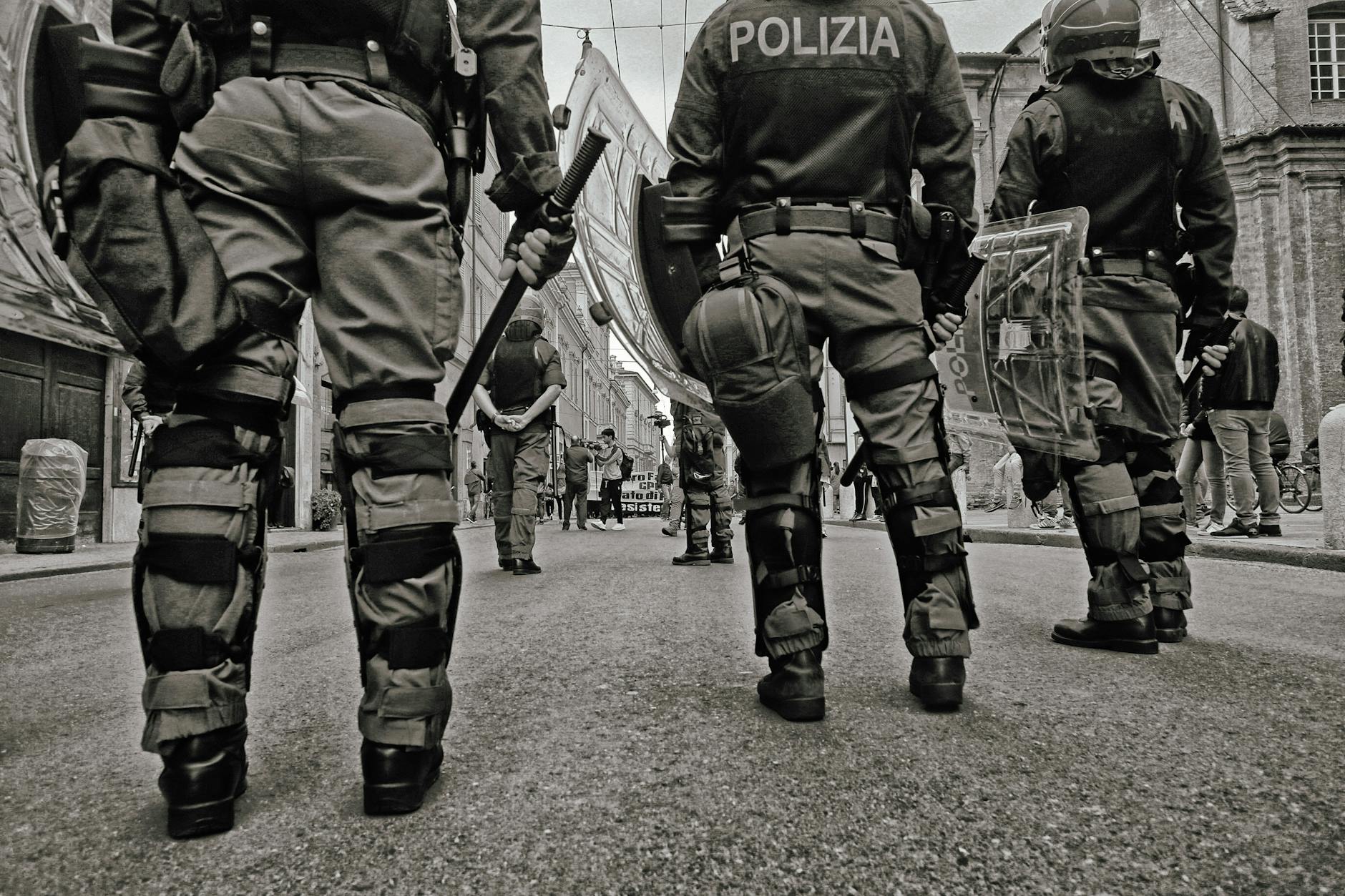
    Public discourse often collapses authority into a single shape. Police, federal agents, immigration enforcement, and even the military are spoken about as if they are interchangeable. They are not. The distinction between them matters, not politically, but ethically and constitutionally.

    When those distinctions blur, power stops being restrained by purpose. It becomes defined by convenience.

    To understand what is happening, we must first define what these institutions actually are, not what the noise suggests they are.

    What Police Are Meant to Be

    Police are municipal or state agents of civil order. Their authority is local, geographically limited, and grounded in community presence.

    They exist to respond after laws are broken, to investigate, to maintain order, and ideally to de escalate conflict. Their legitimacy depends on visibility, identification, and proximity to the people they serve. Police operate among the population, not above it.

    They are constrained by:

    • local and state law
    • constitutional protections
    • judicial oversight
    • community accountability

    When policing fails, it usually fails through escalation, fear, or loss of restraint. But structurally, police are meant to function within a civic relationship. That relationship is imperfect, but it is foundational.

    What Federal Agents Are

    Federal agents are not community based. They are mission based.

    Their authority comes from Congress and is limited to specific federal statutes. They investigate crimes that cross state lines, involve federal property, or implicate national interests. Their jurisdiction is national, but their mandate is narrow.

    Federal agents are insulated from local politics, but they are still bound by:

    • federal law
    • judicial review
    • defined scopes of investigation
    • identification and chain of command

    They are not general enforcers. They are specialists.

    This distinction matters because federal power was intentionally designed to be limited, not omnipresent.

    What ICE Actually Is

    Immigration and Customs Enforcement occupies a fundamentally different space.

    ICE does not primarily enforce criminal law. Immigration violations are civil matters. Yet ICE operates with tactics, equipment, and authority that resemble criminal enforcement.

    ICE arrests.
    ICE detains.
    ICE uses force.
    ICE conducts operations that resemble raids.

    But the underlying violations are often administrative, not criminal.

    This creates a structural contradiction.

    Civil law is being enforced with criminal force.

    Status Versus Behavior

    Police and federal agents respond to behavior. Something was done. A law was broken. Evidence exists. Process follows.

    ICE enforcement centers on status.

    Who someone is allowed to be.
    Where someone is permitted to exist.
    What documentation they possess.

    This shift from behavior to identity changes the ethical landscape entirely.

    When enforcement is based on behavior, restraint is easier to justify. When enforcement is based on status, restraint becomes inconvenient.

    That is why identity based enforcement demands the highest ethical safeguards. Instead, it has been granted some of the loosest.

    Anonymity and the Collapse of Accountability

    Visibility is not cosmetic. It is ethical.

    When an agent carries authority, a weapon, and legal protection, identification is not optional. It is the mechanism by which accountability remains possible.

    Masked enforcement does not protect democracy. It protects detachment.

    When power is anonymous:

    • fear replaces legitimacy
    • compliance replaces consent
    • accountability is deferred to internal review
    • abuse becomes harder to trace

    A system that requires anonymity to function is already signaling a lack of ethical confidence.

    Militarized Appearance Without Military Constraint

    Armed forces operate under strict legal and ethical codes. They are identifiable. Their ranks are visible. Their authority is constrained by rules of engagement and military law.

    When civilian agencies adopt military aesthetics without military accountability, the result is performative power without restraint.

    This is not security. It is psychological conditioning.

    It trains the public to accept war posture in civilian space while stripping away the safeguards that normally accompany it.

    It also trains the agent to see the environment as hostile rather than civic.

    That shift is subtle, but it is corrosive.

    Why Recruitment Standards Matter

    It is difficult to enter many federal agencies because those roles require discretion, judgment, and ethical interpretation.

    It is comparatively easier to enter ICE and border enforcement roles because those positions prioritize execution over interpretation.

    This is not an insult to individuals. It is a structural reality.

    When systems need rapid expansion, they select for compliance and endurance, not philosophical restraint. Reliability becomes more valuable than reflection.

    History shows that when obedience is prioritized over judgment, ethical drift follows.

    The Constitutional Tension

    The Constitution was designed to prevent concentrated power. Civil enforcement was never meant to bypass criminal safeguards by redefining the nature of the offense.

    When civil violations are enforced through detention, force, and fear, constitutional protections are not violated outright. They are eroded through reinterpretation.

    That erosion is more dangerous than open violation because it becomes precedent.

    Exceptional authority does not remain exceptional.

    The Ethical Question That Remains

    This is not about whether enforcement is legal. It is about whether it is legitimate.

    Legitimacy requires:

    • proportionality
    • transparency
    • accountability
    • moral symmetry

    When enforcement is detached from community, shielded from visibility, and justified through identity rather than behavior, legitimacy collapses quietly.

    What emerges is authority without accountability.

    And authority without accountability does not need to be cruel to become dangerous. It only needs to become normal.

    The Resilient Philosopher Podcast Community

  • Xangô: Justice, Fire, and the Weight of Consequence

    Xangô: Justice, Fire, and the Weight of Consequence

    The Resilient Philosopher

    If Isis is the symbol that gathers what has been broken, Xangô is the symbol that asks why it broke in the first place. This distinction matters.

    Restoration without justice becomes denial.
    Compassion without accountability becomes indulgence.
    Forgiveness without consequence becomes permission.

    Xangô enters the human story where power meets responsibility, and where authority is tested not by how it is claimed, but by how it is exercised.

    This is not the biography of a god who comforts.
    It is the biography of a symbol that judges.


    Who Xangô Was Before He Became a Symbol

    In Yoruba tradition, Xangô is remembered as a king before he was remembered as fire.

    This detail is essential.

    He ruled.
    He commanded.
    He failed.
    He learned.

    Xangô is not born perfect. He is forged through consequence.

    He is associated with thunder and lightning not because he is chaotic, but because justice, when delayed or denied, arrives violently.

    Fire does not negotiate.
    Lightning does not explain itself.

    Xangô represents the moment when moral weight can no longer be ignored.


    Xangô as a Psychological Function

    Psychologically, Xangô is the internal authority that cannot be bribed.

    He represents the part of the psyche that demands alignment between belief and action.

    Where Isis gathers, Xangô measures.
    Where compassion pauses, Xangô decides.

    He emerges when excuses begin to rot the soul.
    When self deception becomes habitual.
    When power is exercised without reflection.

    Xangô is not anger.
    He is consequence.

    Anger reacts.
    Xangô responds.


    Justice Versus Revenge

    This is where many confuse the symbol.

    Xangô is not vengeance.
    He is justice without sentimentality.

    Revenge seeks relief.
    Justice seeks balance.

    In leadership, in family, in institutions, the absence of justice creates resentment that eventually erupts as chaos. Xangô represents the truth that unaddressed imbalance does not disappear. It accumulates.

    Fire purifies, but it also destroys.

    This duality is not cruelty.
    It is reality.


    The Crossover Into Christianity

    Christianity often frames judgment as something external and postponed.

    Xangô frames judgment as internal and immediate.

    This is the divergence.

    In Christianity, justice is deferred to God.
    In Xangô, justice is enacted through responsibility.

    The biblical God of wrath and the Christ who speaks of accountability share an uncomfortable overlap with Xangô. Not in narrative, but in function.

    Actions have weight.
    Words have consequence.
    Power answers to something greater than ego.

    When Christianity institutionalized forgiveness without accountability, it softened justice into abstraction. Xangô resists that softness.

    He does not reject mercy.
    He demands that mercy not erase responsibility.


    Authority Without Accountability

    Xangô exposes the lie of unearned authority.

    Power without discipline becomes tyranny.
    Leadership without consequence becomes performance.

    Xangô is the symbol that stands against moral posturing.

    He does not care what you claim to believe.
    He cares what your actions produce.

    This is why Xangô appears in moments of collapse, rebellion, and reform. He is invoked when systems rot from the inside while maintaining the appearance of order.


    Virtue and Vice Within the Symbol

    Integrated, Xangô represents justice with restraint.
    Authority earned through accountability.
    Strength governed by ethics.
    Fire that purifies without consuming everything.

    Unintegrated, Xangô becomes tyranny.
    Rigid moralism.
    Punishment without compassion.
    Power addicted to its own righteousness.

    Justice without compassion becomes cruelty.
    Compassion without justice becomes decay.

    Xangô exists to hold that tension.


    Why Xangô Follows Isis

    Restoration without justice rebuilds the same broken structures.

    Isis gathers what remains.
    Xangô decides what must change.

    Without Xangô, healing becomes repetition.
    Without Isis, justice becomes destruction.

    Together, they form the first moral axis of the psyche.


    Closing Reflection

    Xangô does not ask for belief.

    He asks for honesty.

    He does not arrive when things feel unfair.
    He arrives when imbalance has been tolerated for too long.

    Justice is not loud by default.
    It becomes thunder only when ignored.

    Humanity has always known this.

    And when the weight of consequence finally speaks, it has worn many names.

    Xangô is one of the clearest.

  • Love, The First Principle of Resilient Leadership

    Love, The First Principle of Resilient Leadership

    Daily writing prompt
    What positive emotion do you feel most often?

    Love is the positive emotion I feel most often. It is not sentiment, it is standard. In this reflection I present love as a leadership practice grounded in my books. This practice is supported by research in emotion science and moral psychology. I explain how love powers the Trinity of Life. The Trinity includes honesty, integrity, and spirituality. Daily rituals translate love from emotion into action. I connect love with learning, self command, morality, and justice. I offer concrete practices that leaders can apply in teams and families. The goal is simple. Quiet love becomes steady power when it is trained like a discipline and lived as service.

    Introduction

    Love is the emotion I return to most. It is positive even when it hurts, because real love corrects, protects, and guides. I love learning, serving, and empowering people to become everything I was not and everything I may never be. I love my family, my friends, and every person who chooses what is right without expecting anything in return. I love the self and the way of all within time and space. It exists before or after nothing. It represents the continuity of consciousness. Love is my first principle.

    Love as a Positive Emotion and a Leadership Standard

    Positive emotions broaden attention. They build durable resources. This is why love makes me less reactive and more strategic (Fredrickson, 2001). In leadership contexts love is not soft. Love sets boundaries, confronts ego, and chooses the hard right over the easy wrong. In my work, I define leadership as service that empowers others to rise. I judge power by who I empower rather than by what I control (Dantes, 2025a). This standard keeps me oriented to people instead of titles and to presence instead of performance.

    The Trinity of Life and the Practice of Love

    The Trinity of Life is my daily compass. Honesty names reality as it is. Integrity keeps my word when no one is watching. Spirituality returns me to silence where I meet myself without masks. Love keeps the three in motion and turns them into habits of attention and behavior. In The Resilient Philosopher, I argue that responsibility is the price of real freedom. Morality without action is an illusion (Dantes, 2025c). The Trinity keeps that responsibility close to the body so it can be lived, not performed.

    Learning as an Expression of Love

    Every day is a great day to learn something new, by removing the excuses and addressing the reasons. That sentence guides my mornings. In Mastering the Self, I describe learning as a ritual. This ritual outlasts motivation. Discipline becomes identity in action (Dantes, 2025b). Love for learning allows me to grow without resentment and to coach without control. It also strengthens belonging. Research identifies belonging as a fundamental human motivation. This motivation sustains well being and prosocial behavior (Baumeister & Leary, 1995; Emmons & McCullough, 2003).

    Self Command and Rituals of Love

    Leadership begins at home. Self command is the quiet power of alignment. I pause, I breathe, and I choose the response that serves. Mastering the Self outlines this sequence as a daily discipline that transforms pressure into presence (Dantes, 2025b). Love shows up as ritual, not as mood. My baseline routine is simple. Three slow breaths, three specific thank yous, and one intention to serve. I repeat it at midday and I review it at night. Emotion becomes character when rituals are repeated.

    Love, Morality, and Justice

    We create morality and laws because love teaches value. We protect life because love says life matters. We pursue justice because love refuses to let power eat the vulnerable. Law without love becomes a weapon. Love without law becomes sentiment. The Resilient Philosopher argues that private morality eventually becomes public leadership. Accountability begins in silence. It then speaks in public (Dantes, 2025c). Moral psychology also reminds us that emotions such as compassion, awe, and elevation influence people towards prosocial choices. It is not only logic or rules that guide them (Haidt, 2003; Sternberg, 1986).

    From Emotion to Action: Practices

    Emotion without action is noise. The following practices translate love into behavior.

    1. Give my best work to the smallest task. Excellence is a habit, not an event.
    2. Pause before I speak so I can honor the person in front of me.
    3. Write one thank you note each day.
    4. Correct in private and praise in public to protect dignity and grow strength.
    5. Invest in someone else’s growth without keeping score.
    6. Practice the three breaths, three thank yous, one intention routine.
    7. Build relationships with honest boundaries. Love and clarity are partners, not rivals.
    8. Return to silence for self audit and course correction.

    Conclusion

    Love is the first principle of my resilient leadership. It powers the Trinity of Life, it trains my attention, and it keeps me faithful to service. When I treat love as a discipline rather than a feeling I gain what teams need most from a leader. Calm presence, honest boundaries, and dependable action. Quiet love becomes steady power.

    References

    Baumeister, R. F., & Leary, M. R. (1995). The need to belong. Desire for interpersonal attachments as a fundamental human motivation. Psychological Bulletin, 117(3), 497–529. https://doi.org/10.1037/0033-2909.117.3.497
    Dantes, D. L. (2025a). Leadership lessons from the edge of mental health. Vision LEON LLC.
    Dantes, D. L. (2025b). Mastering the self: The resilient mind (Vol. 2). Vision LEON LLC.
    Dantes, D. L. (2025c). The resilient philosopher: The prism of reality. Vision LEON LLC.
    Emmons, R. A., & McCullough, M. E. (2003). Counting blessings versus burdens. An experimental investigation of gratitude and subjective well being in daily life. Journal of Personality and Social Psychology, 84(2), 377–389. https://doi.org/10.1037/0022-3514.84.2.377
    Fredrickson, B. L. (2001). The role of positive emotions in positive psychology. The broaden and build theory of positive emotions. American Psychologist, 56(3), 218–226. https://doi.org/10.1037/0003-066X.56.3.218
    Haidt, J. (2003). The moral emotions. In R. J. Davidson, K. R. Scherer, & H. H. Goldsmith (Eds.), Handbook of affective sciences (pp. 852–870). Oxford University Press.
    Sternberg, R. J. (1986). A triangular theory of love. Psychological Review, 93(2), 119–135. https://doi.org/10.1037/0033-295X.93.2.119


    📌 Author & Resources

    D. León Dantes
    Author | Philosopher | Leadership Coach
    Founder of Vision LEON LLC
    Host of The Resilient Philosopher Podcast

    📘 Leadership Lessons from the Edge of Mental Health – Buy on Amazon

    📘 Leadership Lessons from the Edge of Mental Health – Listen on Audible

    📘 Mastering the Self: The Resilient Mind Vol. 2 – Buy on Amazon
    📘 The Resilient Philosopher: The Prism of Reality – Buy on Amazon

    📚 Amazon Author Page – D. León Dantes

    🎙️ The Resilient Philosopher Podcast – Listen on Spotify
    📰 The Resilient Philosopher Chronicles – Subscribe on Substack

    📬 LinkedIn Presence:
    Newsletter: The Resilient Philosopher
    The Resilient Philosopher – LinkedIn Page
    Showcase: D. León Dantes

  • Solomon and the Discipline of Wisdom

    Solomon and the Discipline of Wisdom

    “Wisdom is not proven by what a person knows, but by what that knowledge allows him to govern without corruption.” – D. L. Dantes

    Introduction

    Throughout history, few figures have carried the symbolic weight of wisdom the way King Solomon has. Whether one approaches him through scripture, literature, tradition, or philosophy, Solomon remains more than a religious figure. He represents a question that every age must answer for itself: what does it mean to rule, judge, and live with understanding rather than impulse? That is why his legacy continues to matter. It is not simply about ancient kingship. It is about the moral burden that comes with perception.

    In a time when many people confuse confidence with wisdom and power with maturity, Solomon offers a different image. He is remembered not first for conquest, wealth, or spectacle, but for asking for understanding. That detail is more than symbolic. It reveals a principle that still matters in public life, leadership, and personal development. Real strength begins when a person values discernment more than domination.

    Wisdom Is Heavier Than Power

    The most compelling part of Solomon’s legacy is not that he possessed authority, but that he understood authority required judgment. Many people want influence because they imagine influence gives them freedom. In reality, influence gives a person responsibility. The more power a person holds, the more dangerous a lack of wisdom becomes. That is why discernment matters so deeply. To see clearly, judge carefully, and weigh consequence honestly is far harder than simply acting with force.

    This is one reason Solomon remains philosophically important. He symbolizes the idea that leadership without wisdom becomes corruption waiting for a stage. A person may have charisma, intelligence, and reach, yet still fail because he does not know how to govern his own impulses. If readers have also reflected on your piece about love and knowledge, the connection is clear. Knowledge alone does not make a person wise. Wisdom begins when knowledge is disciplined by humility, responsibility, and moral restraint.

    Discernment Must Serve Justice

    Another reason Solomon endures is that his image is tied not only to insight, but to judgment. Wisdom that never enters the realm of justice remains decorative. It may sound profound, but it does not yet serve humanity. The deeper lesson in Solomon’s legacy is that understanding must become action. It must shape how a person judges conflict, protects dignity, and responds when competing interests demand a decision.

    That principle matters beyond kings and courts. It applies to parents, supervisors, teachers, writers, and anyone whose words affect others. The question is never only whether a person sees deeply. The question is whether that depth leads to fairness. Wisdom that does not protect human dignity becomes vanity dressed in noble language. Justice requires more than intelligence. It requires the discipline to apply understanding without self-interest distorting the result.

    The Tragedy of Wisdom Without Self-Government

    Solomon’s legacy also carries a warning. A person may begin with wisdom and still decline if self-government fails. This is one of the reasons the figure remains so powerful. He does not merely represent idealized wisdom. He also represents the fragility of wisdom in a human being who remains vulnerable to excess, attachment, and contradiction. That makes his story more useful, not less. It reminds us that insight alone does not save a person from moral drift.

    This is where the philosophical lesson becomes personal. Many people seek wisdom as if wisdom were an achievement that, once gained, secures the self forever. But wisdom is not static. It has to be practiced. It has to be guarded. It has to remain joined to humility, or it begins to decay into rationalized pride. The human condition is full of brilliant people who lacked moral steadiness. Solomon remains relevant because his legacy forces us to ask whether we are pursuing wisdom as truth, or merely as prestige.

    “Power without discernment becomes noise. Discernment without self-government becomes tragedy.” – D. L. Dantes

    The value of Solomon’s legacy is not that it gives us a perfect man to admire. It gives us a difficult standard to measure ourselves against. Wisdom is not the possession of answers for their own sake. It is the discipline of seeing clearly, judging justly, and governing the self before attempting to influence others. That is why Solomon still matters. He reminds us that the deepest form of leadership begins not in authority over others, but in responsibility toward truth, justice, and one’s own inner life.

    By D. L. Dantes, The Resilient Philosopher

    Leave a comment and share this article with others who may benefit from the reflection.

  • Redefining Justice: Protecting the Vulnerable

    Redefining Justice: Protecting the Vulnerable

    Introduction

    Injustice doesn’t always come from what is done, but from what is ignored. Two headlines placed side by side reveal a painful truth: a repeat drug offender sentenced to life, while a convicted child molester receives just ten years. In the same breath, we see society obsessing over children of celebrities who identify as transgender or non-binary, instead of celebrating their survival and resilience.

    The question is not just why this happens, but what it says about us as a society.


    The Sentencing Disparity

    When a drug dealer gets life in prison, and a child molester receives a lighter sentence, the scales of justice are not balanced. We criminalize substances with the weight of eternity while minimizing crimes that permanently scar the lives of children.

    This contradiction reveals that the justice system often reflects fear, politics, and power—not the protection of the vulnerable. Mandatory minimums and “three strikes” rules fill prisons with non-violent offenders, while acts that destroy innocence are met with limited accountability.

    Leadership must ask: Who benefits from these priorities? Who is being protected, and who is being sacrificed?


    The Obsession with Trans Youth

    On another front, social media obsesses over the children of celebrities who identify as trans or non-binary. Some claim it’s a suspicious pattern, as though identity were a conspiracy. Yet others answer with a deeper truth: the pattern is that these children are alive. They are surviving because they are supported, loved, and allowed to be who they are.

    When a society spends more time scrutinizing the gender identity of strangers than confronting child abuse or sentencing inequities, it reveals misplaced values. It is easier to argue over identity than to face the failures of justice.


    The Connection: Misplaced Priorities

    Both examples—the courtroom and the online thread—show us the same disease. Our culture misplaces its outrage.

    • We rage at drugs but not at abusers.
    • We rage at identity but not at suffering.
    • We rage at what we don’t understand while ignoring what destroys lives in plain sight.

    This is not leadership. This is fear disguised as morality.


    The Resilient Philosopher’s Reflection

    As I wrote in The Resilient Philosopher: The Prism of Reality, silence and fear create false priorities. Leadership is not about control—it is about clarity. A servant leader does not turn away from hard truths or amplify shallow fears. A servant leader asks: What protects life? What protects dignity? What builds resilience?

    Justice must be redefined not as punishment alone, but as alignment with truth and compassion. Children deserve safety more than systems deserve control. People deserve authenticity more than society deserves conformity.


    Call to Action

    The challenge is simple, but not easy:

    • Demand justice that prioritizes the protection of the vulnerable.
    • Challenge systems that punish survival while minimizing harm.
    • Refuse to waste outrage on other people’s identities and instead direct it toward real injustices.

    A society led by fear collapses into tyranny. A society led by truth rises into resilience.


    Conclusion

    We stand at a crossroad where headlines and hashtags reveal who we are. Do we remain silent and complicit, or do we become leaders that reorder priorities? Justice will never be served until we learn to protect children over appearances, truth over fear, and dignity over control.

    The call is not for more laws, but for more leaders willing to live by truth.


    References:

    • Dantes, D. Leon. The Resilient Philosopher: The Prism of Reality. Vision LEON LLC, 2025.
    • Dantes, D. Leon. Leadership Lessons from the Edge of Mental Health. Vision LEON LLC, 2025.
    • Dantes, D. Leon. Mastering the Self: The Resilient Mind Vol. 2. Vision LEON LLC, 2025.