Introduction
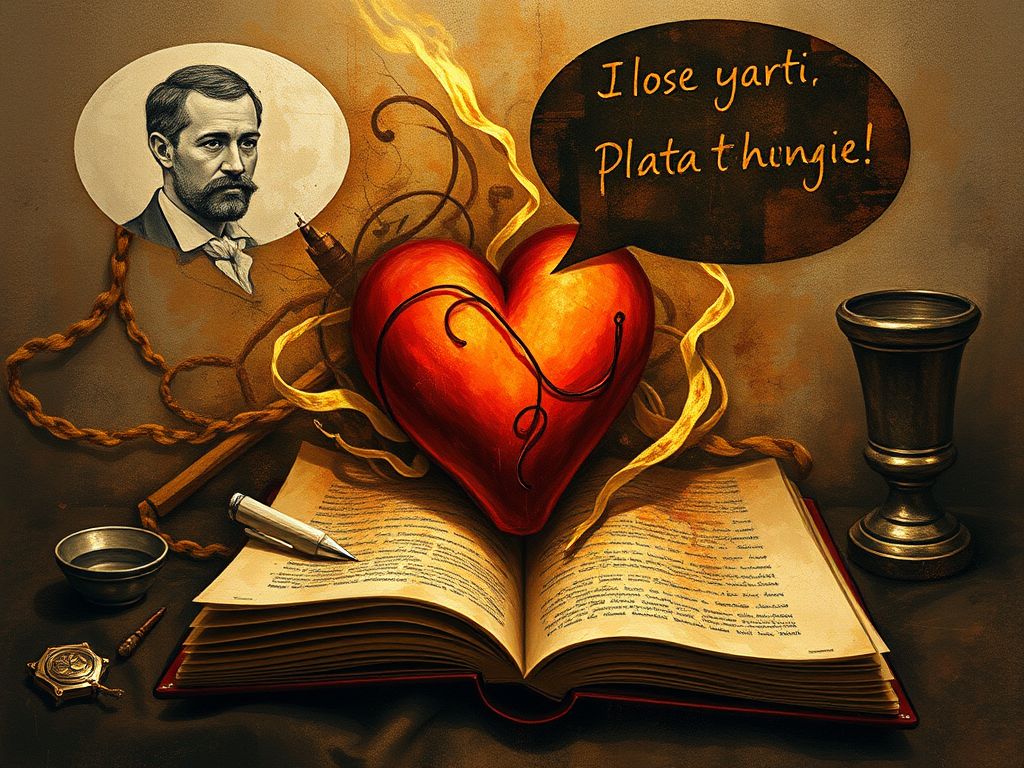
Every philosopher is, at their core, a mosaic of the artists and thinkers who came before them. My work—whether through my books, the Vision LEON LLC website, or The Resilient Philosopher podcast—exists because of the influence of three great artists: José Martí, Leonardo Da Vinci, and Plato.
Each of them represents a dimension of the human experience that fuels my philosophy: Martí’s compassion and rebellion, Da Vinci’s creative curiosity, and Plato’s timeless dialogue with truth.
Their influence is not just artistic—it is profoundly human. They remind me that leadership begins with imagination, philosophy begins with empathy, and art begins with the courage to reflect the world as it truly is.
José Martí: The Voice of the Common Citizen
If there is a spiritual ancestor of The Resilient Philosopher, it is José Martí.
His poetry and political essays were born from fire and love, woven for the people who had no voice. Martí understood something I hold close to my heart: that the highest form of leadership is to serve the people, not to rule them.
When I began Vision LEON LLC, and later the Resilient Philosopher podcast, it was in part because of Martí’s echo—the need to remind society that wisdom and compassion must belong to everyone, not just to those in power.
He believed that ideas were not meant to be stored in the minds of scholars but planted in the hearts of the people. That belief became the seed of my writing: to create work that moves, questions, and heals.
Martí’s vision for the common citizen lives within every reflection I write and every episode I record. He taught me that resilience begins when the people reclaim their right to think freely.
Leonardo Da Vinci: The Dreamer Beyond Time
Leonardo Da Vinci was more than an artist—he was a man possessed by curiosity.
When I think of Da Vinci, I see myself in the pages of his unfinished sketches, his scattered notebooks, and his restless imagination. His life feels familiar to me, as though he too wrestled with a mind that refused to stay still.
Perhaps Da Vinci shared the traits of what we now call ADHD, but to me, it was never a disorder—it was the divine restlessness of creation. The ability to dream across disciplines, to see art in science and philosophy in mechanics.
He lived in the tension between wonder and order, between sketches that never left the page and visions that transformed the world. That tension mirrors the creative life of every thinker who dares to build something new.
Through Da Vinci, I learned that leadership is not the control of the mind, but the liberation of it. To create is to surrender—to the chaos, to the unknown, to the impossible becoming possible.
Plato: The Architect of Thought
If Martí gave me the voice and Da Vinci the vision, Plato gave me the structure.
His dialogues were not just philosophical exercises; they were plays of the human condition. Through conversation, Plato gave life to the very essence of thought—turning ideas into living beings that questioned and contradicted each other.
He transformed philosophy into theater, where every belief had to defend itself against reason. It is no wonder his work remains timeless; Plato was not teaching what to think, but how to think.
That principle shapes The Resilient Philosopher. Each reflection I write, and each conversation I record, carries a dialogue between emotion, intellect, and spirit. It’s what I call the Trinity of Life—the union of what we feel, what we know, and what we believe.
Plato reminds me that philosophy is not for the classroom. It is for life—for love, leadership, and the pursuit of meaning in every breath we take.
The Bridge Between Them: The Birth of The Resilient Philosopher
From Martí, I inherited the fire of purpose.
From Da Vinci, the hunger for creation.
From Plato, the discipline of thought.
Together, they form the foundation of The Resilient Philosopher, and by extension, of Vision LEON LLC.
Martí gave me the courage to write for the people.
Da Vinci gave me the freedom to think beyond limits.
Plato gave me the wisdom to build a framework that transcends time.
These three masters remind me that leadership is not born in boardrooms but in reflection, creation, and compassion. They are the silent mentors behind every quote I write and every book I publish.
They represent what every true philosopher should strive for: to think deeply, to create boldly, and to serve humbly.
Conclusion
Art is not a mirror—it is a window. Through Martí, Da Vinci, and Plato, I learned to see not just what the world is, but what it could become.
The artist within me is not separate from the philosopher; they coexist, learning from one another. And as The Resilient Philosopher, my purpose is to continue their legacy—to blend love, curiosity, and reason into something that awakens the human spirit.
Because, as Martí once wrote, “The soul, by its nature, longs for freedom.”
And I believe that freedom begins when we dare to think, create, and feel—all at once.
References
- Martí, J. (1891). Nuestra América.
- Plato. (c. 380 BCE). The Republic.
- Da Vinci, L. (1487). Codex Atlanticus.
- Dantes, D. L. (2025). The Resilient Philosopher: The Prism of Reality. Vision LEON LLC.
- Dantes, D. L. (2025). Leadership Lessons from the Edge of Mental Health. Vision LEON LLC.
- Dantes, D. L. (2025). Mastering the Self: The Resilient Mind Vol. 2. Vision LEON
Relevance:
This article aligns with The Resilient Philosopher framework, connecting emotional intelligence, creative freedom, and philosophical depth to the development of modern leadership.
Leave a Reply