Tag: Plato

  • Gender Dynamics: Strength and Unity Beyond Division

    Gender Dynamics: Strength and Unity Beyond Division

    The Resilient Philosopher | D. L. Dantes

    “If we reflected as much as we project, maybe we would be more productive.”
    – D. L. Dantes

    I have watched society lose its definitions and then argue as if the confusion is wisdom. Gender is one of the easiest places for that confusion to spread. It touches identity, family, attraction, tradition, and fear. The modern debate is rarely about biology alone. It is about insecurity disguised as certainty, and politics disguised as morality. When people feel threatened, they reach for simple narratives. Those narratives feel like strength, but most of the time they are only a defense mechanism.

    I am not interested in building my worldview through opposition. I am interested in building it through observation, reflection, and accountability. If a belief cannot survive nuance, it is not a belief, it is a shield. If masculinity must be announced every day, then masculinity is not being lived. It is being performed. Performance is not strength. Performance is a symptom of fear.

    The Myth of Gendered Strength

    The biggest biological difference between men and women begins at the chromosome level. However, most of what society argues about exists between nature and nurture. Culture, environment, experience, trauma, and expectation shape behavior far more than slogans ever will. We still cling to old binaries because they are emotionally convenient. Mars versus Venus. Alpha versus beta. Strong versus weak. These frameworks are seductive because they reduce a complex species into a cartoon.

    The alpha narrative is one of the most damaging examples because it trains people to see leadership as dominance. Real leadership is not dominance. Real leadership is stewardship. When a man builds his identity around “being the strong one,” he quietly becomes dependent on being needed. That dependency can evolve into control, and control is the opposite of stability. A secure person does not need to advertise security. A capable leader does not need to demand fear.

    Strength that requires constant validation is fragile strength. It is strength that collapses when challenged. That is not leadership. That is insecurity in costume.

    Biological Reality Without Mythology

    Biology explains difference. Biology does not justify hierarchy. A chromosome can describe a category, but it cannot assign value. The moment people use biology to excuse dominance, they are not describing nature. They are projecting ideology.

    If I want to talk about strength honestly, I have to include endurance, not just force. Pregnancy is a direct example. The physical pain, psychological endurance, hormonal impact, and long-term bodily consequences are undeniable. Women endure that process willingly, often more than once. That reality alone dismantles the shallow definition of strength that many men defend. Strength is not volume. Strength is endurance, resilience, and the ability to carry consequence without collapsing.

    When society reduces strength to intimidation, it insults human complexity. It also teaches boys that their value is performance and teaches girls that their value is tolerance. Both are forms of harm. Both create adults who struggle to build healthy relationships because they were trained to compete instead of connect.

    Why Culture Turns Defensive

    Most gender conversations today are built to trigger defensiveness. Once defensiveness appears, reflection disappears. That is why I avoid debates that are designed as moral panic. Sports arguments, bathroom arguments, and endless online battles rarely produce awareness. They produce camps. They produce slogans. They produce winning and losing, not understanding.

    Change does not come through accusation alone. Change emerges through awareness, slowly, internally, and voluntarily. If a society wants transformation, it must stop viewing people as enemies. It should start seeing them as humans who are learning. That does not mean tolerating harm. It means choosing a strategy that actually works. Defensive cultures harden. Reflective cultures evolve.

    The deeper issue is that many people are not afraid of women. They are afraid of losing the story they were told about what a man is supposed to be. Many people are not afraid of gender diversity. They are afraid of instability. The fear is real even when the conclusion is wrong. Leadership begins when I can hold that reality without becoming cruel, without becoming soft, and without becoming dishonest.

    Perspective Over Identity

    I watch sports because I enjoy them. I listen to music regardless of who created it. I read books written by men and women alike. Perspective matters more than gender because lived experience produces radically different worldviews even inside the same biological category. Difference is not exclusive to gender. Difference exists everywhere.

    There are biological realities we do not share. Women experience physical pain men never will. Men face vulnerabilities that women may not encounter in the same way. The solution is not to pretend the differences do not exist. The solution is to remove the moral hierarchy we attach to them. Helping one another does not weaken us. It stabilizes us.

    Cooperation is not the opposite of strength. Cooperation is the refinement of strength.

    Integration Instead of Label Warfare

    This is where psychology becomes useful, not as a weapon, but as a mirror. When a society turns identity into a battlefield, people become trapped in labels they feel forced to defend. When identity becomes something to defend, growth becomes difficult. Growth requires change. Change can feel like betrayal of the label. When people feel threatened, they cling more to categories. As they cling to categories, they see individuals less.

    I do not need everyone to agree with me. I need people to return to a disciplined habit of reflection. A person’s inner life, their desires, their personality, and their emotional makeup should not be reduced to propaganda. When we treat human complexity as a political problem, we create unnecessary conflict. A healthy society can acknowledge differences without turning them into weapons.

    The leadership lesson is straightforward. If I lead through fear, I will create a fearful culture. If I lead through dignity, I will create a dignified culture. That does not require perfection. It requires intention.

    Equality Without Competition

    The work that matters is not winning arguments online. The work that matters is building civil rights, equity, and equal opportunity, without turning life into a gender competition. Mutual dignity is not a compromise. It is the baseline requirement for a stable society.

    Regardless of biological sex or sexual orientation, the foundations of life remain the same. We all need income. We all need food. We all need safety. We all need meaning. At their core, human struggles are shared. Everything else is context. When a society forgets what is shared, it becomes easy to divide. When a society remembers what is shared, it becomes harder to manipulate.

    If I want unity, I have to practice it as discipline, not as sentiment. Unity does not mean sameness. Unity means shared commitment to dignity, even in disagreement.

    Closing Reflection

    Gender is real, but the mythology we attach to gender is optional. Biology can describe differences without creating hierarchy. Strength can be defined by endurance rather than domination. Leadership can be measured by service rather than performance. When we restore definitions, we restore stability because we stop rewarding insecurity disguised as certainty.

    I do not need a society where everyone thinks the same. I need a society where people can disagree without dehumanizing, and where leaders can guide without manipulating. That is how strength becomes unity, and unity becomes resilience.
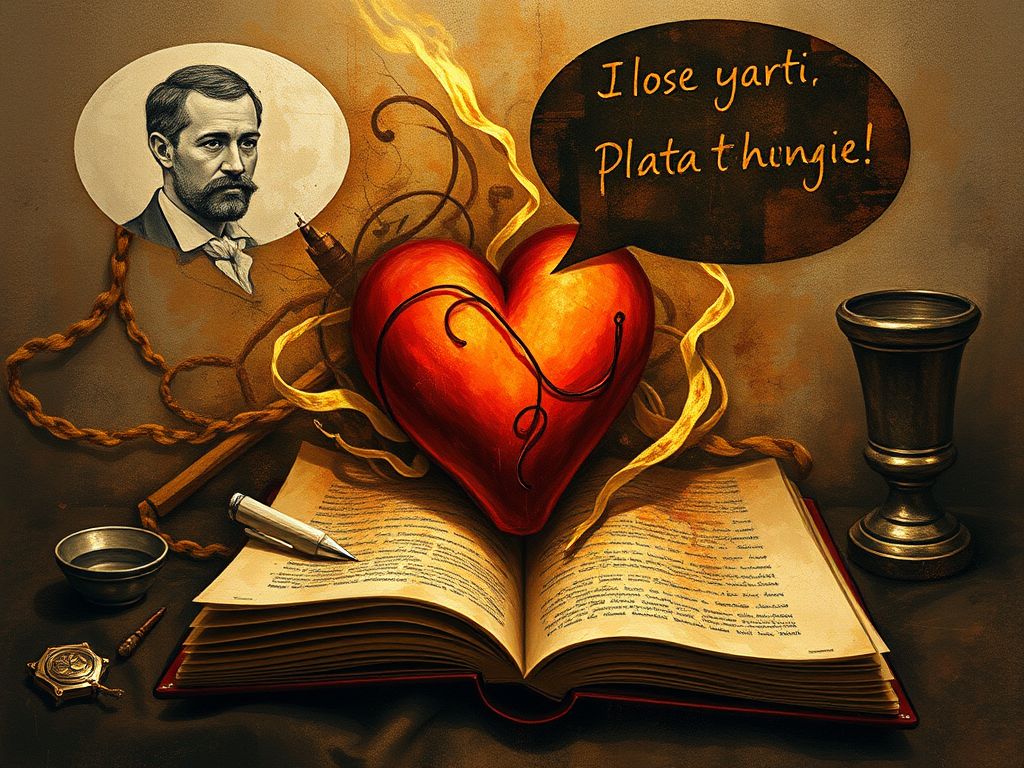
  • Influential Artists Shaping Resilient Philosophy

    Influential Artists Shaping Resilient Philosophy

    Introduction

    Every philosopher is, at their core, a mosaic of the artists and thinkers who came before them. My work—whether through my books, the Vision LEON LLC website, or The Resilient Philosopher podcast—exists because of the influence of three great artists: José Martí, Leonardo Da Vinci, and Plato.

    Each of them represents a dimension of the human experience that fuels my philosophy: Martí’s compassion and rebellion, Da Vinci’s creative curiosity, and Plato’s timeless dialogue with truth.

    Their influence is not just artistic—it is profoundly human. They remind me that leadership begins with imagination, philosophy begins with empathy, and art begins with the courage to reflect the world as it truly is.


    José Martí: The Voice of the Common Citizen

    If there is a spiritual ancestor of The Resilient Philosopher, it is José Martí.

    His poetry and political essays were born from fire and love, woven for the people who had no voice. Martí understood something I hold close to my heart: that the highest form of leadership is to serve the people, not to rule them.

    When I began Vision LEON LLC, and later the Resilient Philosopher podcast, it was in part because of Martí’s echo—the need to remind society that wisdom and compassion must belong to everyone, not just to those in power.

    He believed that ideas were not meant to be stored in the minds of scholars but planted in the hearts of the people. That belief became the seed of my writing: to create work that moves, questions, and heals.

    Martí’s vision for the common citizen lives within every reflection I write and every episode I record. He taught me that resilience begins when the people reclaim their right to think freely.


    Leonardo Da Vinci: The Dreamer Beyond Time

    Leonardo Da Vinci was more than an artist—he was a man possessed by curiosity.

    When I think of Da Vinci, I see myself in the pages of his unfinished sketches, his scattered notebooks, and his restless imagination. His life feels familiar to me, as though he too wrestled with a mind that refused to stay still.

    Perhaps Da Vinci shared the traits of what we now call ADHD, but to me, it was never a disorder—it was the divine restlessness of creation. The ability to dream across disciplines, to see art in science and philosophy in mechanics.

    He lived in the tension between wonder and order, between sketches that never left the page and visions that transformed the world. That tension mirrors the creative life of every thinker who dares to build something new.

    Through Da Vinci, I learned that leadership is not the control of the mind, but the liberation of it. To create is to surrender—to the chaos, to the unknown, to the impossible becoming possible.


    Plato: The Architect of Thought

    If Martí gave me the voice and Da Vinci the vision, Plato gave me the structure.

    His dialogues were not just philosophical exercises; they were plays of the human condition. Through conversation, Plato gave life to the very essence of thought—turning ideas into living beings that questioned and contradicted each other.

    He transformed philosophy into theater, where every belief had to defend itself against reason. It is no wonder his work remains timeless; Plato was not teaching what to think, but how to think.

    That principle shapes The Resilient Philosopher. Each reflection I write, and each conversation I record, carries a dialogue between emotion, intellect, and spirit. It’s what I call the Trinity of Life—the union of what we feel, what we know, and what we believe.

    Plato reminds me that philosophy is not for the classroom. It is for life—for love, leadership, and the pursuit of meaning in every breath we take.


    The Bridge Between Them: The Birth of The Resilient Philosopher

    From Martí, I inherited the fire of purpose.
    From Da Vinci, the hunger for creation.
    From Plato, the discipline of thought.

    Together, they form the foundation of The Resilient Philosopher, and by extension, of Vision LEON LLC.

    Martí gave me the courage to write for the people.
    Da Vinci gave me the freedom to think beyond limits.
    Plato gave me the wisdom to build a framework that transcends time.

    These three masters remind me that leadership is not born in boardrooms but in reflection, creation, and compassion. They are the silent mentors behind every quote I write and every book I publish.

    They represent what every true philosopher should strive for: to think deeply, to create boldly, and to serve humbly.


    Conclusion

    Art is not a mirror—it is a window. Through Martí, Da Vinci, and Plato, I learned to see not just what the world is, but what it could become.

    The artist within me is not separate from the philosopher; they coexist, learning from one another. And as The Resilient Philosopher, my purpose is to continue their legacy—to blend love, curiosity, and reason into something that awakens the human spirit.

    Because, as Martí once wrote, “The soul, by its nature, longs for freedom.”
    And I believe that freedom begins when we dare to think, create, and feel—all at once.


    References

    • Martí, J. (1891). Nuestra América.
    • Plato. (c. 380 BCE). The Republic.
    • Da Vinci, L. (1487). Codex Atlanticus.
    • Dantes, D. L. (2025). The Resilient Philosopher: The Prism of Reality. Vision LEON LLC.
    • Dantes, D. L. (2025). Leadership Lessons from the Edge of Mental Health. Vision LEON LLC.
    • Dantes, D. L. (2025). Mastering the Self: The Resilient Mind Vol. 2. Vision LEON

    Relevance:
    This article aligns with The Resilient Philosopher framework, connecting emotional intelligence, creative freedom, and philosophical depth to the development of modern leadership.

  • The Paradox of Lies, Honesty, and Integrity in Leadership and Politics

    The Paradox of Lies, Honesty, and Integrity in Leadership and Politics

    Introduction

    A lie is more than a falsehood—it is a fracture in trust. Defined simply, a lie is a deliberate misrepresentation, whether through words, silence, or omission. Its essence lies in intent: to deceive, to mislead, or to protect oneself. And yet, if lying is universal, then what does honesty mean? Can integrity survive in a world where every human being, at some point, has strayed from truth?

    This paradox is not new. From Plato to Kierkegaard, from Marcus Aurelius to Hannah Arendt, philosophers have wrestled with the burden of truth and the temptation of lies. Their insights can help us frame honesty not as perfection, but as resilience in the face of our failures.


    Lies and Their Justifications

    Lies come in many forms: direct lies, half-truths, omissions, and “white lies.” People justify them to avoid conflict, spare feelings, or protect their pride. But justifications cannot erase what lies are—departures from truth.

    Plato spoke of the “noble lie,” a myth designed to protect social harmony (The Republic, Book III). He argued that such lies may be useful, yet he admitted they risk corrupting trust. Søren Kierkegaard warned: “The most dangerous lie is the lie one tells oneself” (1849/1990, p. 43).

    From The Resilient Philosopher’s lens, lies should not be measured in moral shades but in impact:

    • Did the lie erode trust?
    • Did it distort reality for self-gain?
    • Or was it an act of compassion with no lasting harm?

    Honesty as a Discipline

    If all humans lie, then honesty cannot mean “never lying.” Instead, honesty is a discipline—a conscious return to truth.

    Immanuel Kant (1785/1993) insisted that lying is always wrong because it violates human dignity and treats others as means, not ends. Friedrich Nietzsche, however, suggested that humans need illusions to live: “We have art in order not to perish from the truth” (1873/1999, p. 23).

    The honest person is not flawless; they are one who, when straying from truth, admits it and realigns themselves with integrity.

    “We are not defined by the lie, but by how quickly we return to truth.” —The Resilient Philosopher


    Integrity in Action: Learning Through Mistakes

    A mistake is not a lie. When I made a mistake recently, I didn’t lie, omit, or justify. I accepted the full weight of it—even being told I did not know how to do my job.

    That choice hurt, but it also proved something: integrity is not the absence of failure—it is the courage to face failure with truth.

    Marcus Aurelius reminded himself: “If anyone can refute me—show me I’m making a mistake or looking at things from the wrong perspective—I’ll gladly change” (Meditations, VI.21). Epictetus taught: “It is not things themselves that disturb us, but our judgments about them” (Enchiridion, §5).

    In that moment, I lived my philosophy: the truth bruised my pride, but it strengthened my character.


    The Honest Politician: A Contradiction

    Here lies the paradox of politics: the “honest politician” still lies—sometimes to the people, sometimes to the party, and sometimes to themselves. They justify it as strategy, compromise, or diplomacy. But in the eyes of those they serve, the result is the same: the erosion of trust.

    Niccolò Machiavelli (1532/2008) argued in The Prince that rulers must “learn how not to be good” and use deceit when necessary for survival. Hannah Arendt (1967) warned that when lies become normalized, reality itself collapses, leaving citizens unable to distinguish truth from falsehood.


    The Constitution Beyond Parties

    The America I love has a Constitution without political affiliations. It was written for the people—not for parties. George Washington warned against “the baneful effects of the spirit of party” in his Farewell Address (1796/2000).

    John Stuart Mill (1859/2001), in On Liberty, argued that even unpopular truths must be preserved because silencing truth robs humanity of growth. The Constitution embodies this principle: rights belong to individuals, not to parties.

    Lies in politics weaken democracy because they divide people into factions, distracting them from their true identity as citizens. The Constitution belongs to us—not to Republicans or Democrats.

    “The people do not belong to the parties. The parties, if they must exist, must belong to the people.” —The Resilient Philosopher


    The Resilient Philosopher’s Reflection

    The paradox of lies teaches us this truth:

    • Every person lies.
    • Honesty is not perfection but commitment to return to truth.
    • Integrity is not about avoiding failure but confronting it.
    • Leadership is measured not by flawless execution but by accountability.
    • Politics must return to serving the people, not parties.

    Aristotle wrote: “The high-minded man must care more for truth than for what people think” (Nicomachean Ethics, IV.7).

    Resilient leadership requires courage. Courage to face mistakes, courage to reject justifications, and courage to live aligned with truth—even when truth is uncomfortable.


    Conclusion

    In leadership, in life, and in politics, lies will always tempt us. They promise comfort, protection, or power. But only truth endures. The Constitution, written without parties, was built on that very principle: that the people deserve truth, not strategy.

    As The Resilient Philosopher, I know this—mistakes can bruise pride, lies can fracture trust, but truth strengthens character. And if we as leaders can commit to returning to truth, even when we fall, then honesty and integrity still live within us.


    References (APA 7th Edition)

    • Arendt, H. (1967). Truth and politics. The New Yorker.
    • Aurelius, M. (2006). Meditations (G. Hays, Trans.). Modern Library. (Original work published ca. 180 CE)
    • Epictetus. (2008). The Enchiridion (E. Carter, Trans.). Dover Publications. (Original work published ca. 125 CE)
    • Kant, I. (1993). Grounding for the metaphysics of morals (J. W. Ellington, Trans., 3rd ed.). Hackett Publishing. (Original work published 1785)
    • Kierkegaard, S. (1990). The sickness unto death (H. V. Hong & E. H. Hong, Trans.). Princeton University Press. (Original work published 1849)
    • Machiavelli, N. (2008). The prince (P. Bondanella, Trans.). Oxford University Press. (Original work published 1532)
    • Mill, J. S. (2001). On liberty. Batoche Books. (Original work published 1859)
    • Nietzsche, F. (1999). On truth and lies in a nonmoral sense (D. Breazeale, Trans.). Oxford University Press. (Original work published 1873)
    • Plato. (1991). The republic (A. Bloom, Trans., 2nd ed.). Basic Books. (Original work published ca. 380 BCE)
    • Washington, G. (2000). Farewell address. Yale University Avalon Project. (Original work published 1796)

    Author & Resources

    Written by D. León Dantes, Chief Creative Executive of Vision LEON LLC, host of The Resilient Philosopher podcast, and author of:

    • The Resilient Philosopher: The Prism of Reality (2025)
    • Leadership Lessons from the Edge of Mental Health (2025)
    • Mastering the Self: The Resilient Mind Vol. 2 (2025)