Tag: freedom

  • Why Understanding Rights is Crucial for Civic Responsibility

    Why Understanding Rights is Crucial for Civic Responsibility

    “When people inherit rights without understanding what it took to secure them, they begin to treat freedom like a permanent condition instead of a responsibility.” – D. L. Dantes

    There is a danger in inheriting what you never had to fight to keep. Rights can be written into law, repeated in schools, wrapped in patriotic language, and still remain poorly understood by the very people who claim to possess them. The moment a society confuses possession with understanding, it begins to decay from within. What was once protected through sacrifice becomes assumed through comfort. What was once guarded through vigilance becomes neglected through habit.

    I am not looking at this issue through the shallow frame of one group against another, even though race is undeniably part of the American story. I am looking at the deeper pattern beneath it. Power writes rules, rules create structures, and structures survive long after the people who first designed them are gone. Then those same structures begin affecting people beyond the original target. What was once used to restrain one population eventually becomes a machine that harms anyone vulnerable enough to fall beneath it.

    Power Writes the First Draft

    The United States did not begin as a neutral experiment floating above the biases of history. It began with human beings holding power, writing law, defining citizenship, and deciding who counted fully within the civic body. Those assumptions shaped the architecture of the nation from the beginning. That does not mean every law came from the same motive, but it does mean the structure reflected the people with enough authority to define reality for everyone else. Power always writes the first draft.

    Later generations inherit that draft whether they understand it or not. Some revise it, some reinforce it, and some pretend it was naturally just from the start. That is why history matters. History is not a museum piece for emotional performance. History reveals how systems are built, how they preserve themselves, and how their logic remains active long after the language around them changes.

    A society can update its vocabulary while carrying old habits forward in new forms. It can celebrate progress publicly while quietly preserving exclusion structurally. It can speak in the language of equality while still operating through deeply unequal assumptions. If citizens inherit a house without studying the blueprint, they will blame the weather when the walls begin to crack. Very few will stop to ask what was wrong in the design.

    Rights Are Lost in Comfort Before They Are Lost in Law

    Most people imagine rights disappearing dramatically. They picture a tyrant, a public decree, a clear suspension of liberty that everyone recognizes in the same instant. Yet many rights are lost more quietly than that. They are first lost in the public mind. They begin fading when people stop studying them, stop teaching them, stop defending them, and stop understanding how fragile they really are.

    A right you do not understand is a right you are not prepared to defend. A right you assume is permanent is already halfway surrendered. Civic decline does not begin when the law is finally used against you. It begins when you convinced yourself the law could never be used against you in the first place. That kind of ignorance is more dangerous than open opposition because it disarms people without them noticing.

    Comfort makes people intellectually lazy. It weakens political memory and encourages symbolic thinking in place of civic discipline. People begin mistaking familiarity for permanence and slogans for protection. Then when the damage becomes visible, they feel betrayed by reality itself. In truth, they had stopped paying attention long before the consequences arrived.

    Poverty Expands the Reach of Every Flaw

    One of the great lies of every age is that social harm stays neatly confined to the group it first targeted. People want to believe suffering can be fenced off. They imagine that if the law falls hardest on someone else today, it will somehow spare them tomorrow. History never supports that fantasy. Once a society normalizes disposability, exclusion, or selective punishment, it expands wherever weakness is easiest to exploit.

    Poverty is one of the strongest expansion mechanisms inside any society. Poverty does not care what stories people tell about race, heritage, class pride, or national identity. Poverty increases vulnerability, lowers recovery capacity, and exposes people to the hard edges of every flawed system. The poorer a population becomes, the more exposed it is to coercion, manipulation, and instability. That exposure does not disappear just because people believe they belong to the “right” category.

    This is why structural damage eventually widens. What begins as selective containment can become generalized vulnerability. A law may be born inside one historical context, but once its logic is normalized, its reach can broaden. The poor do not stop being poor because they belong to the majority. The uneducated do not stop being manipulable because they share a flag with those in power. Systems do not become gentle simply because new people finally experience what others had long warned about.

    The Myth of the Outsider

    When people lose influence, stability, or confidence, they often look for a simple explanation. They want one villain, one betrayal, one outsider to blame so they do not have to confront deeper failures in the structure they trusted. That is why scapegoating remains so powerful. It offers emotional relief in exchange for intellectual dishonesty. It replaces systems analysis with theater.

    The outsider becomes the perfect excuse. The immigrant becomes the perfect excuse. The minority becomes the perfect excuse. The opposing party becomes the perfect excuse. None of these narratives require serious self-examination. None of them require a population to ask whether it neglected civic education, ignored institutional decay, or tolerated flawed structures as long as those structures seemed to protect its side.

    I have seen enough contradiction in human beings to know that prejudice is rarely as principled as it pretends to be. People will condemn an entire group and still make exceptions when comfort, familiarity, or usefulness enters the picture. That selective blindness exposes the fraud at the center of tribal thinking. People support hard systems when they assume those systems will only fall on someone else. What they fail to understand is that the flaw protected today often becomes the opening through which tomorrow’s damage enters their own house.

    Origin Is Not Destiny

    One of the most destructive messages a society can give its people is that their origin is their destiny. It does not matter whether that origin is racial, economic, geographic, educational, or cultural. The moment human beings are taught that their beginning permanently defines their ceiling, aspiration begins to collapse. People stop reaching toward transformation when they are conditioned to believe the future is already assigned to them.

    I reject both fatalism and decorative moral performance. Human beings are not infinitely plastic, but they are more capable than most systems allow them to become. Potential is shaped by structure, expectation, opportunity, discipline, and the kind of meaning a society offers its people. If you deny those ingredients and then point to failure as proof of inferiority, you are not describing reality. You are describing a reality you helped construct.

    Empowerment is not sentimental language. It is not a slogan for speeches or workshops. Empowerment is one of the practical forces that keeps the gears of society moving. When enough people believe they matter, effort rises. When enough people believe growth is possible, responsibility rises. When enough people believe dignity can be protected, participation rises. A society that starves its people of meaning should never be surprised when disorder becomes cultural.

    The Ages Return Under New Names

    I do not see the Dark Ages, the Medieval world, and the Renaissance as dead periods sealed safely in the past. I see them as recurring patterns in human civilization. There are ages of fear, ages of hierarchy, ages of obedience, ages of awakening, and ages of reconstruction. These patterns return under modern language and digital decoration, but their internal logic remains familiar. Technology changes the speed, not the nature, of the cycle.

    A society can possess advanced tools and still descend into a new dark age of confusion. It can have endless access to information and still suffer from deep ignorance. It can speak constantly about progress while reviving old habits of censorship, tribalism, and dehumanization. Modernity does not rescue people from ancient instincts. In many cases, it simply gives those instincts better marketing.

    That is why moving backward in time does not require horses, castles, or candlelight. It only requires the return of the same patterns under a different name. A people can become more technologically sophisticated while becoming less morally and civically mature. That is not progress. It is accelerated regression dressed in modern clothing.

    Closing Reflection

    The deeper problem in any society is not disagreement. It is forgetting that freedom requires maintenance. When people inherit rights without studying them, inherit institutions without questioning them, and inherit power without understanding its fragility, decline becomes only a matter of time. The damage may begin with one group and spread to another, but the pattern remains the same. A system built around selective harm eventually injures more than its original target.

    That is why the architect of reality cannot afford simplistic thinking. He must learn to see beyond categories, beyond slogans, beyond emotional relief, and beyond the theater of blaming outsiders. He must understand that every law tolerated for someone else may one day be used against his own people. He must understand that poverty broadens the reach of exclusion, ignorance accelerates manipulation, and comfort weakens civic memory. Wherever stewardship disappears, some older and darker pattern begins returning through the cracks.

    D. L. Dantes
    The Resilient Philosopher
  • Cuba’s Freedom: Ethics, Consent, and True Sovereignty

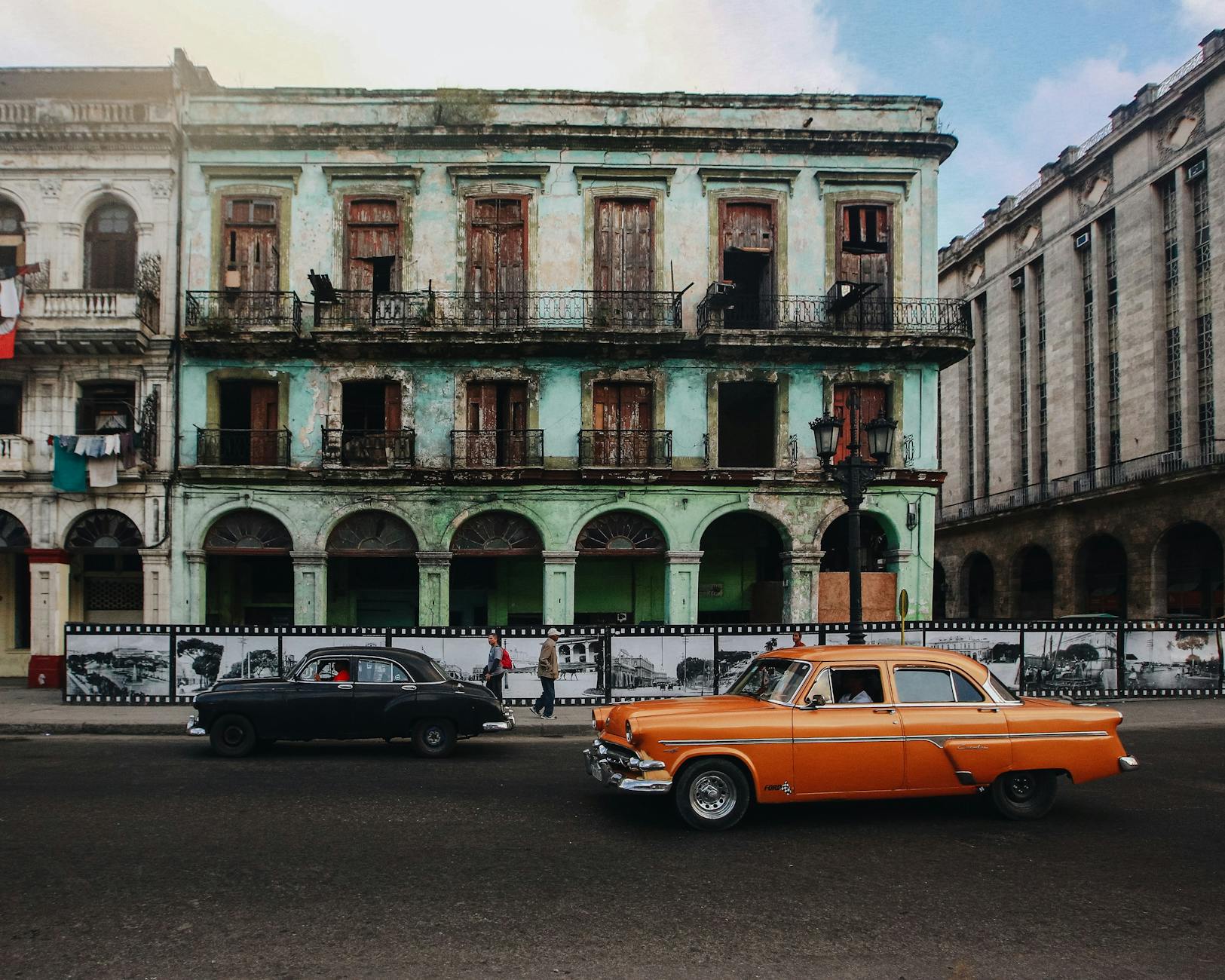
    Cuba’s Freedom: Ethics, Consent, and True Sovereignty

    The Resilient Philosopher | D. L. Dantes

    Freedom is an illusion of free will. Every nation has the right to decide which misery it is willing to accept. However, every decision comes with consequences to live with.
    D. L. Dantes

    Some topics are debated like teams, but they are really mirrors. Cuba is one of those mirrors. When someone speaks about “fixing” the island like it is paperwork, they are not only making a political claim. They are revealing their definition of freedom. When freedom becomes rhetoric, it becomes dangerous. It can be used to justify the very thing it claims to oppose. That is why I do not write to attack ideologies. I write to expose the paradox inside them, the contradiction where the desire to save becomes permission to control.

    National freedom is not a promise, it is an ethical burden

    A nation is not free just by declaring itself free. It is not free because an outside power “helps” it become free. A nation is truly free when its people can choose their laws. They must hold that choice without fear and without punishment. They do not need a savior to maintain it. The trap appears when safety is confused with sovereignty, because safety can be purchased, but sovereignty must be practiced. Practicing sovereignty means accepting consequences, even when they hurt, even when the least bad option is still a misery. That is the part propaganda hides and ethics demands we face.

    So the real debate is not “which system sounds better.” The real debate is who decides, and by what right they decide. When the decision is drafted outside the island, even with good intentions, it resembles tutelage. Tutelage always charges a quiet price: it reduces agency, trains obedience, and turns citizens into recipients of other people’s plans. Freedom is not a gift from a powerful country. Freedom is the discipline of a people who can say yes and can also say no.

    Transition looks more like grief than a return

    If a regime collapsed tomorrow, Cuba would not return to the Cuba preserved in exile memory. It would enter a season of grief. It is like the stage after a long divorce. The urgency to feel safe can push people into quick decisions. These decisions are made just to avoid exposure. That is where the myth lives that one nail drives out another. Mistakes are later justified with beautiful language. What is not processed is repeated. What is not understood becomes habit. And habit, when it becomes national, becomes destiny.

    That is the danger of a “quick solution” marketed as freedom. Transition requires time to relearn trust. It takes time to rebuild institutions. It is necessary to allow dissent without revenge. Limits must be formed that do not depend on whoever takes power next. If a transition is built on the urgency to replace, it tends to copy. If it is built on the ethics of limiting power, it begins to heal. The difference is not a party label. The difference is character.

    The stone in the river and the nation reshaped by decades

    Imagine a massive stone falling into a river and blocking much of the flow. The water does not stop. It learns to move around the stone, and over time the channel changes. The depth changes. The width changes. A town adapts to living with less current and builds its life around that reduced normal. Decades later, when the stone is finally removed, the river does not return to what it was. Force returns through a different channel, and that force can collapse what was built during scarcity.

    That is what prolonged control does to a country. Scarcity is not only economic, it shapes social character. Fear does not only silence speech, it trains bodies and communities to survive by minimizing risk. When control breaks, the current returns, but society has already been molded by survival. That is why freedom must encompass civic culture. It should set limits on power. Justice should be pursued without revenge. A public language is crucial where dissent is not treated as a crime.

    Exile and the temptation of convenience

    Exile wants a free Cuba. That longing can be genuine love or nostalgia, and often it is both. The ethical problem appears when the proposed solution benefits the speaker more than the people who live there. Annexation or territorial status can feel “safe.” It offers the promise of return without loss. It guarantees imported stability. It promises a familiar system for someone who has adapted to another life. It is a human temptation. It is also a moral risk, because it can turn the desire for freedom into a claimed right to impose.

    Speaking Spanish is not the same as inhabiting the island’s cultural language after decades away. The island changes. Its codes change. Its wounds change how it trusts. When memory leads, the impulse is often to retake, not to understand. Exile can support, expose, invest ethically, and amplify voices. However, it should not replace the legitimacy of those who will carry the direct cost of every decision. Legitimacy is not measured by intensity. Legitimacy is measured by consequence.

    Consent: the line between freedom and domination

    Here is the question that makes every side uncomfortable because it does not allow propaganda. Can a people choose their future without threats, without punishment, and without retaliation? If the answer is no, the outcome will be another form of tutelage, even if it is painted as progress. Consent means the right to vote without fear. It also means the right to organize without persecution. Consent includes the right to criticize without prison. It is the right to reject a destiny without being punished for rejecting it. Without that, the word freedom becomes decoration.

    This is also where ideologies become dangerous when they turn into religion. Sometimes the “good guy” uses the same method as the “bad guy” to win. He believes the outcome absolves the method. Sometimes the “bad guy” performs a useful act and people confuse usefulness with goodness. If the devil helps someone, he does not become God. If God punishes someone, he does not become the devil. Actions matter, but patterns matter more. In politics the pattern is simple: if saving requires silencing, it is not freedom. It is control with a new name.

    Closing reflection

    Cuba does not need a new owner or a newer narrative with better marketing. Cuba needs the real right to decide without tutelage. That right is not sentimental. It is structural. It means institutions that allow dissent. It requires limits that prevent saviors. It demands a people with enough voice to accept consequences. This must occur without surrendering sovereignty. Freedom will remain imperfect because every choice is imperfect. However, it will be authentic if it is born from the island’s consent. It should not come from the outside world’s convenience. If this reflection resonates, my published work develops it further. In it, I treat freedom as an ethical boundary rather than a propaganda tool.

    D. L. Dantes

  • Reviving the Republic: Unity and Leadership in Governance

    Reviving the Republic: Unity and Leadership in Governance

    Introduction

    The experiment of the constitutional republic was never meant to glorify kings, chiefs, emperors, or dictators. It was designed to prevent them. The founding vision was clear: no individual should rise above the people they serve. Leadership was meant to be an act of service, not superiority.

    Yet as division grows and loyalty shifts from principle to personality, the foundation of the republic trembles. What began as an experiment in balanced power has become a stage where partisanship overshadows purpose and rhetoric replaces responsibility.


    The Experiment of Power

    Power, in any form, is both an illusion and a test. A king claims it by birth, an emperor by conquest, a dictator by fear, and a president by the will of the people. Yet the essence remains the same—the struggle between service and control. The difference lies not in the title, but in the intention behind it.

    The constitutional republic was humanity’s answer to this timeless struggle. It rejected the notion of superiority and replaced it with accountability. To call any president a monarch is not only inaccurate—it is an insult to the very document that defines our freedom.

    But this insult is not merely verbal. It comes from neglect, from apathy, from the silence of those who choose not to participate in shaping the destiny of their nation.


    The Silence of the Voter

    Many speak of division, but few acknowledge the silence that enables it. The voters who chose not to vote—the millions who stood aside—hold more power than they realize. Their silence becomes the stage upon which extremism performs.

    Yet within that silence lies the potential for unity. The voters who do not identify with the noise of partisan politics are the key to restoring balance. The power of the republic rests not in the extremes but in the middle—in those willing to listen, reason, and rise.


    Beyond Two Voices

    A republic cannot thrive when it is confined to two opposing ideologies. Two parties divide a nation into sides instead of citizens. True democracy flourishes only when there are multiple perspectives—when three or more major parties share the weight of governance, forcing collaboration rather than domination.

    Diversity of thought does not weaken a nation; it strengthens it. The founders never intended for politics to become a binary contest. Leadership was to be stewardship, not strategy. A republic thrives not in who governs, but in how governance represents all people.


    The Republic and the Democracy Within It

    A republic is founded upon a constitution that limits power through law. A democracy functions within that republic as the voice of the people choosing their representatives. But those representatives were never chosen to serve a party—they were chosen to serve the nation.

    When elected officials become representatives of ideology instead of the people, the republic begins to dissolve. The difference between a republic and a democracy is not found in the right to vote, but in the purpose of that vote. A democracy allows for selection; a republic ensures accountability through principle.

    When parties overshadow people, the system decays. At that moment, only two paths remain: abolish the dominance of parties or expand representation to many. The strength of a nation lies not in conformity but in the diversity of conscience, bound by one constitution.


    Principles Before Parties

    Imagine if representatives ran on their principles instead of partisan ideology. Leadership would again reflect integrity rather than allegiance. When principles guide decision-making, politics becomes a service to the people, not a contest for control.

    The health of a republic depends on the wisdom of its representatives—individuals who stand for their convictions even when those convictions are unpopular. When leaders are guided by morality and reason instead of the pursuit of victory, democracy regains its balance, and the republic reclaims its soul.


    Restoring Balance Between Federal and State Responsibility

    One of the greatest misconceptions of modern governance is that unity requires centralization. In truth, balance comes from shared responsibility. To reduce federal spending and strengthen the republic, states must reclaim their rightful role as caretakers of their residents.

    The federal government should exist not to dominate, but to protect. Its highest duty is to ensure that every state upholds the constitutional rights of its citizens. The states, in turn, must govern with accountability, compassion, and respect for those same principles.

    For example, universal healthcare can be achieved at the state level. Each state can design a system that fits the unique needs of its people while using federal funding to ensure that benefits are shared nationwide. In this way, compassion becomes policy, and equality becomes practice—not through central mandates, but through cooperative governance.

    When states come together in congress—not as factions but as partners—they create laws that reflect the diversity of the nation. The federal structure then becomes what it was always meant to be: an enforcer of justice, a guardian of liberty, and a servant to the people.

    In this balance, the republic finds stability again. The people are empowered, the states are responsible, and the federal government ensures that freedom remains equal across all boundaries.


    Leadership as Service, Not Power

    The moment a leader believes they are superior, they cease to lead. Leadership is not about control—it is about listening. The greatest leaders empower others to lead. The republic was founded upon that idea: that no single voice should dominate, and that all voices should contribute to the common good.

    Servant leadership reminds us that the highest form of power is humility. To lead is to serve. When a government forgets this, it becomes a shadow of the very tyranny it was created to resist.


    The Call to Reflection and Unity

    The division in our nation is not the result of one side’s actions but of a collective loss of memory. We have forgotten that the constitution was written not to empower leaders, but to protect citizens. We have mistaken governance for authority and politics for philosophy.

    It is time to remember that every citizen—every voice—matters. The republic depends not on those who shout the loudest, but on those who choose to listen and act with integrity. The call is not to fight one another, but to find common ground, to restore reason and purpose, and to lead ourselves before asking others to lead us.

    Unity will not come from the top. It will rise from within the people—through dialogue, reflection, and the courage to think beyond parties and pride.


    Final Reflection

    The republic was never a promise of perfection. It was a challenge—to remain human amidst power. No kings, no chiefs, no emperors, and no dictators were ever meant to rule a free people. The constitution is the bridge between authority and morality, between freedom and accountability.

    To rebuild that bridge, we must first listen. Not to those who shout for dominance, but to those who whisper of wisdom. In the quiet reflection of the people lies the rebirth of the republic.


    Quote from The Resilient Philosopher

    “The experiment of the constitutional republic was never meant to crown superior leaders, but to prevent them. No kings, chiefs, emperors, or dictators were ever to govern a free people. The division we witness today is not political—it is the slow collapse of the republic’s original constitution.”
    — D. Leon Dantes, The Resilient Philosopher: The Prism of Reality


    Closing Thought

    As a nation, we must not wait for another leader to unite us. We must lead ourselves through reflection, compassion, and truth. The republic is not lost—it is simply waiting for its people to remember why it was created.


    Written by: D. Leon Dantes
    Vision LEON LLC | The Resilient Philosopher

    logo8
  • The Circle of Common People: Breaking Free from Debt

    The Circle of Common People: Breaking Free from Debt

    By D. Leon Dantes | Vision LEON LLC — The Resilient Philosopher Series


    Introduction

    The circle of the common people is not built of gold, but of debt. A cycle forged in silence and repetition. We are born into a system that rewards obedience and punishes reflection. We work to pay a debt that was never ours to begin with — the debt of others, inherited by birth and maintained through fear.

    The illusion of freedom is the most sophisticated form of captivity. We are told that to live is to owe, that to exist is to pay. But in truth, we were never meant to live as creditors or debtors. We were meant to live as beings of awareness, not subjects of a man-made economy of control.


    The Inherited Debt

    From the moment we take our first breath, we inherit a debt disguised as duty — the mortgage of survival. The modern world has redefined morality not by virtue, but by payment. To be responsible is to be indebted. To be free is to owe nothing. Yet freedom itself has been sold as a privilege, taxed, regulated, and measured by credit scores.

    We pay not only for our own existence, but for the mistakes and indulgences of those who came before us. The cycle continues: to pay debts, we must borrow more, and to live, we must serve the system that profits from our servitude.

    This is the paradox of civilization — a society that prides itself on progress while enslaving its people through invisible chains of necessity.


    The Domestication of Humanity

    A trainer can train another animal, yet the trainer itself was trained to train another animal. The human species became the most domesticated of all. Not by nature, but by design. We domesticated the horse not to liberate it, but to use it — to make it part of our own servitude.

    We taught the dog to obey, the cow to yield, and the horse to run, yet we never questioned who taught us to work, to kneel, and to conform.

    Domestication became the silent inheritance of civilization. What began as survival evolved into obedience. And obedience, refined by repetition, became the new definition of peace. But peace without awareness is only submission dressed in comfort.


    The Eagle and the Fish

    To understand freedom, one must look to the eagle and the fish.

    The eagle does not work for wings; it soars because it knows no debt. The fish does not pay for the water it breathes; it exists in flow, free of ownership. Neither creature holds property, pays interest, or follows imposed laws — yet both live in balance with life itself.

    They remind us that nature never required contracts to sustain its order. Debt is not natural. It is a construct born from fear — the fear of not having enough, the fear of losing control, the fear of freedom itself.


    The Path to Breaking the Chain

    To break the chain, one must first refuse to live by it. Freedom begins not with rebellion, but with awareness.

    Refusal is not resistance; it is awakening. The refusal to be conditioned is the first act of true leadership. To serve does not mean to obey — to serve means to elevate others through wisdom and understanding, not through control.

    When the common person realizes that servitude is not purpose, but conditioning, the trainer becomes the student again. The circle of obedience breaks when knowledge becomes reflection — when the debt of ignorance is finally paid through truth.


    The Enslavement of Nature

    If slavery is cruel, how come we keep nature enslaved?

    We weep for freedom yet build fences around forests. We speak of liberty yet chain rivers with dams. We domesticate the wild and call it progress, forgetting that every tree we cut is a breath we lose, and every animal we cage is a reflection of our own captivity.

    We enslave the Earth through industries, policies, and ideologies that serve profit over harmony. Humanity became the master that forgot it was part of the same creation it seeks to dominate.

    True cruelty lies not in what we take from nature, but in how we justify it. We’ve turned God’s garden into a marketplace and called ourselves civilized. But civilization without consciousness is a silent tyranny — one where nature pays the price for our comfort.

    To enslave nature is to enslave ourselves, for the soil that feeds us is the same dust we return to.

    Freedom cannot exist in a world where everything that sustains it is chained. Until we free the Earth, we will never truly understand what it means to be free.


    Philosophical Reflection

    We cannot change what we do not first acknowledge. The chains of the common people are not made of iron; they are made of beliefs. To serve without question is to remain enslaved by illusion.

    The Resilient Philosopher does not seek rebellion but clarity. To see beyond the system is not to destroy it, but to transcend it — to live as nature intended, unbound by human constructs. For the one who understands freedom can never again live in servitude.


    “A trainer can train another animal, yet the trainer itself was trained to train another animal. True freedom begins when the trainer unlearns the training. If slavery is cruel, then so is every chain we place upon nature.”
    — D. Leon Dantes, The Resilient Philosopher: The Prism of Reality


    Conclusion

    Debt and obedience are the twin illusions of modern civilization. To work without reflection is to live without purpose. The path of The Resilient Philosopher is not to escape the world, but to awaken within it.

    To live debt-free is not a financial state, but a spiritual one. When we no longer owe our existence to others’ expectations, we return to the essence of life — awareness, purpose, and truth.

    Be like the eagle that soars, not the horse that pulls. For the one who learns from nature cannot be enslaved by man.


    logo8