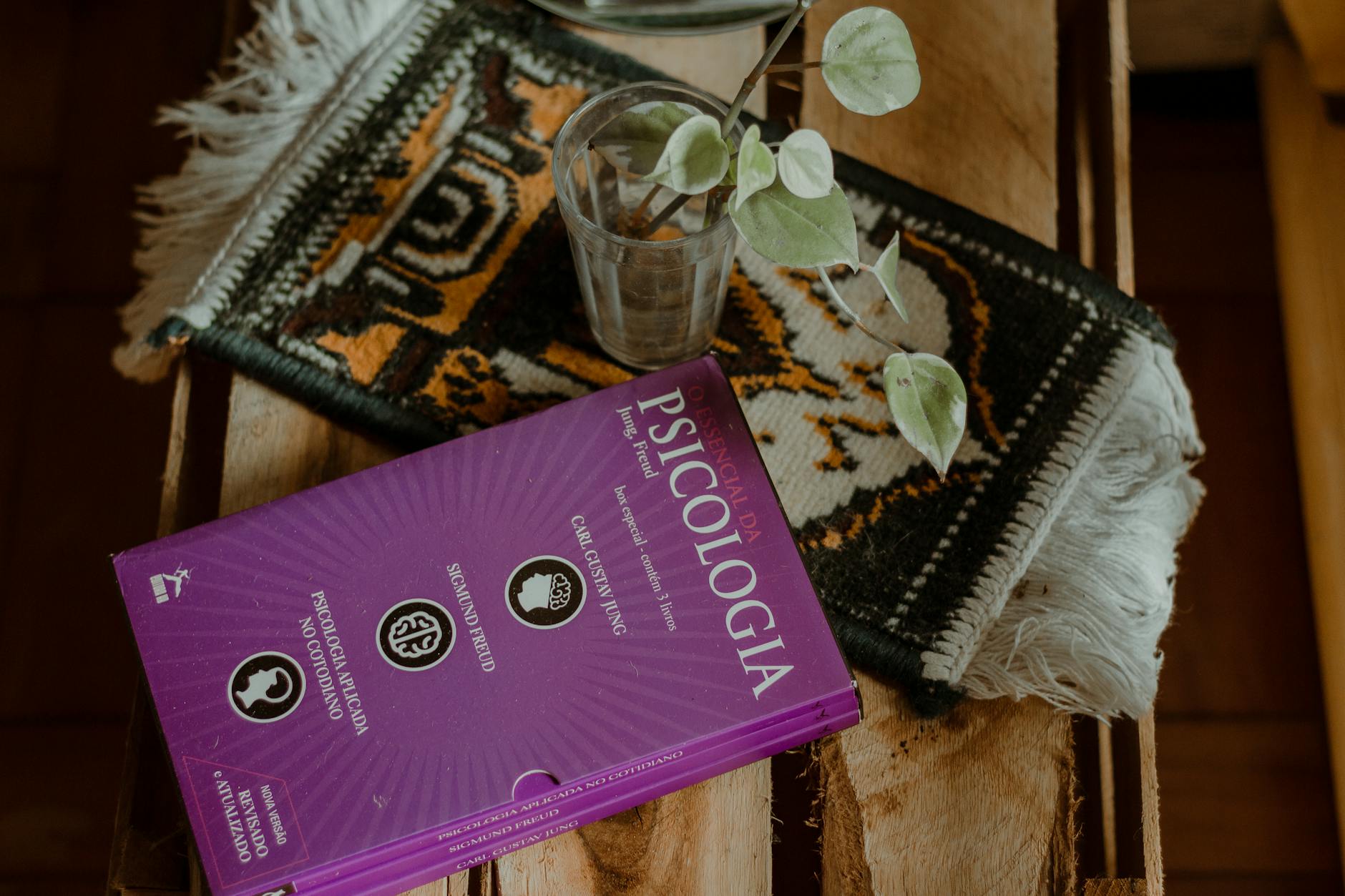
Tag: Carl Jung

  • Insights from Carl Jung: Discovering My True Self

    Insights from Carl Jung: Discovering My True Self

    The Resilient Philosopher

    There are thinkers you read, and then there are thinkers who hold up a mirror.

    Studying the work of Carl Jung did not feel like discovering new ideas. It felt like recognizing patterns I had already been living without naming. It was not information. It was confirmation, correction, and confrontation.

    I did not find myself in Jung’s psychology.
    I found explanations for the internal processes that shaped The Resilient Philosopher long before I had language for them.


    I Was Already Walking the Path He Described

    When Jung spoke about individuation, he described a psychological journey where a person stops living only through roles and begins confronting the deeper structure of the self.

    That resonated immediately.

    My philosophy was never built to impress systems or audiences. It was born from friction with reality, from consequence, from internal conflict, from trying to understand why suffering changes some people and destroys others. I always believed leadership begins inside the individual, not in titles, systems, or applause.

    Jung helped me see that this was not just philosophy.
    It was a psychological process in motion.

    Individuation is not about becoming special.
    It is about becoming honest.


    My Relationship With the Shadow Made More Sense

    I have never been comfortable with the illusion that humans are purely good or purely rational. My work constantly returns to responsibility, consequence, power, failure, and the uncomfortable parts of human behavior.

    Jung called this the Shadow.

    Reading him clarified something important. The goal is not to eliminate darkness. The goal is to become aware of it so it does not run your life unconsciously. That has always been central to my leadership philosophy. A leader who denies their own shadow becomes dangerous. A leader who understands it becomes accountable.

    This reinforced a core principle in my books: self mastery is not about perfection. It is about awareness.


    I Understood Why My Work Feels Personal

    I have often been told my writing feels like lived experience, not theory. Jung’s work explains why.

    He believed that what we create is symbolic expression of the psyche. Our ideas are not random interests. They are the mind trying to organize its inner reality into conscious form.

    That is exactly what The Resilient Philosopher has always been for me. A way to structure what I have learned through living, not just reading. Leadership, systems, discipline, responsibility, and inner order are not topics. They are reflections of how I have had to make sense of life.

    Jung helped me see that my philosophy is not separate from my psychology.
    It is an extension of it.


    Suffering as Development, Not Punishment

    In my books, adversity is never framed as meaningless. It is framed as information, discipline, and transformation. Jung’s perspective aligned with this deeply.

    He saw crisis, neurosis, and psychological struggle as potential gateways to growth when faced consciously. That perspective mirrors my approach to resilience. The breaking point is not the end. It is often the beginning of awareness.

    This reinforced something I already teach. Growth is not comfort. Growth is confrontation with reality, starting with oneself.


    The Warning I Took Seriously

    Jung did not romanticize depth. He warned that people who develop psychological insight can start identifying too strongly with being the one who sees.

    That was an important reminder.

    A philosophy must remain reflective, not rigid. Awareness must continue turning inward, not only outward. If self examination stops, philosophy becomes doctrine, and doctrine replaces growth.

    That warning strengthened my commitment to reflection. Leadership begins with self leadership, and self leadership requires ongoing humility.


    What This Changed in Me

    Studying Jung did not change my philosophy.
    It refined my understanding of it.

    It showed me that:

    • My focus on inner responsibility is psychological maturity, not just moral belief
    • My attention to shadow is leadership awareness, not negativity
    • My emphasis on consequence is alignment with reality, not harshness
    • My belief that systems reflect human consciousness has psychological grounding

    It gave structure to what experience had already taught me.


    Final Reflection

    Jung did not give me a new identity.
    He gave me clarity about the one I was already building.

    The Resilient Philosopher is not an ideology. It is a mirror. Studying Jung reminded me that the work of a lifetime is not to appear wise, but to become more conscious.

    And consciousness always begins within.

    The Resilient Philosopher Podcast Community

  • Gender Dynamics: Strength and Unity Beyond Division

    Gender Dynamics: Strength and Unity Beyond Division

    The Resilient Philosopher | D. L. Dantes

    “If we reflected as much as we project, maybe we would be more productive.”
    – D. L. Dantes

    I have watched society lose its definitions and then argue as if the confusion is wisdom. Gender is one of the easiest places for that confusion to spread. It touches identity, family, attraction, tradition, and fear. The modern debate is rarely about biology alone. It is about insecurity disguised as certainty, and politics disguised as morality. When people feel threatened, they reach for simple narratives. Those narratives feel like strength, but most of the time they are only a defense mechanism.

    I am not interested in building my worldview through opposition. I am interested in building it through observation, reflection, and accountability. If a belief cannot survive nuance, it is not a belief, it is a shield. If masculinity must be announced every day, then masculinity is not being lived. It is being performed. Performance is not strength. Performance is a symptom of fear.

    The Myth of Gendered Strength

    The biggest biological difference between men and women begins at the chromosome level. However, most of what society argues about exists between nature and nurture. Culture, environment, experience, trauma, and expectation shape behavior far more than slogans ever will. We still cling to old binaries because they are emotionally convenient. Mars versus Venus. Alpha versus beta. Strong versus weak. These frameworks are seductive because they reduce a complex species into a cartoon.

    The alpha narrative is one of the most damaging examples because it trains people to see leadership as dominance. Real leadership is not dominance. Real leadership is stewardship. When a man builds his identity around “being the strong one,” he quietly becomes dependent on being needed. That dependency can evolve into control, and control is the opposite of stability. A secure person does not need to advertise security. A capable leader does not need to demand fear.

    Strength that requires constant validation is fragile strength. It is strength that collapses when challenged. That is not leadership. That is insecurity in costume.

    Biological Reality Without Mythology

    Biology explains difference. Biology does not justify hierarchy. A chromosome can describe a category, but it cannot assign value. The moment people use biology to excuse dominance, they are not describing nature. They are projecting ideology.

    If I want to talk about strength honestly, I have to include endurance, not just force. Pregnancy is a direct example. The physical pain, psychological endurance, hormonal impact, and long-term bodily consequences are undeniable. Women endure that process willingly, often more than once. That reality alone dismantles the shallow definition of strength that many men defend. Strength is not volume. Strength is endurance, resilience, and the ability to carry consequence without collapsing.

    When society reduces strength to intimidation, it insults human complexity. It also teaches boys that their value is performance and teaches girls that their value is tolerance. Both are forms of harm. Both create adults who struggle to build healthy relationships because they were trained to compete instead of connect.

    Why Culture Turns Defensive

    Most gender conversations today are built to trigger defensiveness. Once defensiveness appears, reflection disappears. That is why I avoid debates that are designed as moral panic. Sports arguments, bathroom arguments, and endless online battles rarely produce awareness. They produce camps. They produce slogans. They produce winning and losing, not understanding.

    Change does not come through accusation alone. Change emerges through awareness, slowly, internally, and voluntarily. If a society wants transformation, it must stop viewing people as enemies. It should start seeing them as humans who are learning. That does not mean tolerating harm. It means choosing a strategy that actually works. Defensive cultures harden. Reflective cultures evolve.

    The deeper issue is that many people are not afraid of women. They are afraid of losing the story they were told about what a man is supposed to be. Many people are not afraid of gender diversity. They are afraid of instability. The fear is real even when the conclusion is wrong. Leadership begins when I can hold that reality without becoming cruel, without becoming soft, and without becoming dishonest.

    Perspective Over Identity

    I watch sports because I enjoy them. I listen to music regardless of who created it. I read books written by men and women alike. Perspective matters more than gender because lived experience produces radically different worldviews even inside the same biological category. Difference is not exclusive to gender. Difference exists everywhere.

    There are biological realities we do not share. Women experience physical pain men never will. Men face vulnerabilities that women may not encounter in the same way. The solution is not to pretend the differences do not exist. The solution is to remove the moral hierarchy we attach to them. Helping one another does not weaken us. It stabilizes us.

    Cooperation is not the opposite of strength. Cooperation is the refinement of strength.

    Integration Instead of Label Warfare

    This is where psychology becomes useful, not as a weapon, but as a mirror. When a society turns identity into a battlefield, people become trapped in labels they feel forced to defend. When identity becomes something to defend, growth becomes difficult. Growth requires change. Change can feel like betrayal of the label. When people feel threatened, they cling more to categories. As they cling to categories, they see individuals less.

    I do not need everyone to agree with me. I need people to return to a disciplined habit of reflection. A person’s inner life, their desires, their personality, and their emotional makeup should not be reduced to propaganda. When we treat human complexity as a political problem, we create unnecessary conflict. A healthy society can acknowledge differences without turning them into weapons.

    The leadership lesson is straightforward. If I lead through fear, I will create a fearful culture. If I lead through dignity, I will create a dignified culture. That does not require perfection. It requires intention.

    Equality Without Competition

    The work that matters is not winning arguments online. The work that matters is building civil rights, equity, and equal opportunity, without turning life into a gender competition. Mutual dignity is not a compromise. It is the baseline requirement for a stable society.

    Regardless of biological sex or sexual orientation, the foundations of life remain the same. We all need income. We all need food. We all need safety. We all need meaning. At their core, human struggles are shared. Everything else is context. When a society forgets what is shared, it becomes easy to divide. When a society remembers what is shared, it becomes harder to manipulate.

    If I want unity, I have to practice it as discipline, not as sentiment. Unity does not mean sameness. Unity means shared commitment to dignity, even in disagreement.

    Closing Reflection

    Gender is real, but the mythology we attach to gender is optional. Biology can describe differences without creating hierarchy. Strength can be defined by endurance rather than domination. Leadership can be measured by service rather than performance. When we restore definitions, we restore stability because we stop rewarding insecurity disguised as certainty.

    I do not need a society where everyone thinks the same. I need a society where people can disagree without dehumanizing, and where leaders can guide without manipulating. That is how strength becomes unity, and unity becomes resilience.

  • Be Like the Moon: Reflections on Light, Darkness, and Emotional Boundaries

    Be Like the Moon: Reflections on Light, Darkness, and Emotional Boundaries

    By D. León Dantes | The Resilient Philosopher | Vision LEON LLC


    Introduction

    Nature offers the most profound metaphors for how we live, love, and heal. The cycles of the moon show these rhythms. The dance of sunrise and sunset parallels our emotional states. The interplay of light and darkness echoes in our own emotional landscapes.

    As Carl Jung once observed:

    “One does not become enlightened by imagining figures of light, but by making the darkness conscious.”

    In a world that often demands constant exposure, it is wise to be cautious. Guard which side of yourself you show and to whom.


    The Healing of Light and Darkness

    As the night gives rest, so do those we love give rest to us. The day is the time for growth and action; the night is when we restore and heal.

    I thought I knew love. However, all I knew was light. These relationships made me stronger but never healed my deeper wounds.

    “Relationships that only affirm your light can never help you integrate your shadow.”
    (The Resilient Philosopher, p. 42)

    Stoic Reflection:
    Marcus Aurelius wrote:

    “The impediment to action advances action. What stands in the way becomes the way.”

    Even pain becomes the path, if you have the courage to walk it.


    Be Like the Moon

    Always be like the moon. Show the side of yourself that reflects the light—the part that can guide others through darkness. Yet understand that there will be times you must turn inward, to rest and renew.

    “If you always show your dark side, there will be people who will make use of it.”

    Jungian Reflection:
    Carl Jung believed that our shadow is not evil but misunderstood:

    “The most terrifying thing is to accept oneself completely.”

    Discernment—deciding who has earned the right to witness your darkness—is the essence of emotional maturity.

    My Philosophy:

    “Vulnerability without boundaries is self-sabotage disguised as authenticity.”
    (The Resilient Philosopher, p. 59)


    The Circle of Trust

    Surround yourself with a special few who can see you fully—who can witness your phases without judgment.

    “Hold on to them as the earth holds on to the moon.”

    These relationships are sacred, because they make it safe to be imperfect.

    Stoic Reflection:
    Seneca reminds us:

    “Associate with people who are likely to improve you.”

    In other words, your circle shapes your resilience.

    My Philosophy:

    “Trust is the soil where vulnerability can bloom into connection.”
    (The Resilient Philosopher, p. 72)


    Protecting Your Ecosystem

    Always look at nature and you will understand: we are part of an ecosystem. What ruins an ecosystem is the invasive species—people who consume without contributing.

    “Make sure to remove them before they destroy everything around you, and eventually, you.”

    Jungian Reflection:

    “People will do anything, no matter how absurd, to avoid facing their own souls.”

    Sometimes, removing the invasive influence in your life forces others to confront their own darkness.

    Stoic Reflection:
    Epictetus wrote:

    “The key is to keep company only with people who uplift you, whose presence calls forth your best.”


    Conclusion

    The moon does not apologize for its cycles. It shines, it hides, it renews itself.

    You, too, have the right to decide when to reflect light and when to rest in darkness.

    “Philosophy is not something you do in quiet hours it is the framework through which you decide what you will allow into your life.”
    (The Resilient Philosopher, p. 15)

    Live deliberately. Protect your ecosystem. Be like the moon.


    Call to Action

    If this reflection resonated with you, I invite you to:
    ✅ Share your thoughts in the comments
    ✅ Explore The Resilient Philosopher: The Prism of Reality for more guidance on self-mastery
    ✅ Subscribe to my newsletter for weekly essays on resilience, leadership, and philosophy

  • Living With Bipolar Disorder: My Journey of Resilience and Self-Understanding

    Living With Bipolar Disorder: My Journey of Resilience and Self-Understanding

    Introduction

    Bipolar disorder entered my life in my early teens, long before I had words to name it. At ten or eleven, I didn’t know why my emotions were storms—moments of soaring creativity followed by silence so heavy I could barely breathe. While my peers navigated school and friendships, I was navigating extremes. It wasn’t until my early thirties that I finally received a diagnosis, and that moment of truth became both a relief and a responsibility.

    This article is not just about my story. It is about the importance of awareness, therapy, and self-leadership. It is about how bipolar disorder shaped my relationships, my philosophy, and my understanding of resilience.


    Bipolar Disorder in Adolescence

    The teenage years are already turbulent. For me, bipolar disorder magnified everything.

    • Highs: bursts of creativity, energy, and ideas that raced faster than I could contain them.
    • Lows: despair, isolation, and silence that disconnected me from others.

    Every friendship felt fragile. Every disagreement felt like rejection. Even within family, I felt misunderstood. Looking back, I can see that bipolar did not simply affect my mood—it reshaped my reality.


    The Importance of Diagnosis and Treatment

    I was diagnosed at thirty-three. For over twenty years, I lived with bipolar disorder without knowing its name. That diagnosis was not a label to trap me—it was a key to understanding myself.

    • Therapy matters. The right therapist provides a space for honesty and growth.
    • Medication can restore balance. It does not erase identity but helps align mind, body, and spirit.
    • Self-awareness is essential. Mental health awareness means recognizing shifts before they control you.

    Mental health is not a handicap. It is a reality that demands attention and, when addressed, can become a source of strength.


    Jung and Adler on Bipolar Disorder

    Carl Jung taught me that the human psyche is always balancing opposites. Bipolar disorder made that truth extreme. The highs and lows became my shadow, my anima, my path to individuation. The task was not to eliminate them but to integrate them into wholeness.

    Alfred Adler reminded me that feelings of inferiority can drive us to growth. My lows pushed me into despair, but my striving pulled me toward purpose. Adler’s idea of social interest—the need to belong and contribute—helped me see that isolation could never be the final answer. Even when misunderstood, my purpose was to serve and to connect.


    The Resilient Philosopher Framework

    Bipolar disorder shaped the very pillars of my philosophy:

    1. Everything can be nothing, but nothing can’t be everything. My mania made everything possible; my depression made everything nothing. Neither defined reality.
    2. Every day is a great day to learn something new. Each cycle carried a lesson when I chose to listen.
    3. The Trinity of Life. Mind, body, and spirit needed grounding—through sleep, meditation, and discipline.
    4. To lead is to serve. My leadership was not despite bipolar disorder—it was forged through it.
    5. Silence. Silence revealed truths louder than the swings of mania or the emptiness of depression.

    Relationships and Misunderstandings

    Bipolar disorder complicates love and friendship. A simple question can feel like rejection. A playful comment can feel dismissive. The intensity of my perception often collided with the simplicity of others’ intentions.

    The lesson? Communication must be redefined. Honesty, patience, and silence are essential. Those who love us do not need to carry our disorder—they need only to walk with us in truth.


    Practical Steps for Living With Bipolar

    • Track your moods. Journaling or apps can help you notice patterns.
    • Build routines. Sleep, nutrition, and exercise stabilize the Trinity of Life.
    • Seek professional support. Find both a therapist and psychiatrist you trust.
    • Be honest. With yourself, with loved ones, with your medical team.
    • Embrace silence. Not as isolation, but as healing space for reflection.

    Promoting Resilience Through My Work

    📖 Books

    For a deeper exploration of resilience, philosophy, and mental health, I invite you to read my books:

    • Leadership Lessons from the Edge of Mental Health
    • Mastering the Self: The Resilient Mind Vol. 2
    • The Resilient Philosopher: The Prism of Reality

    These works expand on the journey of resilience I’ve shared here, offering tools for leaders, families, and individuals facing mental health challenges.


    🎙️ Podcasts

    You can also listen to my reflections on mental health and leadership through my podcasts:

    • The Resilient Philosopher (English)
    • El Filósofo Resiliente: El Prisma de la Verdad (Español)

    Sharing in both languages embodies the principle of serving beyond borders, ensuring that these lessons in resilience are available to all.


    🌐 Articles on Vision LEON LLC

    This article is one of many available at Vision LEON LLC, where I continue to publish insights on leadership, mental health, and philosophy. Each reflection builds on the pillars of The Resilient Philosopher, reminding us that resilience is not just survival—it is growth.


    Conclusion: The Gift of Bipolar

    Bipolar disorder is not only a burden. It is also a gift. It forced me to face myself, to build resilience, and to shape a philosophy that could endure storms. My disorder began in my early teens, but so did my resilience. And resilience, not diagnosis, is what defines me.

    Bipolar disorder may shape my journey, but it does not define my destiny. I am The Resilient Philosopher, and this is my truth.


    References

    • Jung, C. G. (1964). Man and His Symbols.
    • Adler, A. (1956). The Individual Psychology of Alfred Adler.
    • American Psychiatric Association. (2022). Diagnostic and Statistical Manual of Mental Disorders (5th ed., text rev.; DSM-5-TR).