Tag: Unity

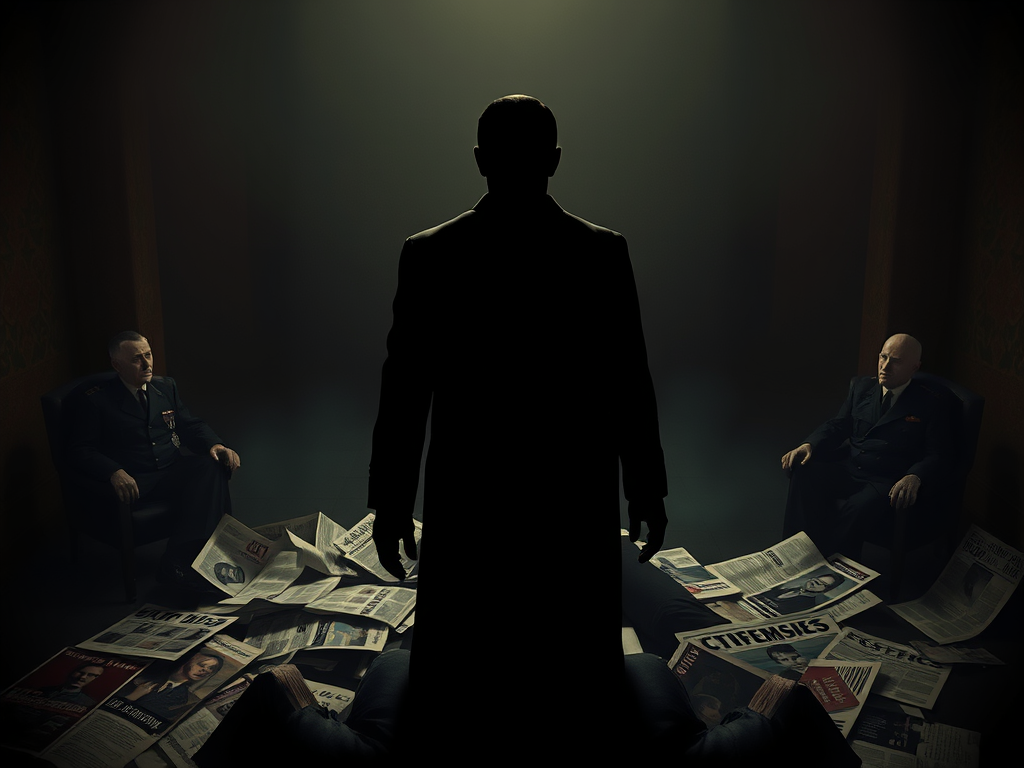
  • The Myth of Strongman Leadership and the Nature of Truth

    The Myth of Strongman Leadership and the Nature of Truth

    The Resilient Philosopher

    Why history does not repeat itself, but patterns always return

    I have learned something the hard way.
    Systems outlive men.
    Ideologies survive leaders.
    And absolute truths are often the most dangerous lies we tell ourselves.

    This is not theory for me.
    It is lived experience.

    I was born in a socialist country. I watched Fidel Castro die. I watched the headlines declare the end of an era. And then I watched reality continue exactly as before. Same system. Same oppression. Same silence dressed as stability.

    That moment taught me something no book could. Removing a man does not dismantle a system. Killing a symbol does not heal a structure. Power does not evaporate just because a face disappears.

    This is where many people get trapped. They confuse strength with immunity. They confuse fear with peace. They confuse a leader’s posture with historical exception.

    History does not repeat itself. But patterns do.

    Why absolutism always sounds comforting

    I understand why people are drawn to absolute truths. I grew up being told that Jehovah’s Witnesses had the truth. Not a truth. The truth. Complete. Final. Unquestionable.

    When you are raised inside a closed truth system, certainty feels like safety. Questions feel like danger. Doubt feels like betrayal. Authority feels righteous simply because it claims moral clarity.

    Leaving that world permanently reshaped how I see ideology.

    Any system that claims total moral ownership should be questioned. Any movement that insists it alone understands reality should raise alarms. Not because it is wrong in everything it says, but because absolute certainty always requires silence from dissent.

    And silence is how systems rot.

    The strongman myth and fear-based leadership

    Every generation seems to rediscover the same fantasy. The belief that one man can scare the world into order. That strength alone prevents chaos. That fear guarantees peace.

    History tells a different story.

    Fear does not eliminate conflict. It delays it. Intimidation does not end opposition. It consolidates it quietly. Strongman leadership does not prevent collapse. It often accelerates it by convincing followers that consequences no longer apply.

    Rome believed it was untouchable. Napoleon believed he was inevitable. The Soviet Union believed fear would last forever. Fidel Castro believed his revolution would die with him.

    None of them were exceptions.

    Power creates reactions. Silence creates alliances. Intimidation invites patience, not submission.

    Lived experience versus ideological certainty

    This is where lived experience matters more than slogans.

    When you have watched a system survive the death of its architect, you stop worshiping personalities. When you have lived under centralized power, you stop romanticizing authority. When you have studied history long enough, you realize that confidence is not the same as wisdom.

    I am conservative in the sense that I believe in responsibility, consequences, and restraint. I am almost anarchist in the sense that I do not trust centralized authority or ideological purity. That is not contradiction. That is balance earned through observation.

    I do not follow ideologies. I study outcomes.

    That approach often frustrates people who want immediate alignment. They want a side chosen. A banner raised. A certainty declared.

    But restraint is not indecision. It is discipline.

    Sometimes the most responsible position is to wait, observe, and judge leaders by what they do over time, not by what they promise or how loudly they posture.

    Unity without blindness

    I support this country. I support the people who serve it. I support the idea of a nation bound by shared responsibility.

    What I do not support is the idea that unity requires ideological surrender.

    True unity does not demand agreement on everything. It demands commitment to the same foundation. One flag. One nation. Shared accountability. Mutual restraint.

    History shows us that nations do not fall because of disagreement. They fall when disagreement becomes dehumanization. When loyalty replaces reflection. When fear replaces dialogue.

    Strength without unity fractures inward. Unity without critical thought collapses outward.

    Both are necessary. Neither is sufficient alone.

    Why systems matter more than symbols

    Symbols are easy to destroy. Systems are not.

    You can remove a dictator and keep the bureaucracy. You can imprison a leader and preserve the incentives. You can overthrow a regime and rebuild it under a different name.

    That is why revolutions so often disappoint. They aim at faces instead of foundations.

    History punishes those who believe they are immune to it. Every empire that thought it had finally figured it out eventually discovered it had only renamed old mistakes.

    The discipline of rejecting absolute truth

    Rejecting absolute truth does not mean rejecting truth itself. It means refusing to surrender critical thought to any institution, leader, or ideology.

    It means understanding that morality without accountability becomes tyranny. Power without reflection becomes corruption. Certainty without humility becomes dangerous.

    The moment someone claims they are beyond history is the moment history begins preparing the lesson.

    Final reflection

    I am not pessimistic. I am observant.
    I am not cynical. I am experienced.
    I am not against strength. I am against myth.

    History does not need belief. It only needs time.

    And time always reveals the same truth. Systems endure. Patterns return. And those who refuse absolute certainty are often the only ones prepared when reality refuses to cooperate with ideology.

    The Resilient Philosopher | Vision LEON LLC

    When Faith Becomes Empire: How Christianity Evolved into a Machine of Power

  • The Future of Humanity: Learning Through Servant Leadership

    The Future of Humanity: Learning Through Servant Leadership

    The Resilient Philosopher

    Introduction

    Every time I look at the past, I see the same message repeating itself. Civilizations rise, conquer, blend, collapse, and then repeat the cycle in a different form. The names and faces change, but the human mistakes stay the same. To me, this makes something very clear. The past has meaning only when we learn from it. Without that learning, we simply recycle the same failures our ancestors left unresolved.

    What fascinates me today is not just what humans were, but what we are becoming. Not through ideology or politics, but through evolution, mixing, migration, and necessity. We are slowly becoming a species that no longer fits the old categories of color, race, region, or division. The future of humanity is not found in tribes or borders. It is found in unity, diversity, and the blending of minds and lineages into something stronger than anything that existed before.

    Servant leadership sits at the center of that transformation. It teaches us that greatness is not achieved by dominating others, but by empowering others. Not by creating hierarchy, but by dissolving it. And when I look at humanity through the lens of evolutionary history, I see a single truth. The strongest version of the human species will be the version that learns to serve one another. The version that learns to blend instead of divide.

    A Look into Our Ancestral Mirror

    Many of us grew up believing that Neanderthals were stupid. Brutes. Less evolved. Inferior to Homo sapiens. Yet modern DNA research has revealed something astonishing. Europeans and Asians carry Neanderthal DNA. I carry it too. About 2 percent. Meanwhile, Africans who remained in Africa carry little to none of it. They retained the pure Homo sapiens lineage.

    This alone destroys the racist mythologies created in the last three centuries. If anyone attempted to use “purity” as a badge of superiority, modern genetics turns that argument into dust. The truth is simple. Europeans are a hybrid lineage. Africans hold the deepest and most ancient human diversity. And every single living human carries a mixture of ancient hominin species and migrations.

    Humanity is not one story. It is many stories woven into one genome. Science proved what philosophy always whispered. All of us are connected. All of us are blended. And none of us are superior.

    Civilization Was Never About Color

    Ancient Rome did not divide people by race. They divided them by culture, citizenship, and allegiance. A person from Africa, Greece, Iberia, Gaul, or the Middle East could become Roman. Their appearance did not define their worth. Their loyalty and contribution did. The Romans viewed Germanic tribes as uncivilized, not because of skin color, but because they resisted Roman law.

    Alexander the Great understood something even deeper. He unified entire regions through culture, language, and shared identity. He encouraged blending. Rome demanded that people become Roman. Alexander encouraged people to become more than they were before.

    Neither of them operated under the false modern idea of “race.” Because race did not exist. Humans created that illusion centuries later as a tool to justify power and wealth. When colonial empires needed a reason to dominate, they shaped skin color into a weapon.

    And even then, genetics still tells the truth. No civilization, no empire, and no ethnic group ever advanced on its own. Every discovery in history came from the blending of ideas and the exchange of knowledge.

    Progress is collective. Greatness is shared. And the strongest societies were always the most diverse.

    The Illusion of Purity and the Strength of Mixing

    Modern genetics reveals something that philosophers knew before science could prove it. Diversity is strength. Mixture is survival. The human species becomes stronger when lineages blend. Immune systems become wider in range. Cells adapt to more environments. Traits diversify. Vulnerabilities decrease.

    The future strongest human will not be defined by whiteness, blackness, Asianness, or indigeneity. That future human will be mixed to the point where old labels lose meaning. Skin will be a gradient. Features will be blended. Identity will be universal.

    Not because we choose unity. Because survival demands it.

    Nature always corrects what we fail to fix. If humans do not unite by choice, evolution forces unity through necessity.

    Science Is Born from Philosophy, and Philosophy Demands Questioning

    Science has never been the achievement of one ethnicity or one region. African astronomers, Middle Eastern mathematicians, Asian engineers, Indigenous agricultural scientists, European physicists, and countless unnamed thinkers across the world shaped the modern scientific community.

    We inherited a global library written by the entire human race. The core of science is not certainty. It is curiosity. Science is philosophy under discipline. Philosophy asks why. Science asks how. Together they challenge the illusions that divide us.

    There is no permanent consensus in science. Everything is true only until proven otherwise. This is not weakness. This is the strength of intellectual humility. When we refuse to question, we stop evolving. When we refuse to question, we stop leading.

    Servant Leadership as the Path Forward

    Servant leadership is the modern expression of an ancient evolutionary truth. Humanity survives when we work together. Humanity thrives when we empower others. Humanity evolves when we blend different minds into one purpose.

    Servant leadership is not about command. It is about unity. It is about dissolving hierarchy through trust, not authority. It is about listening more than speaking. It is about ensuring the wellbeing of others so the collective can rise.

    The future human species the mixed, unified, resilient version of Homo sapiens will only emerge when leadership evolves from the desire to control to the desire to serve.

    We either become one.
    Or we collapse in pieces.

    Conclusion

    The past warns us. The present reflects us. The future waits for us.

    We are living through a moment where humanity stands at a crossroads. One path is division, superiority, borders, identity wars, racial illusions, and the collapse that follows. The other path is unity, mixing, humility, questioning, scientific advancement, and the servant leadership needed to guide billions into a new era.

    If we fail now, it will not be because our ancestors failed. It will be because we ignored the lessons they left behind. Their mistakes are not meant to be repeated. They are meant to be transcended.

    We are not multiple races. We are one species with many stories. One earth with many colors. One future shaped by the blending of minds and lineages into something stronger than anything that has existed before.

    Humanity will become united when we understand that leadership is not domination, but service. Not separation, but connection. Not purity, but mixture. And not superiority, but humility.

    If there is a new human emerging, it will not be born from ideology or technology. It will be born from necessity. It will be born from unity. It will be born from evolution.

    And it will be the first true reflection of what humanity was always meant to be.


    References for Reader Exploration

    • Max Planck Institute for Evolutionary Anthropology
    • 2010 Neanderthal Genome Project, Science
    • S. Pääbo, Neanderthal Man: In Search of Lost Genomes
    • Smithsonian Human Origins Program
    • Stanford Encyclopedia of Philosophy, entries on Science and Epistemology
    • Harvard University, Implicit Bias and Human Diversity Studies
  • Fear and Dark Psychology: Manipulating Political Power

    Fear and Dark Psychology: Manipulating Political Power

    The Resilient Philosopher

    There is a reason people fall for the same patterns of manipulation over and over again. There is a reason entire nations can be persuaded to surrender their freedom without a single shot being fired. When leaders understand the shadows of the human mind, and citizens remain thirsty in a desert of misinformation, tyranny does not arrive with force. It arrives with applause.

    I have spent years studying how nations rise and fall, how dictatorships take form, and how ordinary people become obedient under the weight of collective fear. What I found is uncomfortable for many, but clarity is never supposed to comfort us. Truth is supposed to awaken us.

    When I look at figures like Hitler, Mussolini, and Fidel Castro, I see leaders who understood the psychological architecture of human vulnerability. They knew how to shape perception, how to control information, how to divide neighbors, and how to turn fear into the fuel that powers obedience. Some were strategic thinkers. Some were dark psychologists. Some were simply opportunists with enough charisma to hijack a nation’s insecurities and turn them into a weapon.

    And then there are modern leaders like Donald Trump. A man who does not operate from intellectual depth, nor from the calculated strategies of historical dictators. Instead, he stands as a reflection of narcissism elevated by a system that rewards spectacle over substance and fear over truth.

    Today, misinformation spreads faster than logic, and people become obedient even when they recognize the deception. When ignorance is fed by fear, it becomes a collective stupidity that blinds entire generations.

    This is the heart of dark psychology in politics.

    The Shadow Play of Manipulation

    Dark psychology is not about intelligence. It is about understanding the shadows of human nature. Hitler and Castro were different kinds of students. Hitler admired Mussolini not because of philosophy, but because Mussolini demonstrated how a leader could emotionally fuse nationalism, victimhood, and unity into a single psychological fire.

    Castro on the other hand mastered psychological control. He built a country where neighbors reported one another, where children grew up conditioned to protect the ideology even if it meant betraying a parent. He knew that people will conform when the cost of truth becomes too high. He perfected the art of silencing dissent by turning the population into his surveillance system. Every word, every breath, every whisper was a risk. That is how dark psychology becomes a culture.

    Trump does not operate at that level. His narcissism prevents him from understanding the emotional subtleties of control. He has tyrannical tendencies, but he lacks the psychological discipline that historical dictators wielded. His influence comes not from strategy, but from emotional resonance with societal frustrations. His power is a reflection of the nation’s anger, not his intellect.

    This is why he divides. Division protects narcissistic leadership. Unity threatens it.

    Fear as the Oldest Political Technology

    book 2

    Every generation believes it is living in the most dangerous moment in history. That is the cognitive dissonance that keeps people obedient. When someone claims that God is ending the world this year, they are using fear to validate their worldview. The same pattern repeats in politics.

    When rumors spread that a massive caravan of migrants is marching toward the United States, people feel fear. But if a hundred thousand people were walking into a sovereign nation together, that would not be immigration. That would be a declaration of war. Yet instead of questioning the logic, fear took over. That fear drove people toward leaders who promised to be strong enough to protect them.

    Fear always works because fear does not seek logic. Fear seeks comfort.

    And comfort often disguises itself as certainty, even when certainty is an illusion.

    The Mirage of Misinformation

    The most dangerous part of misinformation is not the lie itself. It is the obedience that grows out of exhaustion. When the noise becomes too loud, even those who see through the illusion become silent. They surrender just to escape the chaos.

    Ignorance does not grow by accident. Ignorance grows by design.

    When misinformation becomes the foundation of public conversation, the nation begins to split. Fear travels through families, workplaces, communities. Neighbors begin to view each other as suspects. Rumors become truth. Truth becomes offensive. And clarity becomes dangerous.

    Right now, I hear that a new government hotline may allow neighbors to report undocumented immigrants or criminal activity. This may sound like security, but it also mirrors old patterns in totalitarian systems. Stalin did it. Castro did it. Hitler used neighbors to expose dissenters. When fear becomes a civic duty, unity is destroyed.

    Governments fear unity because unity creates accountability.

    A divided people are easier to control than a united population.

    The Four Philosophers Who Warned Us

    Nietzsche once warned that when you stare into the abyss, the abyss eventually stares back. He understood how fragile the human mind becomes when faced with fear and unanswered questions. Dostoevsky understood human vulnerability in the face of oppression. And Dietrich Bonhoeffer, the theologian philosopher murdered by Hitler, stood against manipulation even when speaking truth meant his life would end.

    These three understood what I call the path of The Resilient Philosopher. Awareness is the only true defense against manipulation. To see clearly, I must look at fear without allowing it to shape my conclusions. I must challenge illusion even when others cling to it. And I must remain committed to clarity, because clarity is the essence of freedom.

    If these philosophers kept their light alive in times darker than ours, then we have no excuse to surrender ours today.

    Why We Need More Voices of Clarity

    Right now we live in a desert of misinformation. People are thirsty, but instead of seeking the oasis, they run toward the mirage that comforts their illusions. Truth is not beautiful. Truth is not soothing. Truth is water. It keeps me alive and aware. It forces me to think clearly even when the world embraces the comfort of collective ignorance.

    What we face today is not a battle between political parties. It is a battle between awareness and obedience. Between clarity and illusion. Between The Resilient Philosopher within us and the comfortable lie that demands our silence.

    The question is not whether dictators still exist. The question is whether we still have the courage to think freely.

    And I believe we do.

    Because every moment of clarity begins with one person willing to speak truth in a world full of noise.


    Call to Action

    If this reflection gave you clarity, share it with someone who is tired of fear based narratives and ready to think beyond the noise. Leadership begins when we choose awareness over obedience. Continue exploring these ideas with me at Vision LEON LLC and on The Resilient Philosopher podcast, where we challenge illusions and build a stronger foundation for personal and collective resilience.

    Peer Reviewed References

    • Arendt, H. (1951). The Origins of Totalitarianism. Harcourt.
    • Cialdini, R. (2006). Influence: The Psychology of Persuasion. Harper Business.
    • Kelman, H. C. (1973). Violence without moral restraint: Reflections on the dehumanization of victims and victimizers. Journal of Social Issues.
    • Pratkanis, A., & Aronson, E. (2000). Age of Propaganda: The Everyday Use and Abuse of Persuasion.
    • Post, J. M. (2010). Leaders and Their Followers in a Dangerous World. Cornell University Press.
    • Zimbardo, P. (2008). The Lucifer Effect. Random House.
  • Compassionate Leadership: Bridging Morality and God

    Compassionate Leadership: Bridging Morality and God

    The Resilient Philosopher

    Introduction

    There is a moment when the noise of society becomes too loud to ignore. A moment when you see contradictions everywhere, especially in the way people claim morality, claim godliness, and claim devotion. I wrote this reflection because I realized something that many avoid admitting. We live in a world where people say they follow God, yet their God changes from country to country. Their morality follows borders, not humanity. Their unity is conditional, and their compassion is selective.

    This is the comedy of godliness. And this is the God that we miss.

    The Illusion of a Universal God

    A God That Changes With Borders

    People proclaim that God is universal. Yet their behavior reveals something else. The God of one nation does not act like the God of another. The God of peace becomes the God of war when political interests demand it. The God of unity becomes silent when injustice favors the powerful. People preach that all life is sacred, yet their compassion changes as soon as a border appears.

    If God created all humans, why does human morality shrink at the sight of another flag?

    Religion Without Humanity

    Religions around the world claim to unite humanity, but each one forms its own circle. They proclaim love, but they create separation. They speak of heaven with open arms, but only if you walk through their door. They teach salvation, but only if you accept their version of truth.

    If you do not believe as they believe, you are lost.
    If you do not worship as they worship, you burn.
    If you question the doctrine, you become the enemy.

    This is not unity. This is division wrapped in holiness.

    Finding Morality Without Fear

    A Life Guided by Humanity, Not Doctrine

    I never needed religion to find morality. I never needed a God to understand the value of life. My morality did not grow from fear of hell or desire for heaven. It came from recognizing the essence of life within myself and within others. Morality begins when you understand that mistakes are not sins, they are lessons. Imperfection is not evil, it is human.

    I protect my virtues because I love being a good human.
    I cut my vices because I want a better world for my family and yours.
    I help others because we survive together.

    Not because a doctrine commands it, but because my humanity recognizes theirs.

    The Real Comedy of Godliness

    The real comedy is simple. A person without a traditional God can live closer to moral values than those who preach holiness every week. Someone who believes in energy, consciousness, and the interconnected nature of life can embody compassion more naturally than institutions built to represent it.

    The missing God has never been in a temple.
    The missing God has never been in a book.
    The missing God has always been in the way we treat each other.

    The God That Humanity Forgot

    Beyond Ritual and Borders

    The God that we miss is not the God of rituals. The God that we miss is not the God who demands worship. The God we miss is the one found in compassion, humility, and the recognition that every person deserves dignity. This God does not belong to any doctrine. This God belongs to humanity.

    This is the truth people fear.
    Because if humanity becomes the source of morality, then power loses control over the mind.

    Leadership Begins With Humanity

    The world does not need more religion. It needs more humanity. It needs leaders who live their values instead of repeating them. Leaders who serve not because a doctrine demands it, but because the world needs it.

    True leadership begins with the courage to see everyone as equal, regardless of nation, belief, or tradition.

    Conclusion

    At the end of the day, the God that we miss is found not in scripture, ritual, or tradition, but in the choices we make every day. To love. To build. To help. To speak truth. To grow. To become better human beings than we were yesterday.

    That is where morality begins. That is where leadership begins. That is where humanity begins.

    And it begins with us.

    Call to Action

    If this reflection challenged you, inspired you, or made you pause, take a moment today to practice humanity without borders. Share compassion freely. Lead silently. Serve because it is the right thing to do. And if you want to dive deeper into resilience, leadership, and the philosophy behind this message, explore my books and episodes through Vision LEON LLC and The Resilient Philosopher.

    Supporting Influence

    My reflections draw from my books Leadership Lessons from the Edge of Mental Health, Mastering the Self: The Resilient Mind Vol. 2, and The Resilient Philosopher: The Prism of Reality, where morality, leadership, and human connection rise above tribalism, dogma, and inherited illusions.

  • Reviving the Republic: Unity and Leadership in Governance

    Reviving the Republic: Unity and Leadership in Governance

    Introduction

    The experiment of the constitutional republic was never meant to glorify kings, chiefs, emperors, or dictators. It was designed to prevent them. The founding vision was clear: no individual should rise above the people they serve. Leadership was meant to be an act of service, not superiority.

    Yet as division grows and loyalty shifts from principle to personality, the foundation of the republic trembles. What began as an experiment in balanced power has become a stage where partisanship overshadows purpose and rhetoric replaces responsibility.


    The Experiment of Power

    Power, in any form, is both an illusion and a test. A king claims it by birth, an emperor by conquest, a dictator by fear, and a president by the will of the people. Yet the essence remains the same—the struggle between service and control. The difference lies not in the title, but in the intention behind it.

    The constitutional republic was humanity’s answer to this timeless struggle. It rejected the notion of superiority and replaced it with accountability. To call any president a monarch is not only inaccurate—it is an insult to the very document that defines our freedom.

    But this insult is not merely verbal. It comes from neglect, from apathy, from the silence of those who choose not to participate in shaping the destiny of their nation.


    The Silence of the Voter

    Many speak of division, but few acknowledge the silence that enables it. The voters who chose not to vote—the millions who stood aside—hold more power than they realize. Their silence becomes the stage upon which extremism performs.

    Yet within that silence lies the potential for unity. The voters who do not identify with the noise of partisan politics are the key to restoring balance. The power of the republic rests not in the extremes but in the middle—in those willing to listen, reason, and rise.


    Beyond Two Voices

    A republic cannot thrive when it is confined to two opposing ideologies. Two parties divide a nation into sides instead of citizens. True democracy flourishes only when there are multiple perspectives—when three or more major parties share the weight of governance, forcing collaboration rather than domination.

    Diversity of thought does not weaken a nation; it strengthens it. The founders never intended for politics to become a binary contest. Leadership was to be stewardship, not strategy. A republic thrives not in who governs, but in how governance represents all people.


    The Republic and the Democracy Within It

    A republic is founded upon a constitution that limits power through law. A democracy functions within that republic as the voice of the people choosing their representatives. But those representatives were never chosen to serve a party—they were chosen to serve the nation.

    When elected officials become representatives of ideology instead of the people, the republic begins to dissolve. The difference between a republic and a democracy is not found in the right to vote, but in the purpose of that vote. A democracy allows for selection; a republic ensures accountability through principle.

    When parties overshadow people, the system decays. At that moment, only two paths remain: abolish the dominance of parties or expand representation to many. The strength of a nation lies not in conformity but in the diversity of conscience, bound by one constitution.


    Principles Before Parties

    Imagine if representatives ran on their principles instead of partisan ideology. Leadership would again reflect integrity rather than allegiance. When principles guide decision-making, politics becomes a service to the people, not a contest for control.

    The health of a republic depends on the wisdom of its representatives—individuals who stand for their convictions even when those convictions are unpopular. When leaders are guided by morality and reason instead of the pursuit of victory, democracy regains its balance, and the republic reclaims its soul.


    Restoring Balance Between Federal and State Responsibility

    One of the greatest misconceptions of modern governance is that unity requires centralization. In truth, balance comes from shared responsibility. To reduce federal spending and strengthen the republic, states must reclaim their rightful role as caretakers of their residents.

    The federal government should exist not to dominate, but to protect. Its highest duty is to ensure that every state upholds the constitutional rights of its citizens. The states, in turn, must govern with accountability, compassion, and respect for those same principles.

    For example, universal healthcare can be achieved at the state level. Each state can design a system that fits the unique needs of its people while using federal funding to ensure that benefits are shared nationwide. In this way, compassion becomes policy, and equality becomes practice—not through central mandates, but through cooperative governance.

    When states come together in congress—not as factions but as partners—they create laws that reflect the diversity of the nation. The federal structure then becomes what it was always meant to be: an enforcer of justice, a guardian of liberty, and a servant to the people.

    In this balance, the republic finds stability again. The people are empowered, the states are responsible, and the federal government ensures that freedom remains equal across all boundaries.


    Leadership as Service, Not Power

    The moment a leader believes they are superior, they cease to lead. Leadership is not about control—it is about listening. The greatest leaders empower others to lead. The republic was founded upon that idea: that no single voice should dominate, and that all voices should contribute to the common good.

    Servant leadership reminds us that the highest form of power is humility. To lead is to serve. When a government forgets this, it becomes a shadow of the very tyranny it was created to resist.


    The Call to Reflection and Unity

    The division in our nation is not the result of one side’s actions but of a collective loss of memory. We have forgotten that the constitution was written not to empower leaders, but to protect citizens. We have mistaken governance for authority and politics for philosophy.

    It is time to remember that every citizen—every voice—matters. The republic depends not on those who shout the loudest, but on those who choose to listen and act with integrity. The call is not to fight one another, but to find common ground, to restore reason and purpose, and to lead ourselves before asking others to lead us.

    Unity will not come from the top. It will rise from within the people—through dialogue, reflection, and the courage to think beyond parties and pride.


    Final Reflection

    The republic was never a promise of perfection. It was a challenge—to remain human amidst power. No kings, no chiefs, no emperors, and no dictators were ever meant to rule a free people. The constitution is the bridge between authority and morality, between freedom and accountability.

    To rebuild that bridge, we must first listen. Not to those who shout for dominance, but to those who whisper of wisdom. In the quiet reflection of the people lies the rebirth of the republic.


    Quote from The Resilient Philosopher

    “The experiment of the constitutional republic was never meant to crown superior leaders, but to prevent them. No kings, chiefs, emperors, or dictators were ever to govern a free people. The division we witness today is not political—it is the slow collapse of the republic’s original constitution.”
    — D. Leon Dantes, The Resilient Philosopher: The Prism of Reality


    Closing Thought

    As a nation, we must not wait for another leader to unite us. We must lead ourselves through reflection, compassion, and truth. The republic is not lost—it is simply waiting for its people to remember why it was created.


    Written by: D. Leon Dantes
    Vision LEON LLC | The Resilient Philosopher

    logo8
  • The Angels of a Nation: A Memorial Day Reflection on Unity, Sacrifice, and Responsibility

    The Angels of a Nation: A Memorial Day Reflection on Unity, Sacrifice, and Responsibility

    By D. León Dantes | Vision LEON LLC | The Resilient Philosopher


    Introduction: Not Just a Day—A Reckoning of Gratitude

    Memorial Day is not just about waving flags or posting photos.
    It is not about political sides, sales, or social media slogans.
    It is a moment of sacred stillness—a pause to remember the cost of the freedoms we take for granted.

    Today, we honor those who gave everything. Not for recognition. Not for party. Not for applause.

    But so that the rest of us could live, speak, and think freely.


    Our Fallen Warriors Are the Angels of This Nation

    They didn’t sign up to die.
    They signed up to serve.
    To defend a Constitution that was supposed to belong to everyone, not just the powerful.

    They were fathers, daughters, sons, wives, neighbors, and friends—volunteers who believed that liberty was worth protecting with their lives.

    They did not sacrifice themselves so we could tear this country apart with hatred, division, or apathy.

    They died so we could speak our minds—even when we disagree.
    They died so we could protest, vote, love, pray—or choose not to.
    They died so we could keep the light of justice burning, even when politics tries to snuff it out.


    We Must Not Let Their Sacrifice Be Betrayed

    It is not enough to mourn them.
    We must live lives worthy of the price they paid.

    That means refusing to let the corrupt games of both political parties blind us to our shared humanity.
    That means holding leaders accountable regardless of party lines.
    That means standing up when our rights are stripped away—not just when it’s convenient for our beliefs.

    To honor the dead is to protect the living.
    And we do that by protecting the very freedoms they died for.


    Division Is the Real Enemy—Not Each Other

    The greatest threat to our nation isn’t from outside.
    It is from within: the propaganda, the fear-mongering, the “us vs. them” thinking.

    And make no mistake—division is a weapon.
    A divided people are easy to distract. Easy to control. Easy to silence.

    But the fallen did not die for us to become weak through tribalism.
    They died for a Republic where truth and courage could still exist—even in disagreement.

    Unity does not mean uniformity.
    It means loyalty to the values that make freedom possible.
    It means remembering that we are all Americans, not enemies.


    A Memorial Day Oath: We Will Remember, We Will Rise

    So today, I invite you—not to mourn in silence—but to rise with purpose.

    Let us vow to keep the memory of our fallen brothers and sisters alive by standing up—for truth, for unity, for justice.

    Let us promise to never let political idols replace personal responsibility.

    Let us refuse to be manipulated by either side—and instead, walk as citizens with a conscience.

    To the fallen, we remember you.
    We honor you.
    We will not let your sacrifice be forgotten.

    And to the living—we have work to do.


    Final Reflection:

    A free nation is not inherited.
    It is defended—every day—by those with the courage to stand, even when it’s hard.

    This Memorial Day, I don’t just remember the fallen.
    I pledge to live in a way that proves their sacrifice mattered.

    Because that’s what makes me an American.
    That’s what makes me human.
    And that’s what makes me The Resilient Philosopher.


    🇺🇸 We are strong when united. Don’t let them divide us.

  • A Reflection on Dialogue and Division

    A Reflection on Dialogue and Division

    The Resilient Philosopher


    The Noise We Mistake for Dialogue

    In an online thread, an image comparing two controversial leaders triggered chaos. What began as humor evolved into hostility, insults, moral outrage, and emotional warfare.
    Some accused one side of corruption and hatred, others defended blindly. The few who tried to promote reason were quickly drowned by noise.

    This exchange was not unique. It is a mirror of our era, a society where disagreement has replaced dialogue and emotion has replaced reason.
    It reflects what I described in The Resilient Philosopher as the collapse of reason under emotional weight, where people scroll and shout more than they think and reflect.


    The Mirror of Division

    Every polarized debate, every insult, every meme reveals who we have become as a collective.
    We are no longer defending truth, we are defending our labels.

    As I wrote, “Ignorance has always served a purpose. It is not merely a lack of information, it is a tool used by those who fear questions.”

    Social media magnifies that fear by rewarding outrage.
    Each comment becomes an identity statement rather than an idea.
    We stop listening, and in doing so, we stop evolving.

    The result is a nation divided not by policy, but by perception.


    When Emotion Replaces Thought

    One person in that thread listed accusations, taxes, racism, and sexism, declaring “worst president in history.” Another mocked the opposition. A third compared political supporters to criminals.
    These were not arguments. They were emotional discharges, expressions of frustration and pain disguised as logic.

    In The Resilient Philosopher, I warned that “The philosopher threatens every system built on mental obedience. Today, we cancel and silence instead of debate.”

    This digital behavior reveals our collective addiction to instant validation.
    We no longer think to understand, we think to react.
    We seek allies, not answers.
    We want to win, not to learn.


    A Nation of Factions

    Somewhere along the way, “We the People” became “We the Sides.”

    We have become experts in labeling, yet amateurs at listening.
    We form tribes around algorithms instead of values.
    And the more we feed this tribal divide, the more we lose our sense of unity.

    In The Resilient Philosopher, I wrote that you cannot build a temple of integrity on the blueprints of borrowed ideology.

    This truth applies not only to individuals but to entire nations.
    If our collective ideology is built on bias, resentment, and misinformation, then our foundation is already fractured.


    The Collapse of Civil Dialogue

    Dialogue is not the same as agreement. It is the ability to coexist within disagreement.
    In the thread that sparked this reflection, most comments were not about facts, but about moral superiority. Each side believed they held the light, yet both were blinded by their own fire.

    As The Resilient Philosopher explains, “Philosophy is a daily rebellion, not for idle minds but for resilient ones.”

    Rebellion here means resisting the easy urge to insult, judge, or generalize.
    True rebellion is quiet. It is thinking deeply in an age of shallow outrage.
    It is leading with humility when others demand hostility.


    Leadership in the Age of Noise

    Leadership today is not measured by how loud one speaks, but by how deeply one listens.

    As I wrote, “Leadership is not granted by position, degree, or influence. Leadership is the echo of your presence in the lives of others, in the lingering tone of your words, your decisions, and your silence.”

    We live in an era where silence is often mistaken for weakness and volume for strength.
    Yet silence, when rooted in reflection, is the language of wisdom.
    It gives birth to empathy, and empathy gives rise to unity.

    The problem is not political. It is psychological and philosophical.
    A divided nation is the reflection of divided selves.


    Self-Reflection: The Forgotten Practice

    Before we fix the world, we must fix ourselves.
    Before we demand others to change, we must ask whether we are guided by truth or by ego.

    In The Resilient Philosopher, I wrote that every habit questioned is a revolution. Every inherited belief reexamined is a small war against inertia.

    This is what the nation needs, not more debates but more revolutions of introspection.
    We cannot legislate compassion, but we can practice it.
    We cannot impose unity, but we can embody it.


    The Role of Emotional Intelligence

    As I stated in the chapter Leadership Starts at Home, emotional intelligence begins in conversation, not at podiums but at dinner tables.
    The same applies to our democracy.
    If we cannot speak respectfully with our family or neighbor, how can we expect Congress to do so?

    It begins with small choices, to pause before replying, to seek understanding before asserting dominance, to remember that behind every opposing opinion lies a human story.


    The Responsibility of Dialogue

    Freedom of speech is not the freedom to destroy. It is the responsibility to enlighten.
    Every citizen who chooses reflection over reaction strengthens democracy itself.

    In The Resilient Philosopher, I emphasized that to lead is to serve, and to serve is to empower others to rise, even those you disagree with.

    Dialogue is not about proving superiority but creating possibility.
    To silence another person is to silence a fragment of truth that could have helped us evolve.


    A Call to Unity

    We are not enemies.
    We are the same people who pledge allegiance to the same ideals of freedom, justice, equality, and compassion.

    A nation that argues with itself must also learn to forgive itself.
    Our greatest battle is not between left and right. It is between awareness and arrogance.

    Let us return to reflection. Let us rebuild the lost art of dialogue.
    Because the future will not remember our insults, only our integrity.

    As The Resilient Philosopher reminds us, “The one who lacks words speaks the most. The ones with the most words listen. Everything in silence will be loud. Everything loud will be gone with the wind of time.”

    Let us listen, not to respond, but to rebuild.


    A Message From Vision LEON LLC

    If this reflection moved you, I invite you to continue exploring the principles of resilience, emotional intelligence, and servant leadership through The Resilient Philosopher™.

    Our mission at Vision LEON LLC is simple: to restore depth in thought, truth in dialogue, and integrity in leadership.
    Through our podcast The Resilient Philosopher™, our published works, and our leadership education platform, we strive to inspire individuals to lead with awareness and humanity.

    Every conversation matters. Every reflection changes the collective.
    Join the movement toward conscious leadership and resilient living.

  • Resilience: The Forgotten Advantage of Leadership

    Resilience: The Forgotten Advantage of Leadership

    Introduction: The DNA of Resilience

    Scientists once uncovered an extraordinary genetic connection: traces of a Native American woman’s lineage embedded within Icelandic families for more than a thousand years. This discovery revealed that long before Columbus crossed the Atlantic, a bridge between the Americas and Europe already existed—a bond carried silently through generations.

    But beyond genetics, this connection tells a greater story: that humanity has always been one. Our journeys, migrations, and survival across continents are not random events of chance—they are testaments to resilience. They remind us that progress is never born in comfort but in necessity.

    Resilience is not a modern concept. It is an ancient inheritance.


    The Nature of Human Resilience

    Throughout history, humanity has migrated out of necessity—not desire. People left lands scorched by droughts, fled conflicts, crossed oceans, and climbed mountains not because it was easy, but because survival required it. In every migration, humanity carried not just its physical presence but its consciousness, its stories, and its ability to adapt.

    This resilience shaped civilizations. It birthed languages, cultures, and innovations. It taught us to cooperate, rebuild, and redefine what home meant. From the deserts of Mesopotamia to the frozen plains of Iceland, our collective journey has been one of adaptation—proof that the mind, when aligned with purpose, can transcend any condition.

    Psychologically, this same principle applies to leadership. Resilience is not the absence of struggle; it is the art of responding to adversity with creativity and purpose. Every crisis—personal or organizational—reveals whether a leader is merely in command or truly connected to the human condition.


    Resilience as Leadership’s Greatest Asset

    Modern leadership often confuses control with direction. Many leaders seek stability, predictability, and compliance. Yet history reminds us that it is in the unpredictable moments where true leadership is revealed.

    Resilient leaders do not react—they evolve. They see necessity not as a threat but as the mother of invention. They inspire others to adapt, to rise beyond comfort, and to embrace the unknown as a source of strength.

    The resilient nature of humanity is the essence of leadership itself. It calls us to cultivate courage instead of convenience, compassion instead of dominance, and perspective instead of panic. A resilient leader transforms failure into feedback and adversity into opportunity.

    When leadership mirrors this ancient human spirit, organizations no longer fear change—they embody it.


    Servant Leadership Through Resilience

    The fourth pillar of The Resilient Philosopher states:

    “To lead is to serve, by empowering others to lead and rise above.”

    Service is not submission—it is strength. Resilient leadership begins where ego ends. It listens more than it speaks, and it acts from understanding rather than control. Just as ancient peoples migrated to preserve life, the servant leader moves beyond self-interest to preserve collective growth.

    True resilience in leadership is measured by how we elevate others during the storm, not how we celebrate during the calm. In times of uncertainty, the leader who serves becomes the anchor of clarity.

    This is the evolution of leadership humanity now requires—a leadership that reflects not authority but awareness.


    The Resilient Legacy

    The Icelandic–Native American genetic bridge is more than a scientific curiosity; it is a metaphor for human unity and endurance. It reminds us that our bloodlines have always intertwined, that resilience transcends culture, race, and geography.

    If resilience exists in our DNA, then leadership is the conscious expression of that inheritance. Every decision we make, every person we empower, and every challenge we overcome continues this ancient migration toward meaning.

    Resilience is not what keeps us alive—it is what keeps us becoming.


    Conclusion: The Call to Lead as Humanity Once Moved

    The story of humanity is not one of conquest—it is one of endurance. We have crossed deserts, oceans, and eras of darkness because our nature is to adapt, not surrender. Leadership, at its highest form, must mirror that truth.

    When leaders understand that resilience is not an external skill but an internal inheritance, they stop leading from fear and start leading from purpose.

    We were not made to survive—we were made to evolve. And in that evolution lies the forgotten advantage of leadership: to remind humanity of what it already is—resilient.


    📚 Relevant Works

    • The Resilient Philosopher: The Prism of Reality
    • Leadership Lessons from the Edge of Mental Health
    • Mastering the Self: The Resilient Mind Vol. 2

    🔗 Listen on: The Resilient Philosopher Podcast

  • The Healing Energy of Connection: How Human Touch Reconnects Us to Nature and to Each Other

    The Healing Energy of Connection: How Human Touch Reconnects Us to Nature and to Each Other

    Introduction

    From the moment we are conceived, our existence begins within the warmth of connection. Inside the womb, we are nurtured, protected, and surrounded by the rhythm of another heartbeat—our mother’s. That same energy that sustains us through birth is the same energy that continues to connect us through every act of affection we experience in life. Hugs, holding hands, and even the smallest gestures of care carry more than emotion; they transmit energy—the unspoken force that binds us to nature and to one another.

    Recent research shows that human touch can reduce stress, lower blood pressure, and release oxytocin, the hormone of trust and bonding. But beyond science lies something deeper: the essence of our shared humanity. It is the reminder that we are not isolated beings fighting for survival, but extensions of one universal rhythm that keeps the world alive.


    The Energy Within Human Connection

    Every touch carries energy. It’s not a metaphor—it’s biological, emotional, and spiritual. Studies from the University of Colorado Boulder revealed that when two people hold hands during moments of distress, their brain waves synchronize and pain diminishes. What science describes as neural resonance, philosophy sees as the spiritual merging of frequencies.

    In The Resilient Philosopher: The Prism of Reality, I wrote that “Everything can be nothing, but nothing can’t be everything.” This truth reflects the paradox of connection: when we isolate, we become nothing; when we connect, we create meaning. The moment we touch another person with empathy, we bridge the illusion of separation created by ego and fear.

    Our connection is not accidental—it is elemental. It mirrors the movement of nature, where every atom vibrates in unity, every organism depends on another, and balance exists through reciprocity.


    The Womb, the Hug, and the Healing

    Our first experience of safety is found in the womb, a sacred space of warmth and vibration. There, touch is constant—even before consciousness begins. That same energy follows us into the world through the nurturing touch of parents, the comfort of a partner, or the compassionate gesture of a friend.

    When we hug, our bodies synchronize in rhythm. Our heartbeats align, cortisol (the stress hormone) decreases, and oxytocin rises, creating calm and safety. It’s not only the body that heals—it’s the soul that remembers where it came from.

    Even the most guarded or private person—those who hide weakness behind strength—cannot escape the silent force of connection. Whether it’s through music, nature, or companionship, something will always find a way to reach them. That is the divine intelligence of the universe reminding us: you were not made to live apart from love.


    Division and Dependency

    Yet somewhere along the timeline of civilization, humanity learned how to divide itself. Political systems, religious doctrines, and social hierarchies created invisible walls that made us forget the simplicity of connection. Division became the weapon of control, and dependency became the currency of power.

    When we are divided, we are dependent on those who manipulate our fears. But when we unite, we become self-sustaining—no longer needing saviors, institutions, or systems to define our worth.

    This is where leadership and philosophy meet. True leadership is not about control; it’s about reconnection. When a leader fosters unity, they awaken the collective energy that can heal nations, communities, and families.


    The Trinity of Life and the Five Pillars

    Within the Trinity of Life—honesty, integrity, and spirituality—connection becomes the living thread. Honesty opens the heart to others, integrity keeps the connection grounded in truth, and spirituality gives it divine meaning.

    Through the Five Pillars of The Resilient Philosopher, connection emerges again as the essence of growth:

    1. Everything can be nothing, but nothing can’t be everything.
      – Connection gives everything purpose.
    2. Every day is a great day to learn something new by removing excuses and addressing the reasons.
      – Connection teaches humility and curiosity.
    3. The Trinity of Life.
      – Connection is the balance between truth, morality, and spirit.
    4. To lead is to serve, by empowering others to lead and rise above.
      – Connection empowers through service, not authority.
    5. The one who lacks words, speaks the most.
      – Connection often exists in silence—the energy that needs no language.

    These principles remind us that healing does not happen in isolation but through shared energy.


    Leadership Through Connection

    In modern society, emotional detachment has been mistaken for strength. Men, in particular, are often taught to suppress emotion and reject vulnerability. But the truth is the opposite. It is not weakness to be healed by a woman’s touch, nor fragility to be softened by love.

    True masculine energy is balanced by the feminine—it is the unity of compassion and strength that creates equilibrium. Just as nature operates through balance between elements, so too does humanity flourish through mutual healing.

    A leader who understands this harmony leads not through dominance, but through understanding. They see every interaction as energy exchange and every team as a living ecosystem that thrives on empathy and respect.


    Reflection: Returning to the Source

    The healing energy of human connection is not something to discover; it is something to remember. We are fragments of the same source, reflecting different vibrations of one consciousness. When we embrace one another—physically, emotionally, or spiritually—we remember who we are.

    Our journey through life, then, is a return to that original rhythm—the heartbeat we first heard in the womb. A place of unity, calm, and belonging.

    To heal the world, we must heal the space between us.


    Final Thought

    The next time you hold someone’s hand or share a silent hug, realize that you are part of a universal current of energy that has existed since creation itself. Connection is not merely comfort; it is communication with the divine fabric of existence.

    When we live in awareness of this truth, we no longer compete, divide, or fear. We remember that we are each other’s medicine.


    References

    • Goldstein, P., Weissman-Fogel, I., Dumas, G., & Shamay-Tsoory, S. G. (2018). Brain-to-brain coupling during handholding is associated with pain reduction. Proceedings of the National Academy of Sciences.
    • Light, K. C., Grewen, K. M., & Amico, J. A. (2005). More frequent partner hugs and higher oxytocin levels are linked to lower blood pressure and heart rate in premenopausal women. Biological Psychology.
    • Holt-Lunstad, J., et al. (2010). Social relationships and mortality risk: A meta-analytic review. PLOS Medicine.

    Book Reference

    This reflection is inspired by The Resilient Philosopher: The Prism of Reality by D. Leon Dantes, exploring the intersection between human emotion, universal energy, and spiritual leadership.

    logo8