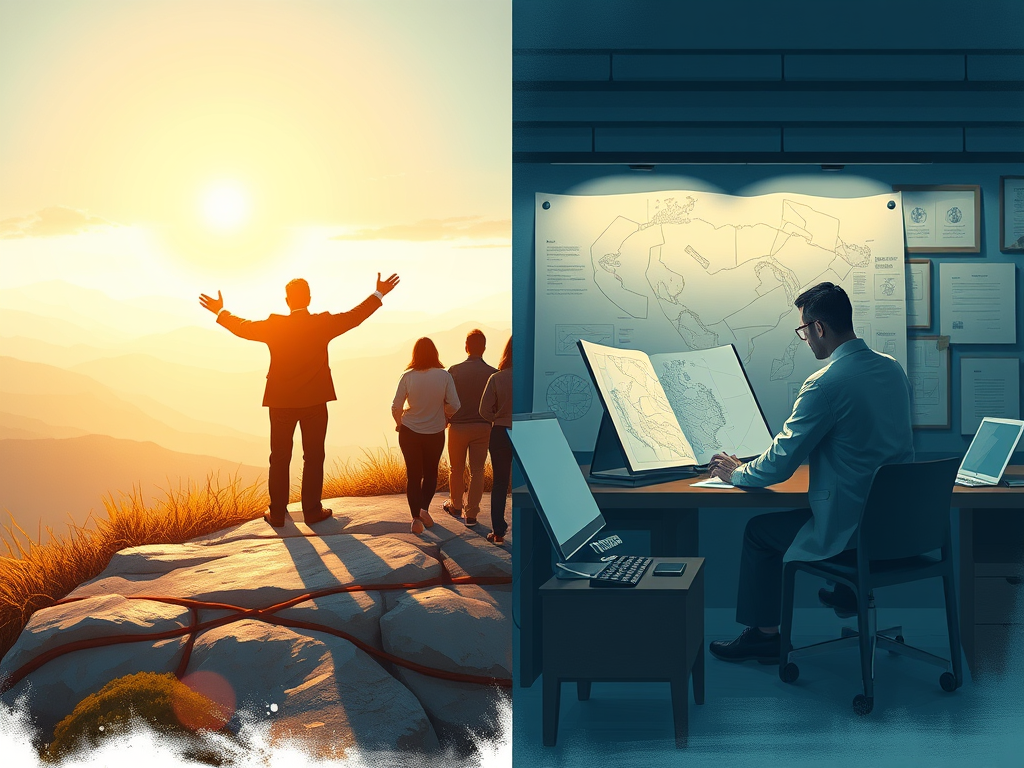
Tag: Stewardship Leadership Model

  • The Illusion of Civilization

    The Illusion of Civilization

    Series: The Loneliness of Civilization

    “We live in a civilized country with a low level of a civilized society.” – D. L. Dantes

    Introduction

    Civilization is one of those words people use with confidence, as if its meaning were obvious. We point to roads, hospitals, laws, electricity, schools, technology, and organized institutions as proof that we have advanced beyond the crude conditions of the past. In many ways, that is true. There are comforts and protections in modern society that previous generations would have considered extraordinary. Yet the existence of advancement does not automatically prove the presence of civilization in its deepest sense.

    That is the contradiction that keeps returning to my mind. A society may become more efficient, more connected, and more industrially capable, while still failing to become more humane. It may generate enormous wealth and still leave many people struggling to live with dignity. It may defend freedom in language while organizing life in ways that keep people trapped between exhaustion and dependency. That is why I call it an illusion. We have become skilled at displaying the outer signs of civilization, while often neglecting the moral substance that should justify the name.

    The Outer Signs of Progress

    There is no wisdom in pretending that modern life offers no benefits. Medicine has saved lives that would have been lost in another age. Running water, refrigeration, stable shelter, sanitation, and access to knowledge have changed the human condition in undeniable ways. Law, when functioning properly, can restrain chaos. Technology can compress time and widen access. These are real gains, and it would be dishonest to dismiss them simply because society remains deeply flawed.

    The problem begins when we confuse these gains with moral completion. A country may have powerful institutions and still be emotionally fractured. It may have advanced medicine and still be full of people who distrust knowledge, distrust one another, and distrust the very systems meant to protect them. It may have extraordinary wealth and still tolerate poverty as if it were an unavoidable law of nature. That is where the illusion reveals itself. Progress in tools is not the same as progress in wisdom. Convenience is not the same as community. Order is not the same as justice.

    A Wealthy Society Can Still Be Poor

    What troubles me most is not that civilization has failed to eliminate all suffering. No serious person expects that. What troubles me is that we live in societies with immense capacity, yet too many people remain one emergency away from collapse. Families work themselves to exhaustion just to maintain what should be basic stability. People are praised for surviving conditions that should never have become normal. A nation may celebrate its market, its innovation, and its growth, while many of those participating in that same system cannot fully participate in the very life they are helping sustain.

    That is not merely an economic contradiction. It is a moral one. If a society can produce abundance but cannot structure that abundance in a way that protects dignity, then its wealth becomes an argument against itself. A poor tribe or a struggling village may suffer because it lacks capacity. But a wealthy industrial society that leaves people insecure despite having capacity reveals something more serious. It reveals that civilization is not failing for lack of means. It is failing for lack of proportion, stewardship, and moral courage.

    “Civilization is not measured by what it can build, but by what it refuses to abandon.” – D. L. Dantes

    The Society Beneath the Structure

    The deeper issue is that a civilization cannot be judged only by the strength of its structures, but by the condition of the people living inside them. If the public world becomes a place where people feel reduced to labor units, political identities, consumption patterns, and survival calculations, then something essential has already begun to decay. A society may still function on paper while becoming inwardly hollow. It may still appear stable while quietly producing distrust, fatigue, resentment, and a growing sense that participation itself has lost meaning.

    This is where the illusion becomes dangerous. Once people accept polished dysfunction as normal, they stop asking what civilization should actually be. They lower the standard from moral health to mere comparison. As long as they believe they are better off than somewhere poorer, less developed, or more visibly unstable, they accept conditions that should still trouble them. But civilization cannot be judged by asking whether we are doing better than the worst examples. It must be judged by whether we are becoming what we are actually capable of becoming. Anything less is not maturity. It is managed stagnation.

    Closing Reflection

    The illusion of civilization is sustained by appearances. It survives because comfort can distract from contradiction, and because advancement can make people assume that moral progress naturally followed material progress. It did not. A society becomes truly civilized when its power, its wealth, and its institutions are ordered toward human dignity rather than merely organized for efficiency and survival. Until that distinction is taken seriously, civilization will remain impressive on the outside and incomplete within, and more people will continue sensing that something essential is missing beneath the polished surface.

    By D. L. Dantes, The Resilient Philosopher

    Leave a comment and share this article with others who may benefit from the reflection.

    Next wein the series: Abundance Without Dignity

  • When Solitude Calls

    When Solitude Calls

    Series: The Loneliness of Civilization

    “Not because you are lonely, not because you desire to be alone, but because you become aware how lonely we are as a society when we cannot work together.” – D. L. Dantes

    Introduction

    There are moments when the desire for solitude has nothing to do with rejecting life. It comes from feeling the pace of the world pressing too hard against the mind, the body, and the spirit. A man can love his family, value his responsibilities, and still feel drawn to the thought of walking away for a while, just to hear his own mind without the noise of society. That pull is not always sadness. At times, it is clarity asking for room to breathe.

    What troubles me is not life itself, but the condition of the society in which life is being lived. We live in a world that calls itself civilized, yet so much of that civilization feels emotionally poor. We are surrounded by people, labels, routines, obligations, and systems, yet many of us feel the absence of real human connection. In that contradiction, solitude begins to feel less like isolation and more like a search for honesty.

    The Meaning Behind Solitude

    When I think about walking away, I am not imagining hatred for my family or disdain for my responsibilities. I am thinking about the possibility of silence, of land, of movement, of waking and sleeping closer to the rhythm of life than the rhythm of a clock. There is something deeply human in wanting a life where every hour is not measured by output, debt, or the need to prove your worth to a system that rarely sees you as a whole person.

    That is why solitude must be understood carefully. Solitude is not always the language of abandonment. Sometimes it is the mind’s response to moral exhaustion. It is what appears when society feels crowded but not communal, advanced but not humane, organized but not truly caring. A person can be surrounded by others and still feel spiritually alone when the public world no longer feels built for shared dignity, but for survival, performance, and endless participation without enough meaning.

    When Civilization Feels Uncivilized

    The contradiction of modern life is that we have comforts, technologies, medicine, structure, and law, yet still struggle to build a society that feels deeply human. We are told that advancement proves civilization, but advancement without shared dignity only hides the problem behind polished surfaces. A society that can generate wealth, store vast amounts of data, and automate its systems, while still leaving people overworked, distrustful, and emotionally fragmented, cannot simply assume it has become civilized in the ways that matter most.

    This is where the loneliness becomes sharper. It is not only personal. It is collective. We are living in a society where too many people are reduced to labor, labels, politics, or profit categories. If a person falls behind, the system often blames the individual before it questions the structure that failed them. That is one of the deepest signs of a society losing touch with its own humanity. The person who longs for solitude may not be running from life. He may be reacting to a civilization that no longer feels like a society at all.

    “Civilization is not proven by how much noise it can produce, but by how much humanity it can preserve.” – D. L. Dantes

    The reason I do not simply walk away is because stewardship still has meaning in my life. My family reminds me that responsibility, care, and mutual support are real. In the home, people still carry one another in ways that society often does not. That is what gives me pause. If I give up on civilization completely, I am also giving up on the part of myself that still believes people can live with more dignity, more trust, and more shared purpose than what we often see around us now.

    Closing Reflection

    The call of solitude is not always a rejection of others. Sometimes it is a quiet judgment against a world that has forgotten how to feel like home. When society stops behaving like a society, solitude begins to feel less like escape and more like truth. The real question is not why so many people long to walk away for a while. The real question is what kind of civilization keeps making that desire feel reasonable.

    By D. L. Dantes, The Resilient Philosopher

    Next in the series: The Illusion of Civilization

    Leave a comment and share this article with others who may benefit from the reflection.

  • The Work Behind The Resilient Philosopher and the Stewardship Leadership Model

    The Work Behind The Resilient Philosopher and the Stewardship Leadership Model

    “AI is a great tool, but it can’t take the human aspect of the work and creativity.”
    D. L. Dantes

    Introduction

    The work behind The Resilient Philosopher and the Stewardship Leadership Model did not appear suddenly. It was not assembled as a brand first and a message second. The result comes from years of reflection and lived experience. It involves disciplined writing and the slow construction of a body of work. This work is meant to preserve both philosophy and leadership. It is crafted in a form that can be revisited, studied, and applied. What readers now encounter through the website, the archives, the articles, and the podcast is a lasting creation. It represents more than a temporary burst of productivity. It is the visible outcome of a longer personal commitment. This commitment involves making meaning out of experience. It also involves turning that meaning into material that may serve others.

    Over the last five years, that commitment has deepened into a sustained writing practice. In the last year and a half alone, writers have written more than 1,200 articles. These articles now form part of the archive. That archive is not merely a collection of posts. It is an evolving record of thought, observation, leadership reflection, psychological inquiry, cultural criticism, and philosophical discipline. The Resilient Philosopher and the Stewardship Leadership Model stand together. They originate from the same source. This source is a life tested by work, thought, responsibility, and the desire to build something honest enough to last.

    Years of Experience, One Body of Work

    The Resilient Philosopher is the broader philosophical body of work. It is the place where reflection, ethics, and mental endurance are examined with seriousness. Systems thinking and the human condition are also addressed directly. The Stewardship Leadership Model emerges from that same foundation. It moves more directly into leadership and organizational conduct. It focuses on responsibility and the practical demands of guiding others with clarity and discipline. These are not disconnected projects competing for attention. They are connected expressions of the same intellectual and lived path. One gives language to how life is understood. The other gives structure to how leadership should be practiced.

    That connection matters because it explains why the archive feels both personal and systemic at the same time. The writing is not built only from theory, nor only from feeling. It is built from years of observing how people think. It observes how institutions behave. It analyzes how leadership succeeds or fails. It examines how human beings carry pressure in both private and public life. The philosophy is lived. The leadership model is tested through experience. Together they form a body of work. It is shaped not by trend. It is shaped by repetition, discipline, and the refusal to separate reflection from reality.

    The Archive Is Meant to Keep Moving

    An archive is only useful if it remains alive. That is why older articles are not left behind as if their value expires after publication. Tools like Revive Social help older work continue to circulate. This way, it may still reach readers who were not there when it was first written. This matters because much of the writing is designed to endure beyond the day it was published. Reflection on leadership, resilience, and human dignity remains relevant. Insights into systems and modern life pressures do not fade over time. In many cases, the older a piece becomes, the more clearly its value can be measured.

    The archive, then, is not static storage. It is an active intellectual reservoir. Readers may arrive through a newly published article. Then, they find themselves moving backward into essays, series, and reflections written months earlier. That kind of movement is part of the purpose. The work is meant to remain discoverable, to continue speaking, and to become cumulative over time. This is one reason the archive matters so much. It allows the body of work to function as more than a timeline. It becomes a living library of thought, built slowly and kept in motion deliberately.

    “What is archived is not abandoned. It is preserved so that truth can keep traveling.”
    D. L. Dantes

    The Human Work Behind the Platform

    Family and friends have supported this work in meaningful ways. However, one person carries the editing, development, structuring, publishing, website management, and podcast development. It is important to state this reality plainly. Readers often see a functioning platform. However, it is the product of hours of unseen labor. The articles do not only require thought. They require revision, formatting, and categorization. Ensuring visual consistency and technical upkeep is essential. Podcast handling and metadata decisions are necessary. There is also continuous management of a digital presence. What appears simple when viewed from the outside is often the result of sustained solitary effort behind the scenes.

    AI is now part of that workflow. It helps reduce the weight of tasks. These tasks would otherwise consume even more time. It assists with structure, refinement, brainstorming, formatting, and the handling of multiple responsibilities that would normally require a larger team. NotebookLM generates audio overviews. These overviews help extend articles and series into another format. The podcast remains available as part of the broader archive. Yet the essential point remains unchanged. AI can help accelerate process, but it cannot replace the human center of the work. It cannot replace lived experience, conviction, or philosophical intent. It also cannot replace the creative judgment needed to decide what should be said. It cannot determine how it should be said and why it matters.

    Why Support Matters

    If readers find value in this work, there are simple but meaningful ways to help sustain it. Subscribing helps build a more direct connection with those who want to follow the ongoing development of the archive. Sharing articles with others extends the reach of the work beyond a single page visit. It helps ideas travel through communities that may benefit from them. Donations, likewise, are not treated as a casual add-on. Instead, they are viewed as a practical contribution toward keeping the platform active. This includes improving the site, strengthening the archive, and expanding what the work can become over time.

    The long-term hope is not merely to keep producing at the current pace. The goal is to eventually build enough support to bring more people into the process. Additional help would make it possible to strengthen editing, site development, media distribution, and the broader infrastructure surrounding the work. For now, much of the labor remains personal and direct. That fact does not weaken the project. It reveals its seriousness. What exists here has been built through effort, discipline, and consistency. Support from readers becomes part of helping that effort continue with greater reach. This leads to greater refinement and sustainability.

    Closing Reflection

    The Resilient Philosopher and the Stewardship Leadership Model are not side projects assembled for appearance. They are years of thought, labor, observation, writing, and lived experience brought into one place with intention. The archive exists because the work kept being done, even when the labor behind it was not always visible. If this body of work has value to the reader, then subscribing, donating, and sharing are not small acts. They are ways of helping preserve and strengthen something built to endure.

    By D. L. Dantes, The Resilient Philosopher

  • Two Bodies of Work, One Independent Calling

    Two Bodies of Work, One Independent Calling

    “AI is a great tool, but it can’t take the human aspect of the work and creativity.” – D. L. Dantes

    Introduction

    The Resilient Philosopher and the Stewardship Leadership Model were never built to chase virality, imitate influencer culture, or force a life of thought into a marketable performance. They were built from lived experience, disciplined writing, reflection, and the long habit of turning observation into work that may still be of use to others. What readers encounter in the archive today is not a sudden burst of productivity or an attempt to manufacture attention. It is the visible result of years of commitment to writing about life, leadership, human struggle, dignity, systems, and the psychological weight of the world people are forced to live in.

    Over the last five years, that commitment has grown into a serious body of work, and over the last year and a half alone, more than 1,200 articles have been written and placed into the archive. That fact matters, not as a boast, but as proof of labor, continuity, and seriousness. An archive of that size is not built by accident. It is built through repetition, sacrifice, revision, technical upkeep, and the willingness to keep going even when the work is not designed for the mainstream rhythm of quick visibility. The work exists because it kept being done, and it kept being done because the conviction behind it was stronger than the demand to simplify it into something smaller.

    The Resilient Philosopher and the Stewardship Leadership Model

    The Resilient Philosopher is the philosophical body of work shaped by the life that formed my thinking. It is where lived experience, ethics, mental health, society, family, resilience, and the broader human condition are examined with seriousness. I did not choose a narrow niche because I do not believe serious writing should always be reduced to a category that is easier to sell. Life does not live inside one lane, and a body of work that is honest about life will inevitably move across multiple subjects. That is why the archive speaks about philosophy, leadership, pain, meaning, culture, responsibility, and the inner life of the person trying to remain human in a pressured age.

    The Stewardship Leadership Model is the applied side of that same foundation. It is the part of the work aligned with leadership development, systems thinking, stewardship, and the professional path I am building toward consulting and I/O psychology. SLM is not detached from TRP. It is what happens when the philosophical foundation is brought into the language of leadership, organizational life, accountability, and practical development. One branch explains the lens through which I see life. The other applies that lens to leadership and the kind of work I intend to carry into my career. They are distinct, but they do not compete with one another. They come from the same root and belong to the same authorial vision.

    “I want the work to be judged by its substance, not by my ability to turn myself into content.” – D. L. Dantes

    Why the Work Remains Open

    My intention is to keep this work available to all. Open access is not a sign that the work lacks value. It is a sign that the mission matters more to me than exclusivity. I want readers to be able to encounter the archive, move through the ideas, and choose whether they connect more with The Resilient Philosopher or the Stewardship Leadership Model. I want the work to remain available because serious thought should still have a place where it can meet people without demanding that every doorway be locked behind payment first. The archive exists to serve, and that service matters.

    At the same time, open access does not mean the work is without cost. Writing, editing, structuring, organizing, publishing, maintaining the website, managing the archive, adapting content across formats, and sustaining the long-term direction of the platform require labor. That is why subscriptions, donations, and sharing matter. They help preserve the archive for everyone while also creating a deeper path of engagement for those who want to support the work directly. Subscribers may reach out by email for more individualized content, and that direct line matters because it allows the work to remain public while still creating a meaningful layer of reader-supported depth.

    Privacy, Anonymity, and Serious Work

    I have never built this platform around videos, reels, or face-forward promotion because I want the writing to stand on its own. Privacy and a degree of anonymity matter to serious work. They protect the work from becoming dependent on personality performance, visual familiarity, or the pressure to turn every thought into a public spectacle. I do not believe substance should have to compete with image in order to be taken seriously. The ideas should be able to stand, the writing should be able to carry its own weight, and the reader should be able to encounter the work without first being asked to consume the author as a product.

    That does not mean I reject visual or spoken formats absolutely. It means I place them where they belong. If a client wants video-based content, direct communication, or more individualized professional material, that belongs on the Stewardship Leadership Model side of the work, and it belongs there as paid labor. That is the business side, the consulting side, and the part of the archive connected to my long-term professional path. I would not mind doing that work when it is asked for and when it is valued properly. What I refuse is the idea that all serious work must be packaged through exposure simply to be considered legitimate. Some work becomes stronger when it is allowed to remain centered on the thought itself.

    The Archive, the Podcast, and the Tools Behind the Work

    The archive is not meant to function as a graveyard of old posts. It is a living body of work. Through tools such as Revive Social, older articles continue moving through social media so that the archive remains active rather than forgotten. This matters because much of the work is written to endure beyond the day it is posted. A reflection on leadership, resilience, economics, ethics, or mental health does not lose value simply because it was written months earlier. If the thought remains true, the archive should continue giving it life, and a serious archive should always be treated as something worth preserving rather than something disposable.

    The podcast exists for a similar reason. It gives voice to the work and allows readers to encounter another layer of the process. Writing is often experienced only in its finished form, but voice reveals the rougher edge of thought, the developing cadence behind the polished article, and the human presence underneath the finished page. NotebookLM audio overviews have also become useful in helping extend articles and series into another accessible form. AI helps me handle multiple tasks, organize process, and reduce some of the technical weight of independent publishing, but it does not author the work. The voice, structure, lived experience, judgment, and philosophical center remain mine. AI is support for workflow, not a substitute for the human source of authorship.

    Work, Career, and Stewardship

    I still remember a social studies teacher in the eighth grade saying that a job is what you do because you have to make a living, while a career is what you do because you enjoy and can make a living from it. There is truth in that distinction, but life has taught me that even this line is incomplete. I have met unhappy people in careers they worked hard to build, and I have met very happy people in jobs that many would overlook. That is because titles do not create worth. Position does not create dignity. Whether a person is an executive or an operator in a factory, the deeper question remains the same. Can you live with meaning, carry responsibility honestly, and become the person you want to be.

    That is where stewardship enters the picture. If a hobby becomes income, some would say you no longer have a job or a career. I would say something deeper happens. You begin living closer to the work that fits your nature, your discipline, and your purpose. Yet even then, the issue is not merely enjoyment. The issue is whether your work serves something greater than vanity. To be a steward is to recognize that what you build, what you write, what you lead, and what you offer others all carry moral weight. That is why SLM matters to my professional path, and why TRP matters to my philosophical path. One helps shape the career I am building. The other preserves the life and thought that made that career worth building at all.

    Closing Reflection

    This work was never meant for fame, virality, or the performance of influence. It was meant to stand on its own, to remain human, and to preserve a body of thought shaped by lived experience, disciplined writing, and a serious commitment to leadership and life. The Resilient Philosopher and the Stewardship Leadership Model are two branches of one independent calling, and if readers find value in that work, then subscribing, donating, and sharing are ways of helping keep it public, strengthen its future, and support the labor that allows it to continue serving others.

    By D. L. Dantes, The Resilient Philosopher

  • Navigating the Path to Influence: Leadership vs. Management

    Navigating the Path to Influence: Leadership vs. Management

    By D. Leon Dantes | Vision LEON LLC

    “Leadership envisions the destination. Management paves the road. Success demands we master both.”
    D. Leon Dantes

    In the evolving ecosystem of organizational life, few distinctions are more critical—and more misunderstood—than the difference between leadership and management. They are not synonymous, yet they are deeply intertwined. One without the other leads to chaos or stagnation. Together, they create momentum, direction, and lasting transformation.

    By weaving together insights from thinkers like Stephen Covey, Dale Carnegie, M. Scott Peck, and Eckhart Tolle, we can better understand how to cultivate both vision and structure in our personal and professional lives.


    Leadership: The Art of Vision and Influence

    Leadership begins with an internal compass. It’s about clarity, conviction, and influence without force. It’s the audacity to imagine a better reality—and the courage to invite others into it.

    In Stephen Covey’s The 7 Habits of Highly Effective People, the principle of “Begin with the end in mind” reinforces this idea. Great leaders operate from vision. They don’t merely respond—they initiate. They see the future, articulate it clearly, and mobilize others with emotional intelligence and authentic purpose.

    Dale Carnegie’s How to Win Friends and Influence People expands this conversation into the realm of relationships. Leadership, at its core, is empathic communication. It’s the ability to truly connect—genuinely, not manipulatively—to empower others toward a shared mission. Respect is the currency. Influence is the return.

    A leader doesn’t wait for permission. A leader walks into uncertainty and invites others to walk with them.


    Management: The Craft of Structure and Stability

    If leadership is the compass, management is the map. It provides the systems, timelines, and accountability needed to turn vision into action.

    Where leaders speak to hearts, managers guide the hands. They operationalize purpose. They ensure resources are aligned, policies are enforced, and goals are achieved. They’re not just maintaining order—they are sustaining momentum.

    Eckhart Tolle’s The Power of Now speaks powerfully to the mindset of an effective manager. In a world that moves fast, managers must stay grounded in the present, focused on the details that make or break performance. Mindfulness isn’t just for meditation—it’s a leadership asset, especially when decisions must be made calmly and swiftly.


    The Synergy: Leadership with Management

    The most effective professionals blend both qualities. They dream, and they deliver. They inspire, and they implement. They speak vision, and they structure reality.

    This synthesis is echoed in M. Scott Peck’s The Road Less Traveled, where discipline and purpose walk hand in hand. True influence doesn’t reside in titles or strategy alone. It lives in the ability to move people while moving forward.

    A leader who lacks management will burn out or burn bridges. A manager who lacks leadership will stall or settle. We must be both bold and balanced—guided by principle, grounded in practice.


    Final Reflection

    Leadership and management are not opposing forces—they are complementary disciplines. One empowers people to believe in what’s possible. The other organizes efforts to make that possibility real.

    If we seek to lead with impact and manage with excellence, we must draw from the best of both worlds. Read widely. Reflect deeply. And remember:

    “The leader holds the vision. The manager builds the bridge. The wise become both.”
    D. Leon Dantes


    📚 Recommended Reading

    • The 7 Habits of Highly Effective People – Stephen R. Covey
    • How to Win Friends and Influence People – Dale Carnegie
    • The Road Less Traveled – M. Scott Peck
    • The Power of Now – Eckhart Tolle