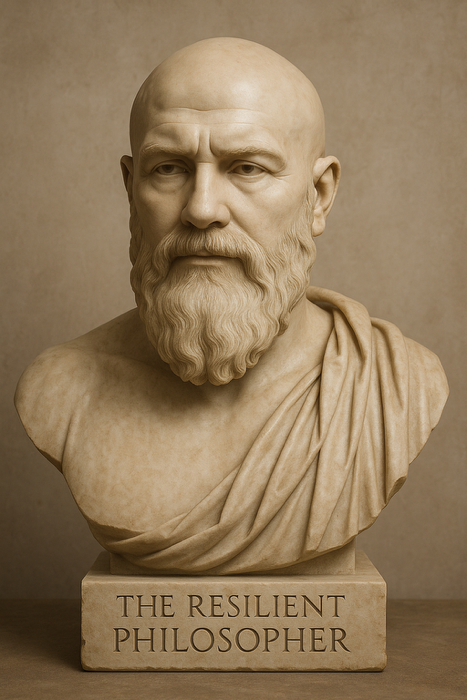
Series: When Collapse Becomes a Business Model: When the Brand Becomes the Leader
“A company becomes vulnerable when recognition is mistaken for leadership.” D. L. Dantes
Introduction
A brand can help a company grow, but a brand cannot lead. It can attract attention, create loyalty, simplify a message, and give people something familiar to trust. That is useful when the brand serves the work, but dangerous when the work begins serving the brand.
The danger begins when recognition is mistaken for competence. A familiar name can make people feel safe even when the structure underneath is weakening. The company may believe it has chosen strength, but what it has really chosen is visibility. Visibility can sell the product, but it cannot replace judgment, discipline, stewardship, or restraint.
Recognition Is Not Stewardship
A company can become attached to a personality, a slogan, a style, or an image. At first, that attachment may feel energizing. People repeat the language, defend the message, and begin to identify themselves with the company’s public face. The brand becomes more than marketing. It becomes belonging.
But stewardship requires more than belonging. A steward protects what outlives them. A brand performer protects the image that benefits them. That difference matters because a company can survive disagreement, correction, and hard truth, but it cannot remain healthy when loyalty to the brand becomes more important than loyalty to the work.
The Slogan Becomes the Standard
Every company needs language. A good phrase can clarify the mission and help workers understand what the organization values. But when slogans replace standards, the company begins to lose its ability to think clearly. People stop asking whether something works and begin asking whether it sounds aligned with the brand.
That is when the brand becomes the leader. Decisions are no longer judged by safety, quality, fairness, or long-term stability. They are judged by whether they protect the image. Workers who question the direction are treated as disloyal. Managers who repeat the right language are rewarded. The company does not need to silence everyone. It only needs to make honesty feel costly.
The Fastest Message Wins
Modern companies move through speed. Internal messaging, public relations, customer response, market pressure, and reputation management can turn every decision into a performance. The faster the message moves, the easier it becomes for the company to confuse attention with truth.
That creates a dangerous rhythm. The brand announces confidence before the floor has processed the risk. The consultants refine the story before the workers finish identifying the problem. The market hears the pitch before the auditors complete the warning. When the fastest message wins, the most accurate message becomes too slow for the room.
When the Middle Grows Tired
Not everyone inside a company belongs to the loudest faction. Some workers simply want the company to function, the standards to be clear, the product to be good, and the leadership to be honest. They are not trying to win a brand war. They are trying to do the work without being dragged into the performance.
But the middle can become exhausted. When every disagreement becomes a loyalty test, reasonable people begin to withdraw. They stop speaking up because correction sounds like betrayal. They stop asking questions because the answer has already been branded. The middle does not always disappear because it was defeated. Sometimes it disappears because it becomes too exhausting to stand there.
“The middle does not always disappear because it was defeated. Sometimes it disappears because it becomes too exhausting to stand there.” D. L. Dantes
A company should never confuse the loudest voice with the clearest one. The brand may bring attention, but attention is not wisdom. The image may inspire loyalty, but loyalty without accountability becomes dangerous. When the brand becomes the leader, the company may still look powerful from the outside, but inside the structure, truth has already begun to slow down.
By D. L. Dantes, The Resilient Philosopher
Next in the series: The Board That Chose the Brand
Leave a comment and share this article with others who may benefit from the reflection.
“Leadership beyond the title is the discipline of humility. Respect is not granted by rank. It is earned through character.”
— D. L. Dantes
Leadership is often confused with visibility, and modern institutions reward appearance faster than they reward depth. A title can be assigned in a day, but trust is formed much more slowly. Teams can sense the difference between someone who carries responsibility and someone who only carries authority. That distinction becomes clear under pressure, when insecurity starts speaking louder than wisdom. The deeper question, then, is not who holds the position, but who actually strengthens the people around them.
My earliest formal lessons in leadership came through public speaking in the structured meetings of the Jehovah’s Witnesses. In that environment, preparation mattered, timing mattered, and audience response mattered. I learned early that speaking well was never only about delivering words, but about reading people, adjusting tone, and respecting attention. Those lessons followed me into professional life, where the room changed but human nature did not. Long before I had the language for stewardship, I was already learning that leadership begins when communication becomes responsibility rather than performance.
When a Title Replaces Character
Too many workplaces still confuse leadership with possession. Some leaders protect titles the way insecure people protect masks, because rank gives them borrowed importance. Others collect credit, redirect blame, and quietly train teams to remain dependent on them for clarity. What looks strong from a distance often reveals itself as fragility up close. When leadership is built on status instead of service, the organization becomes political, fearful, and smaller than it needs to be.
Current workplace data makes that failure harder to ignore. Gallup’s 2025 global data shows that only 21% of employees are engaged worldwide, while manager engagement sits at 27%, which means many of the people expected to stabilize culture are struggling themselves. The U.S. Surgeon General’s workplace well-being framework continues to emphasize that physical and psychological safety are foundational conditions, not optional extras. In other words, low trust, emotional fatigue, and disengagement are not abstract cultural concerns. They are operational signals that leadership is failing to create environments where people can think clearly, contribute honestly, and grow without fear.
Leadership Begins Within
My current work through Vision LEON LLC pushes this argument further than the old leadership vocabulary usually allows. I no longer see leadership as a ladder to climb, but as a mirror that reveals the condition of the self. If the self is fragmented, the leader will be fragmented. A leader who has not confronted ego, fear, resentment, or inner instability will eventually project those fractures onto a team. That is why self-awareness, emotional discipline, and inner clarity are not secondary traits in my philosophy, but the structure that makes ethical leadership possible.
From there, empowerment becomes something far more demanding than encouragement. It is not motivational language, and it is not corporate theater dressed up as positivity. It is the transfer of capacity from one person to another until growth becomes repeatable, independent, and no longer dependent on the leader’s constant presence. A steward teaches, explains, mentors, and distributes knowledge because hoarded knowledge is a quiet form of control. If my leadership requires my constant presence to survive, then I did not build leadership. I built dependence.
Awareness Over Obedience
This is also why my philosophy insists that awareness matters more than obedience. Obedience can produce speed, but awareness reveals reality before a system breaks under the weight of its own silence. A healthy team is not one where everyone learns to nod at the same time, but one where people can speak truth early enough for correction to still matter. The same principle applies to dignity, because people rarely detach from a system only because of workload alone. They detach when they no longer feel seen, respected, developed, or safe enough to tell the truth.
Leadership, then, is not proven by how many people depend on you emotionally, politically, or structurally. It is proven by how many people become steadier, wiser, and more capable because you led them well. That is the difference between title holding and stewardship. One produces compliance that expires when the personality leaves the room. The other produces culture that can outlive the individual because the strength was shared instead of hoarded.
The Work of a Real Leader
If this reflection speaks to you, do not ask first whether you have the perfect title to begin leading differently. Ask whether your presence increases clarity or confusion, courage or silence, responsibility or dependence. Ask whether the people around you are becoming stronger because of your example or smaller because of your insecurity. Leadership reform does not begin in corporate statements, and it does not begin in branding language. It begins in the private discipline of learning to govern the self well enough to stop misgoverning others.
Closing Reflection
Leadership beyond titles is no longer just a personal preference for me. It is an ethical necessity in a time when too many systems reward image, noise, and emotional instability. Every room eventually reveals what kind of leader is standing in it, because pressure removes performance and exposes character. The question is never whether people know your position. The question is whether your presence leaves them clearer, steadier, and more capable of carrying responsibility when you are gone.
Written by D. L. Dantes The Resilient Philosopher
References:
D. L. Dantes. Leadership Lessons from the Edge of Mental Health. Vision LEON LLC.
D. L. Dantes. The Prism of Reality. Vision LEON LLC.
Gallup. State of the Global Workplace, 2025.
U.S. Department of Health and Human Services, Office of the Surgeon General. Workplace Mental Health & Well-Being, 2025.
Vision LEON LLC. The Resilient Philosopher leadership and stewardship essays, 2025–2026.
Some truths feel like common sense until we ask why. I can accept that one plus one equals two because I can see it, count it, and hold it. But when I slow down and ask what multiplication is doing, I notice something else: one times one equals one, not because life is small, but because multiplying by one changes nothing. That is the quiet warning inside the equation, and leadership has the same hidden logic. If I keep the multiplier locked to myself, the system never expands, no matter how impressive I look while standing alone. The world can applaud the appearance of growth while the ecosystem stays dependent on one person.
This is where stewardship becomes measurable, not by revenue or rank, but by whether my presence increases the capacity of the people around me. Leadership is not only what I can build, it is what I can leave behind in others. Stewardship is what happens when my growth becomes transferable, repeatable, and independent of my ego. If my leadership requires my constant presence to survive, then I did not build leadership, I built dependence. When I understand that, I stop chasing admiration and start building capability. That is the shift from performance to stewardship, from self-centered success to ecosystem responsibility.
Define the variables once
To keep the metaphor honest, I define the variables once and I do not move them around. Let X be me, not my title, not my brand, and not my status. X is my capacity as a steward, meaning my skill, my discipline, my emotional control, my ethical clarity, my willingness to learn, and my ability to teach. X is the part of me that can carry responsibility without needing applause. If I inflate the image but neglect the capacity, then I become a public figure with private weakness, and that weakness always leaks into others. Stewardship begins with the humility to define myself by what I can reliably carry.
If X is me, then growth requires addition. X + 1 is a daily decision to improve, and the plus one is not hype, it is refinement. It is the willingness to confront my own excuses and address my own issues before I attempt to manage anyone else’s life or livelihood. It is the discipline of learning something new and applying it so tomorrow’s version of me is more capable than today’s. The plus one is also a moral decision because if I do not grow, I will eventually demand that others carry what I refused to carry in myself. That is how weak leadership becomes loud leadership, and loud leadership becomes harmful leadership.
Now the trap appears with perfect clarity. X times 1 equals X, and if I multiply by one, I stay the same in impact even if I rise in title. I can become richer, more visible, and more celebrated while creating no additional capacity in the system. This is ego leadership in its cleanest form because it grows the image while starving the ecosystem. When I measure success only by what I accumulate, I am still multiplying by one because the results remain trapped within me. The equation exposes what pride tries to hide: a leader can look large while building nothing that outlives them.
Addition is the daily ethic
The plus one mentality is not a motivational quote, it is an operational ethic. I add one when I choose to learn instead of defend, and when I seek feedback instead of worship. I add one when I repair a weakness instead of building an identity around it, and when I become accountable for the consequences of my actions. I add one when stress, pride, or fatigue tempts me to justify my behavior instead of correcting it. The plus one is how I protect people from my underdevelopment, because the greatest risk in leadership is not incompetence alone, it is unexamined incompetence with authority.
A steward does not wait for permission to grow, and a steward does not treat growth like an event. Growth becomes rhythm, like breathing, because responsibility is not seasonal and leadership does not pause when I feel tired. If I do not add to myself, I will subtract from others, even if I do not mean to, because stagnation always produces friction. When my capacity stays stagnant, my reactions increase, my patience thins, and my judgment becomes impulsive. Then leadership becomes mood-driven, and mood-driven leadership creates fear. The plus one is the discipline that keeps my authority from becoming an excuse.
This is why I treat learning as duty. All knowledge is useless until it is useful, and knowledge becomes useful when it changes behavior, improves outcomes, and strengthens others. If my learning only inflates my self-image, it is not wisdom, it is decoration. A steward refuses to decorate the self while leaving the team unprotected. The plus one is my refusal to grow privately while demanding others perform publicly. When the plus one becomes habit, I become more stable, and stability is the first gift a leader owes a team.
Multiplying by one is the ego trap
There is a version of leadership that looks like growth but behaves like containment. It is the leader who learns enough to win and then locks the ladder behind them. It is the executive who becomes indispensable by keeping knowledge scarce and by turning basic competence into a guarded secret. It is the manager who stays in control by ensuring nobody else can do what they do, because control becomes their identity. That person can rise quickly, become a star, and become untouchable in the short term. In the long term, the organization always pays for it, and the people always pay first.
When the leader is the only multiplier, the system becomes a bottleneck and the team becomes fragile. When that leader quits, gets promoted, burns out, or collapses emotionally, the organization experiences a vacuum. Work slows, conflict increases, and people scramble because the system was never built to distribute competence. Promotions become political, not because people are evil, but because the system was designed around scarcity. The team does not suffer only because one person left; the team suffers because one person hoarded what should have been shared. That is why ego leadership is not just unethical, it is structurally incompetent.
Narcissistic leadership creates fragility because it turns the organization into a pyramid balanced on a single personality. It makes the company dependent on a mood, an ego, or a single point of failure, and that is not strength. It is risk disguised as success, and it eventually collapses into resentment. The leader might call it loyalty, but the team experiences it as captivity. Stewardship exposes that behavior for what it is: a refusal to build others because building others would reduce control. A steward does the opposite, not to look humble, but to keep the ecosystem alive.
Stewardship is multiplying people, not multiplying self
Now we introduce the second variable so the metaphor becomes operational. Let N be the number of people I develop into capable leaders, not people who agree with me, not people who admire me, and not people who copy my personality. Capable leaders are people who can solve problems, train others, make sound decisions, and carry responsibility with integrity. This is where stewardship becomes measurable because my impact is not X alone. My impact becomes X times N, not because I became a hero, but because I refused to remain the center of everything. I grow my capacity daily and I grow the capacity of others intentionally, and that is how systems expand without becoming dependent on one person.
This is the compounding effect ego cannot produce. If I help ten people, that is addition, and it matters because it is immediate and real. If I teach ten people to help ten people each, that is multiplication of impact because stewardship replicates across lives. Now a hundred people are better, not because they met me, but because what I taught became transferable. I do not have to be present for it to continue, and that is the difference between leadership as performance and leadership as stewardship. A steward is not obsessed with being irreplaceable, because irreplaceable leadership is simply a polished form of control.
A steward’s goal is to become unnecessary in the best way. The system should continue without my constant intervention, and the people should grow without my constant approval. My job is to build capacity, not dependence, and to protect the organization from the fragility of hero worship. When I accept that, I stop collecting followers and start developing leaders. I stop measuring success by how many people need me and start measuring success by how many people can thrive without me. That is the moment leadership becomes stewardship, because the ecosystem no longer revolves around my personality.
Diversity in leadership is ecosystem design
When I say leadership must be diverse, I am not speaking in slogans, I am speaking in systems. Every member of a team has a function, and every function has the potential to lead within its domain. The stronger the system, the more leadership is distributed across roles, because distributed leadership reduces fragility and increases adaptability. A mature organization does not rely on one brain, it relies on many minds cooperating, correcting, and improving the machine. Diversity in leadership is what keeps decision-making close to reality, because people on different parts of the system see different problems and carry different truths.
This is why I start with the first person who comes in, not the highest title. If I want a stewardship culture, I treat the janitor like a future leader, because they might be, and I treat the entry-level employee like a future supervisor, because they might be. I invest in the quiet worker with discipline because discipline often becomes the backbone of the team. If I only invest in people who already look like leaders, I am building a mirror, not a pipeline, and the pipeline is what protects the future. The next leader can rise from the bottom up, and when it happens, that leader often understands the system more deeply than someone who only lived in executive language.
The more a future leader understands how the whole structure works, the more invested they become. They stop asking, “How do I get to the top?” and start asking, “How do I protect what we are building?” That shift is the difference between ambition and stewardship, between careerism and responsibility. A steward does not worship titles, because titles do not create competence. A steward builds capability, multiplies competence, and adds dignity to every role because every role is part of the ecosystem. When leadership is designed this way, the organization becomes resilient, not because it has one strong person, but because it has many capable people.
Practical stewardship habits that create multipliers
Stewardship is not speech, it is practice, and practice is what turns philosophy into culture. I teach what I know without making people beg for it, because knowledge hoarding is a quiet form of control. I explain decisions so others can learn to think like leaders instead of guessing like followers. I mentor with the intent that the person surpasses me, not merely serves me, because the goal is capacity, not loyalty. I build cross-training so the organization remains resilient when someone is absent, because resilience is planned, not hoped for. Then I promote those who develop others, because development is a measurable form of stewardship.
I remove narcissistic leadership from positions that require stewardship, because charisma without ethics is liability. I reward the leaders who build pipelines, not the leaders who build dependency. I model accountability when I make mistakes so the culture learns correction without fear. I treat feedback as a tool, not an attack, because defensiveness kills growth. When these habits become normal, leadership stops being a single chair and becomes a shared function across the team. The organization becomes less political, less fragile, and more humane because competence is not trapped inside one person.
Closing reflection
I do not need to be the only one who knows, the only one who can solve, or the only one who can lead. If I multiply by one, I might look successful, but the system remains small and the ecosystem remains dependent. If I add to myself daily and multiply people intentionally, the impact becomes larger than my name and stronger than my presence. The plus one is how I grow, and the multiplier is how I serve, because service is measured by what I expand in others. Stewardship is the discipline of building leaders who do not need me in order to continue.
If I want a world that changes, I stop multiplying myself and calling it leadership. I add value to my capacity, then I multiply the people I develop, because that is how an ecosystem grows without collapsing into ego. The goal is not to be remembered as the person who climbed the ladder first. The goal is to build a culture where ladders are not hoarded, where knowledge is shared, and where leadership is distributed. When leadership becomes stewardship, the organization does not fear the future because the future is already being trained. That is how plus one becomes a system, and that is how a steward leaves the world better than they found it.