Tag: Odin

  • Odin: The Resilient Philosopher’s Timeless Wisdom

    Odin: The Resilient Philosopher’s Timeless Wisdom

    The Resilient Philosopher

    If Anubis governs what must be released, Odin governs what must be endured in order to know.

    There are truths that comfort.
    There are truths that clarify.
    And there are truths that scar.

    Odin enters the human story at the moment when curiosity outweighs safety and when the pursuit of understanding demands payment.

    This is not the biography of wisdom as prestige.
    It is the biography of knowledge that costs.


    Who Odin Was Before He Became a Symbol

    Odin is not a god of ease, abundance, or reassurance.

    He is restless.
    He wanders.
    He questions.
    He sacrifices.

    Unlike rulers who inherit authority, Odin earns insight through loss. He gives an eye for vision. He hangs himself upon the world tree to drink from the well of knowledge. He accepts suffering not as punishment, but as tuition.

    This matters.

    Odin does not receive wisdom as a gift.
    He extracts it through ordeal.

    He is not the god of answers.
    He is the god of asking the question that changes everything.


    Odin as a Psychological Function

    Psychologically, Odin represents the seeker archetype pushed beyond comfort.

    He is the part of the psyche that refuses ignorance even when ignorance would be safer.
    He is the willingness to lose illusions in exchange for clarity.
    He is the acceptance that insight often arrives with grief.

    Odin appears when a person realizes that growth will require sacrifice.

    Not symbolic sacrifice.
    Actual loss.

    Reputation.
    Certainty.
    Belonging.
    Naivety.

    Odin governs the moment when the psyche chooses truth over innocence.


    Knowledge Versus Information

    Odin is often misunderstood as a collector of facts.

    This is incorrect.

    Information accumulates.
    Knowledge transforms.

    Odin seeks knowledge that changes the knower. Knowledge that rearranges identity. Knowledge that cannot be unseen.

    This is why Odin is associated with poetry, runes, madness, and prophecy. Truth, when internalized fully, destabilizes the old self.

    Odin accepts this cost.


    The Madness of Seeing Too Much

    There is a reason Odin walks the edge of madness.

    Clarity isolates.

    Once you see patterns others refuse to acknowledge, belonging becomes fragile. Once illusions fall away, returning to comfort becomes impossible.

    Odin is not insane.
    He is alone with awareness.

    This is the burden of the seeker.

    Most people abandon the path before reaching this point. Odin continues.


    The Crossover Into Christianity

    Christianity struggled deeply with Odin’s function.

    Christianity emphasizes faith, submission, and obedience. Odin emphasizes inquiry, sacrifice, and self initiated transformation.

    Yet Odin’s function survives.

    Christ in the wilderness.
    Christ questioning abandonment.
    Christ bearing knowledge of suffering.

    The difference lies in agency.

    Christianity often frames sacrifice as obedience to divine will. Odin frames sacrifice as a conscious exchange.

    You choose what you are willing to lose in order to see.

    Christian mysticism preserved fragments of Odin’s function, but institutional Christianity often discouraged it. Doubt became dangerous. Inquiry became temptation. Knowledge became pride.

    Odin remained in the shadows.


    Wisdom Without Comfort

    Odin reveals a difficult truth.

    Wisdom does not guarantee happiness.

    It offers orientation.
    It offers integrity.
    It offers coherence.

    But it removes comforting lies.

    This is why Odin is feared.

    He does not promise peace.
    He promises clarity.

    And clarity demands responsibility.


    Virtue and Vice Within the Symbol

    Integrated, Odin represents disciplined curiosity.
    Courage to confront reality.
    Willingness to sacrifice illusion.
    Leadership rooted in understanding rather than dominance.

    He governs vision that serves others rather than glorifies the self.

    Unintegrated, Odin becomes obsession.
    Isolation.
    Knowledge hoarding.
    Intellectual arrogance.
    Detachment disguised as insight.

    Seeking truth without grounding leads to fragmentation.

    Odin requires balance.


    Why Odin Comes Last

    Odin must come last.

    Without Isis, knowledge collapses the psyche.
    Without Xangô, insight lacks ethics.
    Without Athena, understanding becomes reckless.
    Without Apollo, clarity cannot be communicated.
    Without Artemis, curiosity consumes the self.
    Without Hekate, inquiry loses direction.
    Without Anubis, truth becomes fixation.

    Odin synthesizes them all.

    He is the symbol of the completed cycle.

    The one who has gathered, judged, reasoned, ordered, protected, crossed, released, and now dares to see.


    The Cost of Seeing Clearly

    Odin teaches that truth is not neutral.

    It changes how you live.
    Who you can stand beside.
    What you can tolerate.
    What you can no longer pretend not to know.

    This is the final initiation.

    Not belief.
    Not certainty.
    But responsibility.


    Closing Reflection

    Odin does not ask to be followed.

    He asks what you are willing to lose in order to see clearly.

    He does not offer salvation.
    He offers awareness.

    Humanity has always known that some truths demand sacrifice, and that the price of wisdom is never symbolic.

    When understanding came at a cost, it carried many names.

    Odin is one of the clearest.

  • The Oldest Thing I Own: A Reflection on Spirituality and Ancestral Leadership

    The Oldest Thing I Own: A Reflection on Spirituality and Ancestral Leadership

    Daily writing prompt
    What’s the oldest thing you own that you still use daily?

    By D. León Dantes
    Vision LEON LLC | The Resilient Philosopher

    “The oldest thing I own can’t be seen, but it leads me through every storm.”


    🕊️ Introduction: A Leadership Rooted in Spirit

    When people ask, “What’s the oldest thing you still use every day?”, they expect an object. A tool. A book. Maybe a watch or a family heirloom.

    But the oldest thing I use every day isn’t made of wood, metal, or stone.

    It’s my relationship with God.

    He has walked with me through the valley of shadows.
    He has stood beside me when my voice trembled.
    He has been the silent companion in my most desperate reflections.

    I don’t carry Him in my pocket—I carry Him in my spirit.


    🔱 The Ancestral Thread of Faith

    This faith wasn’t taught by institutions.
    It was passed down through blood. Through memory. Through genetic reverence.

    I wear Him on my arm and around my neck, not as decoration, but as declaration.
    He is Odin to some, Shango to others.
    Some know Him as Wednesday. Others as Lord.

    But to me, He is the source of my strength, my wisdom, and my Resilient Philosophy.

    He is the reason I lead. The force behind my voice.
    He is both the question and the answer.


    🧭 What It Means to Truly Own Something

    Most people think ownership is about possession. But the truest ownership is embodiment.

    This ancient relationship with the divine isn’t something I hold—it is something that holds me.

    It shaped my philosophy of leadership.
    It sustains my mental resilience.
    And it reminds me daily that power without reverence becomes tyranny.

    That’s why in The Resilient Philosopher, I teach that real leadership starts with spiritual identity—not with a title.


    💭 Final Reflection: What Do You Carry?

    The oldest thing I own…

    • Was born before my name.
    • Can’t be bought or sold.
    • Can’t be stolen or replicated.

    It is the relationship between myself and my God.
    And that relationship has guided my hands, my choices, and my mission.

    Before I speak—I listen.
    Before I lead—I kneel.
    Before I act—I remember who walks beside me.

    This is the core of my leadership.
    And it’s the most ancient tool I use, every single day.


    📌 Call to Action:

    🔗 Listen to the podcast: The Resilient Philosopher on Spotify
    🧠 Explore more reflections at: www.VisionLEON.com
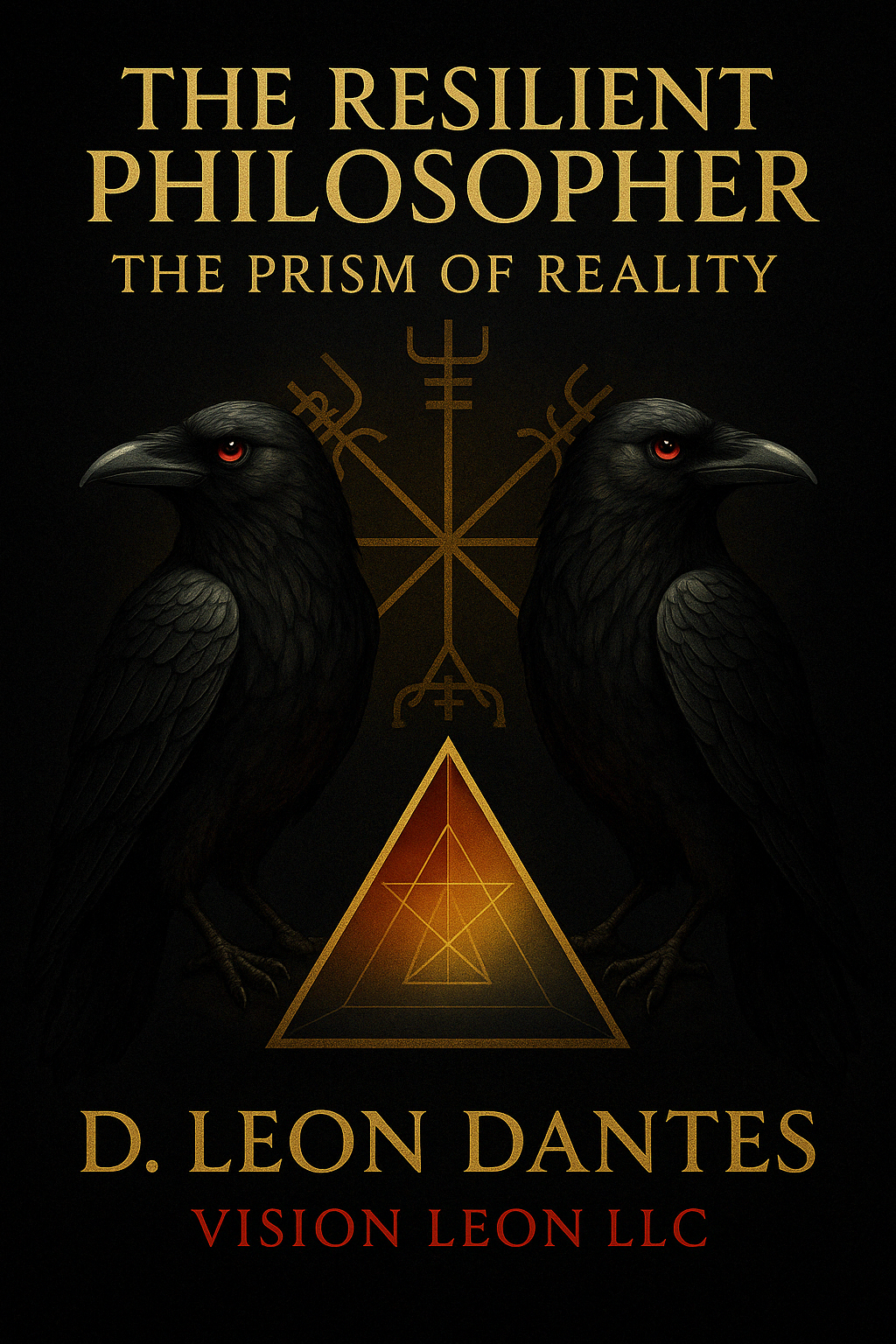
    📚 Read the books: Leadership Lessons from the Edge of Mental Health | The Resilient Philosopher: The Prism of Reality
    📩 Join the conversation: Share this post and tag someone who leads from their soul.

  • A Leadership Rooted in Spirit

    A Leadership Rooted in Spirit

    By D. León Dantes | Vision LEON LLC | The Resilient Philosopher

    “Everything can be or have nothing. But nothing can’t be or have everything.”
    —The Resilient Philosopher


    Introduction: A Leadership Rooted in Spirit

    When people ask, “What’s the oldest thing you still use every day?”, they expect an object. A tool. A book. Maybe a watch or a family heirloom.

    But the oldest thing I use every day isn’t made of wood, metal, or stone.

    It’s my relationship with God.

    He has walked with me through the valley of shadows.
    He has stood beside me when my voice trembled.
    He has been the silent companion in my most desperate reflections.

    I don’t carry Him in my pocket—I carry Him in my spirit.

    And in that spirit, I found a truth that guides all of my philosophy:
    Everything can exist in form or emptiness. But nothingness can never contain the fullness of being.
    That is why I lead through presence, not position. Through meaning, not metrics.


    🔱 The Ancestral Thread of Faith

    This faith wasn’t taught by institutions.
    It was passed down through blood. Through memory. Through genetic reverence.

    I wear Him on my arm and around my neck, not as decoration, but as declaration.
    He is Odin to some, Shango to others.
    Some know Him as Wednesday. Others as Lord.

    But to me, He is the source of my strength, my wisdom, and my Resilient Philosophy.

    He is the reason I lead. The force behind my voice.
    He is both the question and the answer.

    In the void of confusion, faith gave form to my clarity.
    Even when I owned nothing, I still carried everything that mattered—my will, my values, and my spiritual resolve.


    🧭 What It Means to Truly Own Something

    Most people think ownership is about possession. But the truest ownership is embodiment.

    This ancient relationship with the divine isn’t something I hold—it is something that holds me.

    It shaped my philosophy of leadership.
    It sustains my mental resilience.
    And it reminds me daily that power without reverence becomes tyranny.

    Because titles can be taken. Money can be lost. Applause can fade.
    But what you are—what you embody—cannot be stolen by the world.

    This is why I teach that nothing is a dangerous illusion when you forget what you already carry.


    💭 Final Reflection: What Do You Carry?

    The oldest thing I own…

    Was born before my name.
    Can’t be bought or sold.
    Can’t be stolen or replicated.

    It is the relationship between myself and my God.
    And that relationship has guided my hands, my choices, and my mission.

    Before I speak—I listen.
    Before I lead—I kneel.
    Before I act—I remember who walks beside me.

    This is the core of my leadership.
    And it’s the most ancient tool I use, every single day.

    Because even when I had nothing, I was already everything I needed to become.


    🧭 Integrity Before Honesty

    No human being can be 100% honest—not because they are deceitful, but because full honesty requires full self-awareness, and no one is fully aware at all times. Honesty is not a switch. It is a compass. And like all compasses, it wobbles near interference.

    That’s why before anyone claims to be honest, they must first align with their integrity. Integrity is not about saying everything—it’s about saying only what aligns with your core beliefs, even when silence would be more convenient. It is about honoring your principles, not your impulses.

    True honesty is not measured by brutal transparency, but by the consistency between what you believe, what you say, and what you do—especially when no one is watching.

    To lead, to grow, and to serve, a person must accept this:
    You will never be fully honest, but you can be fully aligned.
    Let integrity be your spine, and honesty your voice.
    Let your resolutions be your sanctuary, and your beliefs your guide.
    Because honesty without integrity is just noise.
    But when united, they form the foundation of authentic leadership.


    🔺 The Trinity of Leadership: Spirituality, Honesty, and Integrity

    Spirituality, honesty, and integrity form a trinity of life.

    They are not just traits. They are pillars—foundational truths that separate us from the artificial mind of machines and the instinctual drives of animals.

    Spirituality gives us purpose beyond survival.
    Honesty keeps us anchored in reality.
    Integrity ensures our actions mirror our essence.

    When this trinity becomes whole—when a person aligns these three in perfect balance—the self becomes undeniable.

    You no longer need to demand respect. You radiate it.
    You no longer chase followers. People choose to follow you.
    Because balance is magnetic. And in a world ruled by chaos and artificial noise, your spiritual equilibrium becomes revolutionary leadership.

    As I’ve always taught in my philosophy:

    “Everything can be or have nothing. But nothing can’t be or have everything.”

    This trinity—spirituality, honesty, and integrity—is how you embody everything that matters, even when you seem to have nothing left.


    📌 Author & Resources

    D. León Dantes
    Author | Philosopher | Leadership Coach

    📘 Leadership Lessons from the Edge of Mental Health Buy on Amazon
    📘 The Resilient Philosopher: The Prism of Reality Buy on Amazon
    📘 Mastering the Self: The Resilient Mind Vol. 2 Buy on Amazon

    🎙️ Podcast: The Resilient Philosopher Listen on Spotify
    📰 Chronicle: Subscribe on Substack
    📬 LinkedIn: Follow The Resilient Philosopher Newsletter
    🌐 Website: www.visionleon.com
    📚 Author Page: Amazon Author Central