The Resilient Philosopher
Public discourse often collapses authority into a single shape. Police, federal agents, immigration enforcement, and even the military are spoken about as if they are interchangeable. They are not. The distinction between them matters, not politically, but ethically and constitutionally.
When those distinctions blur, power stops being restrained by purpose. It becomes defined by convenience.
To understand what is happening, we must first define what these institutions actually are, not what the noise suggests they are.
What Police Are Meant to Be
Police are municipal or state agents of civil order. Their authority is local, geographically limited, and grounded in community presence.
They exist to respond after laws are broken, to investigate, to maintain order, and ideally to de escalate conflict. Their legitimacy depends on visibility, identification, and proximity to the people they serve. Police operate among the population, not above it.
They are constrained by:
- local and state law
- constitutional protections
- judicial oversight
- community accountability
When policing fails, it usually fails through escalation, fear, or loss of restraint. But structurally, police are meant to function within a civic relationship. That relationship is imperfect, but it is foundational.
What Federal Agents Are
Federal agents are not community based. They are mission based.
Their authority comes from Congress and is limited to specific federal statutes. They investigate crimes that cross state lines, involve federal property, or implicate national interests. Their jurisdiction is national, but their mandate is narrow.
Federal agents are insulated from local politics, but they are still bound by:
- federal law
- judicial review
- defined scopes of investigation
- identification and chain of command
They are not general enforcers. They are specialists.
This distinction matters because federal power was intentionally designed to be limited, not omnipresent.
What ICE Actually Is
Immigration and Customs Enforcement occupies a fundamentally different space.
ICE does not primarily enforce criminal law. Immigration violations are civil matters. Yet ICE operates with tactics, equipment, and authority that resemble criminal enforcement.
ICE arrests.
ICE detains.
ICE uses force.
ICE conducts operations that resemble raids.
But the underlying violations are often administrative, not criminal.
This creates a structural contradiction.
Civil law is being enforced with criminal force.
Status Versus Behavior
Police and federal agents respond to behavior. Something was done. A law was broken. Evidence exists. Process follows.
ICE enforcement centers on status.
Who someone is allowed to be.
Where someone is permitted to exist.
What documentation they possess.
This shift from behavior to identity changes the ethical landscape entirely.
When enforcement is based on behavior, restraint is easier to justify. When enforcement is based on status, restraint becomes inconvenient.
That is why identity based enforcement demands the highest ethical safeguards. Instead, it has been granted some of the loosest.
Anonymity and the Collapse of Accountability
Visibility is not cosmetic. It is ethical.
When an agent carries authority, a weapon, and legal protection, identification is not optional. It is the mechanism by which accountability remains possible.
Masked enforcement does not protect democracy. It protects detachment.
When power is anonymous:
- fear replaces legitimacy
- compliance replaces consent
- accountability is deferred to internal review
- abuse becomes harder to trace
A system that requires anonymity to function is already signaling a lack of ethical confidence.
Militarized Appearance Without Military Constraint
Armed forces operate under strict legal and ethical codes. They are identifiable. Their ranks are visible. Their authority is constrained by rules of engagement and military law.
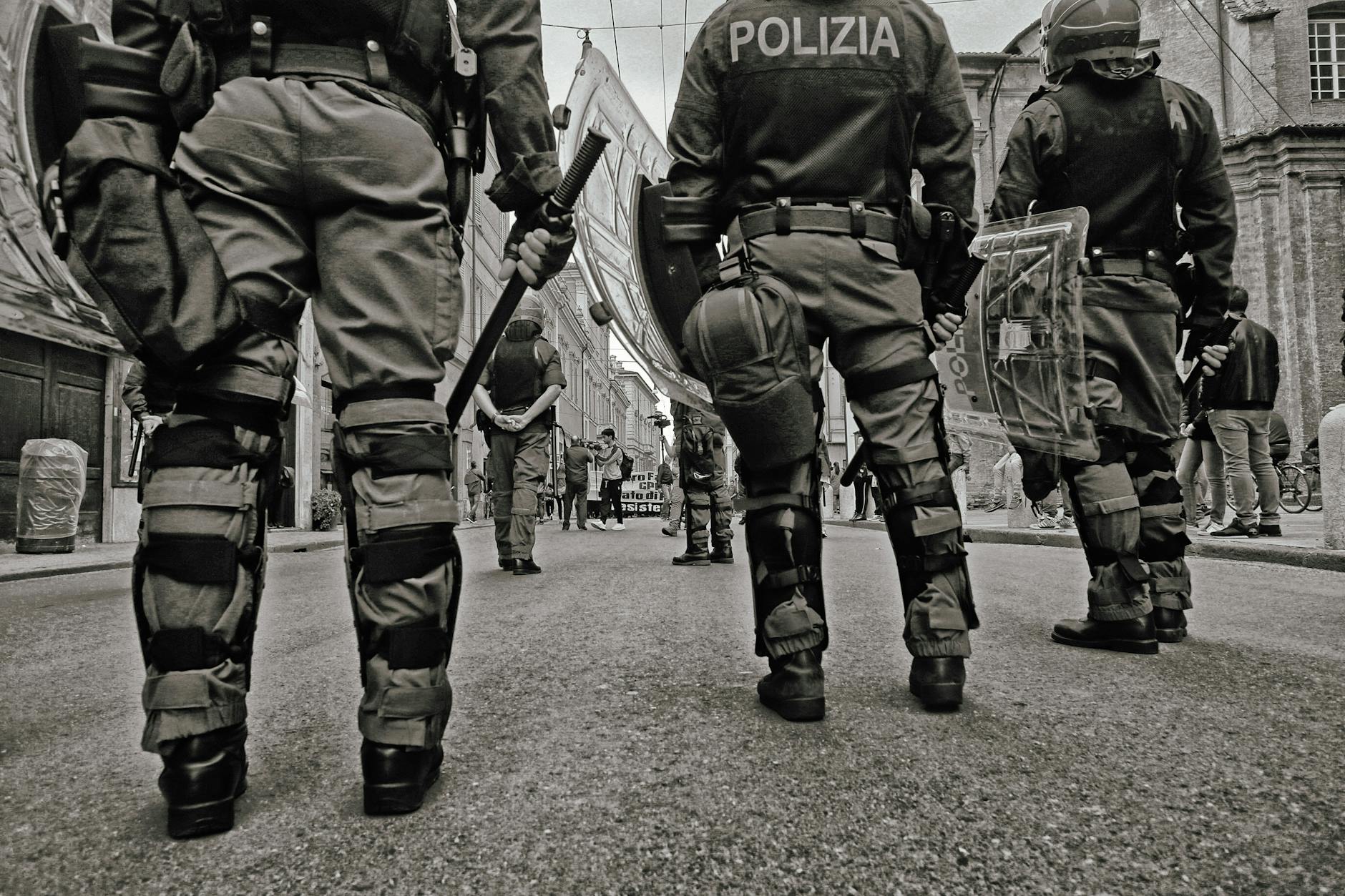
When civilian agencies adopt military aesthetics without military accountability, the result is performative power without restraint.
This is not security. It is psychological conditioning.
It trains the public to accept war posture in civilian space while stripping away the safeguards that normally accompany it.
It also trains the agent to see the environment as hostile rather than civic.
That shift is subtle, but it is corrosive.
Why Recruitment Standards Matter
It is difficult to enter many federal agencies because those roles require discretion, judgment, and ethical interpretation.
It is comparatively easier to enter ICE and border enforcement roles because those positions prioritize execution over interpretation.
This is not an insult to individuals. It is a structural reality.
When systems need rapid expansion, they select for compliance and endurance, not philosophical restraint. Reliability becomes more valuable than reflection.
History shows that when obedience is prioritized over judgment, ethical drift follows.
The Constitutional Tension
The Constitution was designed to prevent concentrated power. Civil enforcement was never meant to bypass criminal safeguards by redefining the nature of the offense.
When civil violations are enforced through detention, force, and fear, constitutional protections are not violated outright. They are eroded through reinterpretation.
That erosion is more dangerous than open violation because it becomes precedent.
Exceptional authority does not remain exceptional.
The Ethical Question That Remains
This is not about whether enforcement is legal. It is about whether it is legitimate.
Legitimacy requires:
- proportionality
- transparency
- accountability
- moral symmetry
When enforcement is detached from community, shielded from visibility, and justified through identity rather than behavior, legitimacy collapses quietly.
What emerges is authority without accountability.
And authority without accountability does not need to be cruel to become dangerous. It only needs to become normal.
