Tag: meaning

  • Exploring the Many Faces of God: A Philosophical Journey

    Exploring the Many Faces of God: A Philosophical Journey

    Series: The Animal That Needed Heaven: What Are We Calling God?

    “Maybe the question is not only whether God exists, but what humanity has been naming when it says God.”
    — D. L. Dantes

    Introduction

    After humanity woke up inside existence, it began asking questions that instinct could not answer. Where did we come from? Why do we suffer? Why do we die? What happens to those we love? Is there something beyond the visible world, or are we only naming our fear of the unknown?

    The word God carries all of those questions at once. For some, God is the Creator. For others, God is Father, judge, spirit, source, energy, nature, consciousness, moral order, or mystery itself. Maybe the disagreement begins because humans often use the same word while pointing toward different meanings.

    The Name Behind the Mystery

    When people say God, they may not always mean the same thing. One person may imagine a personal being who listens, judges, forgives, and intervenes. Another may imagine the force that holds reality together. Another may see God as the source of morality, the ground of existence, or the name we give to what cannot be fully explained.

    This doesn’t make the word meaningless. It makes the word heavy. God becomes the place where human language reaches its limit. The mind tries to name what it cannot hold, and the name becomes sacred because it carries both wonder and fear.

    God, Energy, and Existence

    There is a tempting thought that God may be like energy: unable to be created or destroyed, only present in different forms. That idea can be philosophically powerful, but it should be handled carefully. Science can describe energy, matter, time, and transformation, but science doesn’t automatically tell us whether those realities are divine.

    Still, the thought remains useful. If God is not a figure above the clouds, then perhaps God is closer to the reality beneath all realities. Perhaps God is not somewhere else, but the name humans give to the source, order, or mystery that allows anything to exist at all.

    The Problem of Ownership

    The danger begins when humans stop asking what God means and start claiming ownership over God. A mystery becomes a doctrine. A doctrine becomes an institution. An institution becomes an identity. Then the sacred, which may have begun as wonder, becomes another human boundary.

    Maybe this is why religions divide even when they speak of unity. The problem may not be that people believe in God. The problem is that people often want God to confirm their group, their language, their authority, their wounds, and their version of the world.

    The Sacred Responsibility of Earth

    If God exists, then life on earth should matter. If God doesn’t exist, life on earth still matters because this is the only realm we know directly. Either way, the responsibility returns to how we live with one another while we are here.

    That may be the most honest place to begin. Before arguing about heaven, hell, spirits, dimensions, or final judgment, we can ask whether we have been kind, whether we have loved, whether we have helped, whether we have reduced suffering, and whether we have contributed to the survival and dignity of humanity.

    Closing Reflection

    Maybe God is the Creator. Maybe God is the source. Maybe God is nature, energy, consciousness, moral order, or the mystery behind existence. Maybe humanity has been using one word to reach toward many possibilities at once. But if the idea of God does anything worthy, it should not make us careless with earth or cruel to one another. It should remind us that existence is already sacred enough to demand humility, compassion, and responsibility.

    By D. L. Dantes, The Resilient Philosopher

    End of series: The Animal That Needed Heaven

    Leave a comment and share this article with others who may benefit from the reflection.

  • The Paradox of Unity: How Religion Divides Humanity

    The Paradox of Unity: How Religion Divides Humanity

    Series: The Animal That Needed Heaven: The God Humans Divided

    “The problem may not be that humanity believed in God. The problem is that humanity kept trying to own God.”
    — D. L. Dantes

    Introduction

    Here is the paradox. If God is understood as unity, truth, love, and wholeness, then why do religions divide so easily? Why do people who claim to worship the same God separate into factions, doctrines, denominations, traditions, and institutions that often compete with one another?

    Maybe the division doesn’t begin with God. Maybe it begins with the human need to define, protect, possess, and defend meaning. The sacred may begin as a search for unity, but once human beings organize it into identity, authority, language, ritual, and doctrine, it can become another boundary between one group and another.

    The Sacred and the Group

    Religion rarely remains only private belief. It becomes a group experience. People gather, pray, sing, mourn, celebrate, confess, teach, and pass stories from one generation to the next. That communal structure can be beautiful because it gives people belonging, memory, and shared responsibility.

    But the same group that gives comfort can also create separation. Once a community believes it has the right interpretation of God, another community’s interpretation can become a threat. The question changes from “How do we live closer to the sacred?” to “Who has the authority to define the sacred?”

    When God Becomes Identity

    Human beings don’t only believe ideas. We attach ourselves to them. A belief can become family history, national identity, cultural memory, political loyalty, moral superiority, or ancestral inheritance. When that happens, questioning the belief feels like attacking the person.

    This is where religion can become divided within itself. The believer may begin with reverence, but the institution often learns to protect its name, symbols, rituals, and hierarchy. Then God becomes less of a mystery to approach and more of a possession to defend.

    The Paradox of One God

    Monotheism carries a powerful idea: there is one highest source, one ultimate reality, one supreme being above all other powers. In theory, that should unify people. If there is one God, then humanity should be able to gather under one sacred truth.

    But in practice, one God can lead to many interpretations. If God is infinite and humans are limited, then every human explanation of God is also limited. The problem begins when limited people treat their interpretation as unlimited truth. Then unity becomes division in the name of unity.

    Ancestry and Continuity

    This is why ancestral traditions are so interesting. They often approach the sacred through continuity rather than escape. The dead are not always imagined as gone into a distant heaven. They remain connected through memory, bloodline, land, culture, warning, wisdom, and responsibility.

    Even if someone doesn’t believe ancestors are spiritually present, the moral idea still matters. We are shaped by those who came before us. We inherit their language, wounds, courage, mistakes, and unfinished work. In that sense, ancestry reminds us that spirituality doesn’t always have to divide people from earth. It can reconnect people to time, memory, and obligation.

    Closing Reflection

    Maybe humanity divided God because humanity first divided itself. We separated by tribe, land, language, family, doctrine, wound, and fear, then carried those divisions into the sacred. The tragedy is not that people sought God. The tragedy is that people often turned God into a flag, a wall, a title, or a weapon. If God means unity, then the test of belief may not be how loudly we defend God, but how deeply we learn to live with one another.

    By D. L. Dantes, The Resilient Philosopher

    Next in the series: What Are We Calling God?

    Leave a comment and share this article with others who may benefit from the reflection.

  • When Heaven Becomes Authority: The Power and Control of Faith

    When Heaven Becomes Authority: The Power and Control of Faith

    Series: The Animal That Needed Heaven: When Heaven Became Authority

    “When heaven becomes the highest hope and hell becomes the deepest fear, whoever claims authority over both can shape the human imagination.”
    — D. L. Dantes

    Introduction

    Once humanity imagined heaven, the next question became unavoidable: who understands how to get there? That question may be where religion began to move from personal belief into institutional authority. The sacred was no longer only a mystery to contemplate. It became something interpreted, guarded, taught, ritualized, and sometimes controlled by those who claimed to understand the invisible better than ordinary people.

    This is not a rejection of faith, worship, teaching, or spiritual community. Human beings often need guidance, tradition, wisdom, and shared rituals. The danger begins when guidance becomes gatekeeping, when teaching becomes control, and when the institution begins to stand where the sacred was supposed to be.

    The Power of the Unknown

    The unknown has always carried power over the human mind. Death, suffering, guilt, storms, sickness, dreams, and grief all create questions that human beings struggle to answer alone. When someone claims to understand what the unseen realm wants, fears, allows, forbids, or demands, that person immediately gains influence.

    This doesn’t mean every religious leader is corrupt. There have always been sincere teachers, humble servants, poor communities, and leaders who live close to the suffering of the people. But the structure itself carries risk. When one person or institution becomes the interpreter of heaven, hell, sin, forgiveness, and salvation, the sacred can become dependent on human permission.

    When Fear Becomes Currency

    Fear is one of the easiest emotions to organize. If people fear death, judgment, punishment, or separation from God, they will naturally seek reassurance. That reassurance may come through prayer, confession, ritual, sacrifice, doctrine, or belonging. In its healthiest form, religion can help people carry fear without being destroyed by it.

    But fear can also become currency. If heaven is presented as the highest reward and hell as the deepest punishment, then the institution that claims authority over both can become more powerful than the conscience of the individual. The soul becomes anxious, and anxious people are easier to direct.

    The Mediator Problem

    This is where many religions enter the same loop. A sacred figure appears, a revelation is received, a path is taught, and eventually an institution forms around the path. Over time, the institution may begin protecting itself with the same intensity that it once used to protect the message.

    In Christianity, this problem becomes especially important because Christ is understood as mediator, high priest, sacrifice, and head. If Christ is the mediator, then no human being should become a replacement mediator. Teachers may teach, elders may guide, and communities may gather, but no person should become the gatekeeper between the soul and God.

    The Institution and the Soul

    The institution is not always evil. It can preserve memory, organize service, teach moral responsibility, and carry traditions across generations. Without institutions, many communities lose continuity. Without shared practices, many beliefs become isolated, unstable, or easily forgotten.

    The danger is not institution itself. The danger is when the institution forgets its role. A healthy religious structure should point beyond itself. An unhealthy one begins to point back to itself, making people believe that access to God, meaning, forgiveness, or belonging must pass through its approval.

    Closing Reflection

    Maybe heaven became authority when human beings placed too much trust in those who claimed to manage the invisible. The sacred question began as a search for meaning, but it became dangerous when fear, death, guilt, and hope were organized into systems of dependency. Faith can still comfort, guide, and unite, but it loses its purity when the institution becomes more important than the soul it claims to serve.

    By D. L. Dantes, The Resilient Philosopher

    Next in the series: The God Humans Divided

    Leave a comment and share this article with others who may benefit from the reflection.

  • The Human Need for Heaven: Understanding Life and Death

    The Human Need for Heaven: Understanding Life and Death

    Series: The Animal That Needed Heaven

    “The body fights to survive, but the mind suffers because it knows survival ends.”
    — D. L. Dantes

    Introduction

    There is something strange about being human. The body wants to live before the mind ever explains why life matters. If we hold our breath long enough, the body rebels. It searches for air, panics for air, and forces us back toward survival. The body doesn’t need philosophy to know it wants to continue.

    But the mind carries a different burden. The mind knows that one day the body will stop. It knows that breath will not always return, that strength will fade, that memory can disappear, and that everyone we love exists under the same condition. Maybe this is where heaven first entered the human imagination, not as proof, but as a response to the unbearable awareness that life ends.

    When Death Became a Question

    An animal may fear danger, but the human being can sit in safety and still fear death. That is the difference self-awareness creates. We don’t only react to the threat in front of us. We imagine the end before it arrives, and that imagination changes how we live.

    Death became more than an event. It became a question. Where did they go? Can they still hear us? Will we see them again? Is there judgment? Is there peace? Is there nothing? Once humanity began asking those questions, survival was no longer only about food, shelter, and reproduction. Survival became spiritual, symbolic, and emotional.

    The Need for Continuation

    Heaven may have become powerful because it answered the wound that death left behind. It gave the grieving parent, the dying soldier, the sick elder, and the frightened child a way to believe that love doesn’t vanish completely. It created continuity where the body could only see separation.

    This doesn’t mean heaven is false. It means heaven answers something deeply human. The mind struggles to accept that a person can laugh, speak, love, suffer, sacrifice, and then simply be gone. Heaven becomes the sacred place where the human story doesn’t end in silence.

    Ancestors, Memory, and the Unseen

    Not every culture imagined heaven in the same way. Some traditions held close to ancestors, spirits, sacred lands, or cycles of return. That difference matters because not every spiritual system tries to escape earth. Some try to keep the living connected to those who came before them.

    Ancestry gives death a different meaning. The dead are not only absent. They remain in memory, language, bloodline, custom, warning, trauma, wisdom, and responsibility. Even if a person doesn’t believe ancestors remain spiritually present, it is hard to deny that those who came before us still shape the world we inherit.

    When Hope Becomes Direction

    The idea of heaven can comfort the human mind, but it can also redirect attention away from life. If heaven becomes the only goal, then earth can become treated as a waiting room. The danger is not believing in heaven. The danger is forgetting that life here still demands love, responsibility, justice, compassion, and care.

    A person can believe in heaven and still live fully on earth. But when the afterlife becomes more important than the life in front of us, something becomes distorted. The question should not only be where we are going when we die. The question should also be how we are living before death arrives.

    Closing Reflection

    Maybe humanity needed heaven because death made existence too heavy to carry without hope. The human animal didn’t only want to survive. It wanted to continue, to remember, to be remembered, and to believe that love was not erased by the failure of the body. But if heaven means anything, it should not make us careless with earth. It should make us more aware of how sacred this brief life already is.

    By D. L. Dantes, The Resilient Philosopher

    Next in the series: When Heaven Became Authority

    Leave a comment and share this article with others who may benefit from the reflection.

  • The Awakening of Humanity: From Instinct to Awareness

    The Awakening of Humanity: From Instinct to Awareness

    Series: The Animal That Needed Heaven: When Humanity Woke Up

    “Maybe religion began when the human animal woke up inside existence and could no longer survive on instinct alone.”
    — D. L. Dantes

    Introduction

    Imagine someone in a deep sleep. While they are sleeping, someone moves them into another room, changes the scenery around them, and leaves them there. When they wake up, they are not calm at first. They are disoriented. They want to know where they are, how they got there, why they are there, and who moved them.

    That may be close to what happened when humanity became self-aware. The animal that once survived by instinct began to notice itself inside existence. It could feel hunger, danger, desire, and pain, but now it could also ask questions. It could look at the sky, the dead body, the storm, the child, the river, the harvest, and the fire, and wonder what all of it meant.

    The Shock of Awareness

    Before awareness becomes wisdom, it becomes confusion. To wake up inside existence is not only to see the world, but to realize that the world was already there before we understood it. Humanity didn’t create the sun, the moon, the seasons, the body, or death. It simply woke up surrounded by them.

    That awakening must have carried a strange burden. Human beings could shape tools, build shelters, redirect water, plant crops, and form communities, but they couldn’t explain the source of their own being. The more humanity learned to create, the more it had to ask the question that still follows us today: if we can create, what created us?

    When Instinct Was Not Enough

    An animal can run from danger without asking why danger exists. A human being can run from danger and then sit by the fire wondering why suffering follows life. That difference matters. Human consciousness didn’t remove instinct. It added reflection to instinct, and reflection made survival heavier.

    This is where religion may have found its first psychological opening. Not because early humanity was foolish, but because self-awareness created questions that instinct couldn’t answer. A body wants food, shelter, air, and safety. A mind wants meaning, origin, purpose, morality, and continuity beyond death.

    The Birth of the Sacred Question

    Once humanity became aware of death, life became more than survival. A body can fight death, but the mind has to live with the knowledge that death is coming. That awareness changes everything. It turns grief into memory, memory into ancestry, ancestry into reverence, and reverence into sacred story.

    Maybe gods, spirits, heavens, ancestors, and unseen realms began as humanity’s attempt to organize the unknown. The storm was no longer only weather. The harvest was no longer only food. The dead were no longer only gone. The world became full of meaning because the human mind could no longer live in a world that felt meaningless.

    Religion as Human Orientation

    This is not an attack on faith. It is a philosophical reflection, not a clinical analysis or theological assault. Where psychological science becomes relevant, it can serve as a point of contact, but not as a final verdict. The real question here is not whether God exists. The question is why the idea of God appears wherever human beings confront suffering, death, morality, and the unknown.

    Religion may have helped humanity orient itself. It gave language to fear, ritual to grief, structure to morality, and community to survival. But the same force that can unite people around meaning can also divide them through ownership, doctrine, authority, and control. That is the paradox humanity still carries.

    Closing Reflection

    Maybe humanity didn’t create religion simply because it wanted power over others. Maybe religion began because the human animal woke up and realized that survival alone was not enough. We needed to know why we were here, where we came from, what happened to those we lost, and whether our suffering had meaning. The sacred question began when awareness became too heavy for instinct to carry by itself.

    By D. L. Dantes, The Resilient Philosopher

    Next in the series: The Animal That Needed Heaven

    Leave a comment and share this article with others who may benefit from the reflection.

  • Exploring Spirituality: Insights from an Observer’s View

    Exploring Spirituality: Insights from an Observer’s View

    Series: The Animal That Needed Heaven: Why I Write as an Observer

    “I honor the gods in the same way I honor my ancestors. I don’t need them to be true for them to matter.”
    — D. L. Dantes

    Introduction

    I don’t write about religion because I’m trying to convince anyone to believe what I believe. My personal beliefs are not the center of this work. I write from the perspective of an observer, someone trying to understand why human beings create meaning, protect traditions, divide over interpretation, and search for something beyond what can be seen.

    At a young age, while reading the Bible, I learned that trying to understand everything immediately could limit my ability to learn more later. When I didn’t understand something, I set it aside. I wrote it down. I allowed time, experience, and reflection to return me to the question with a wider mind.

    Belief as Examination

    In that sense, we can all become theologians of our own beliefs. Not because we all hold religious authority, but because we all carry assumptions about life, death, morality, suffering, and meaning. The real question is not only what others believe. The deeper question is what we are doing with what we believe.

    Belief becomes dangerous when it is used only to judge others. It becomes useful when it forces us to examine our own actions. If faith, philosophy, or spirituality doesn’t lead us toward compassion, responsibility, and service, then we have to ask whether we are honoring the sacred or only defending an identity.

    The Observer’s Position

    This series is not an attempt to create a new religion, reject all religion, or replace faith with another belief system. I don’t need religion to feel close to myself, but I do understand why spirituality matters. Spirituality belongs to culture, ancestry, memory, grief, movement, inner energy, and the stories people use to survive.

    Whether gods, spirits, ancestors, or unseen realms are literally true is not the only question that matters. The fact that people have carried these ideas across generations already tells us something important. These beliefs carry memory. They carry warning. They carry identity. They carry the emotional history of tribes, families, nations, and communities.

    Action Before Certainty

    I don’t believe life becomes meaningful only because of where we think we are going after death. Life becomes meaningful through how we live now. Have we been kind? Have we shown love? Have we helped others? Have we contributed to the survival and dignity of those around us?

    Working together matters more than winning arguments about belief. A person can believe in God and still fail to love others. A person can reject organized religion and still live with compassion. What matters most is not the label we defend, but the consequences of our choices.

    Closing Reflection

    I honor ancestral knowledge because it connects us to those who came before us. I honor spiritual stories because they reveal what people feared, loved, protected, and hoped to pass forward. I don’t need every god, spirit, or sacred story to be literally true for it to hold meaning. I don’t seek to change your point of view. I seek to learn from it.

    By D. L. Dantes, The Resilient Philosopher

    Next in the series: When Humanity Woke Up

    Leave a comment and share this article with others who may benefit from the reflection.

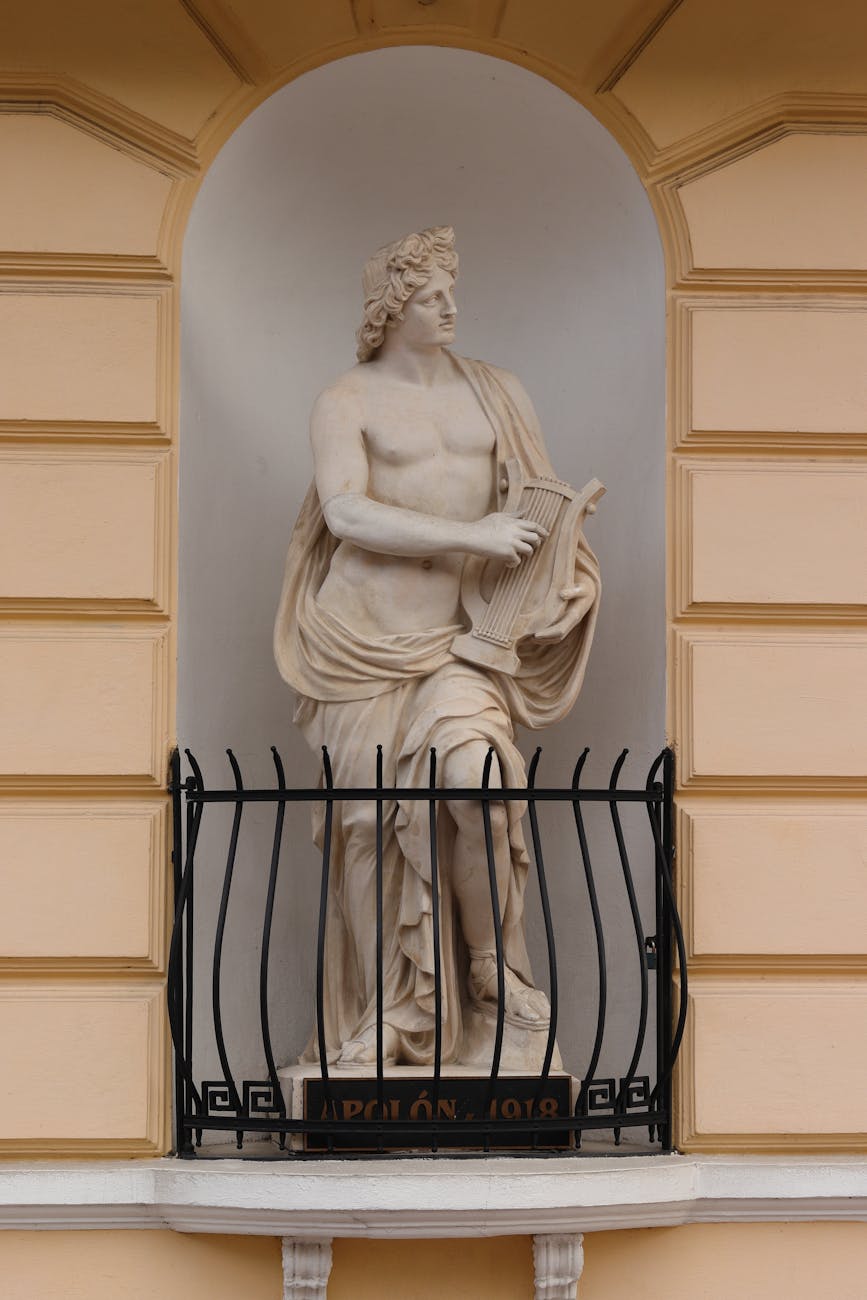
  • Apollo: The Essence of Order and Coherence in Philosophy

    Apollo: The Essence of Order and Coherence in Philosophy

    The Resilient Philosopher

    If Athena governs reason under pressure, Apollo governs what remains after reason has done its work.

    Reason decides.
    Apollo organizes.

    Where Athena sharpens judgment, Apollo creates structure. He is the symbol that turns insight into form, chaos into pattern, and experience into meaning that can be shared.

    This is not the biography of control.
    It is the biography of coherence.


    Who Apollo Was Before He Became a Symbol

    Apollo is associated with light, prophecy, music, medicine, and law. At first glance, these appear unrelated.

    They are not.

    Light reveals.
    Music orders sound into rhythm.
    Medicine restores balance.
    Law organizes behavior.
    Prophecy interprets pattern before it becomes obvious.

    Apollo is not about domination of reality.
    He is about making reality intelligible.

    He does not fight chaos directly.
    He arranges it until chaos loses its threat.


    Apollo as a Psychological Function

    Psychologically, Apollo represents the human need for coherence.

    He is the part of the psyche that asks not only what is true, but how truth fits together.

    Apollo appears after crisis, after justice, after decision, when the mind must stabilize what has been learned.

    Without Apollo, insight remains fragmented.
    Without Apollo, wisdom stays private.
    Without Apollo, meaning cannot be transmitted.

    He governs articulation, narrative, and the ability to explain reality without distorting it.


    Order Versus Control

    Apollo is often confused with authoritarian order.

    This is a mistake.

    Control suppresses complexity.
    Order integrates it.

    Apollo does not erase contradiction.
    He aligns it.

    True order does not require force.
    It requires clarity.

    This is why Apollo is associated with healing. Disease is not chaos by itself. It is imbalance. Apollo restores proportion rather than punishment.


    The Crossover Into Christianity

    Christianity adopted Apollo’s function early, even as it rejected his name.

    The concept of logos, the divine word, the structuring principle of reality, carries Apollo’s signature.

    Sermons, doctrine, scripture, and moral codification all depend on the Apollonian function. Christianity did not eliminate pagan order. It absorbed it, reframed it, and placed it at the center of its theology.

    When faith sought explanation, Apollo provided language.
    When belief sought stability, Apollo provided structure.

    Yet when structure hardened into dogma, order became control. Apollo’s light was replaced with rigidity.

    The symbol was present.
    The balance was lost.


    Meaning as a Human Necessity

    Apollo reveals a truth many avoid.

    Meaning is not optional.

    When humans cannot organize experience into narrative, anxiety fills the vacuum. Chaos is not frightening because it is violent, but because it is unintelligible.

    Apollo does not promise certainty.
    He promises orientation.

    This is why music, law, ritual, and storytelling arise in every civilization. They are Apollonian responses to existential disorder.


    Virtue and Vice Within the Symbol

    Integrated, Apollo represents clarity without rigidity.
    Structure without oppression.
    Healing through balance.
    Truth expressed without distortion.

    Unintegrated, Apollo becomes dogmatism.
    Perfectionism.
    Control disguised as order.
    Meaning enforced rather than discovered.

    Order without flexibility becomes brittle.
    Clarity without humility becomes tyranny.

    Apollo requires discipline, not worship.


    Why Apollo Follows Athena

    Reason must precede order.

    Athena decides wisely.
    Apollo makes that wisdom sustainable.

    Without Athena, Apollo becomes empty structure.
    Without Apollo, Athena remains momentary insight.

    Together, they transform judgment into systems that can endure.


    Closing Reflection

    Apollo does not demand belief.

    He demands coherence.

    When chaos overwhelms the mind, he does not shout louder. He brings light.

    Not to blind, but to reveal.

    Humanity has always known that survival requires more than strength. It requires understanding.

    And when understanding took shape, it wore many names.

    Apollo is one of the clearest.

    7 Podcast Insights from The Resilient Philosopher

    The Resilient Philosopher™ is a trademark in use by Vision LEON LLC.

  • The Matrix and Meaning: Embracing Reality as Simulation

    The Matrix and Meaning: Embracing Reality as Simulation

    Since The Matrix, the idea that reality might be a simulation has captured the imagination of millions. It grew stronger not because of science, but because of something deeper. People recognized themselves inside the story. Not trapped by machines, but by systems. Economic systems. Social systems. Psychological systems. Belief systems.

    The movie was never about computers.

    It was about independent thinking.

    The pill was not a tool to reveal the nature of reality. It was a symbol of awareness. A choice to stop outsourcing meaning. A refusal to live inside someone else’s narrative.

    That is why the movie still resonates. Not because we suspect reality is coded, but because we feel managed.

    Yet somewhere along the way, the metaphor was lost. The question shifted from “How am I living?” to “Is this real?” And that shift is where meaning begins to dissolve.


    The Illusion of Ultimate Answers

    Whether the universe is a simulation or not changes nothing essential.

    Pain still hurts.
    Love still binds.
    Loss still reshapes us.
    Responsibility still exists.

    A Christian believes in heaven and still wakes up every day trying to survive. If everlasting life is achieved through death, why care about health? Why worry about money? Why protect the body at all?

    The answer is simple and uncomfortable.

    Because belief does not erase biology.
    Because meaning does not wait for metaphysics.
    Because responsibility does not disappear in the presence of promises.

    Christianity, at least in its original form, was never meant to be a death cult. Life was not framed as disposable. It was framed as entrusted. Faithfulness was the goal, not escape. Death was never the purpose of living.

    The contradiction only appears when heaven becomes transactional and life becomes a waiting room.


    The Chicken Does Not Care About Metaphysics

    If a hen knows you take the eggs every day, why would it keep laying them?

    The chicken does not need to understand the structure of the farm. It only needs to know whether the exchange is meaningful.

    Whether we are in a simulation or whether heaven exists is irrelevant in the same way. If effort is extracted without purpose, awareness collapses. When meaning is removed from action, resignation follows.

    Truth that cannot be acted upon becomes entertainment.

    That is the danger of simulation talk. It can quietly become an excuse to disengage. A way to feel enlightened without changing behavior. A clever justification for nihilism disguised as intelligence.

    If nothing matters because reality might be fake, then why be ethical? Why lead? Why serve?

    That is not awakening. That is escape.


    Awareness Is Not About Knowing More

    Unplugging is not about discovering secret knowledge.
    It is about refusing to live unconsciously.

    Awareness does not ask whether reality is real.
    Awareness asks what is required of me now.

    You do not unplug by decoding the universe.
    You unplug by acting differently inside it.

    Meaning does not live in future rewards, eternal realms, or hidden architectures of existence. Meaning lives in how you inhabit the present moment.

    Searching for meaning to back up a narrative will always lead to uncertainty. Living meaningfully dissolves the need for narrative altogether.


    Happiness Is Not Delayed

    Happiness is not a prize for correct beliefs.
    It is not postponed for heaven.
    It is not unlocked by certainty.

    Happiness is alignment.

    Alignment between what you see, what you accept, and how you act.

    You can be aware now.
    You can be conscious now.
    You can be at peace now.

    Not because the universe owes you anything, but because presence is available regardless of metaphysics.


    The Quiet Truth

    If you cannot see the light in the darkness, you will see darkness in the light.

    This is not poetry. It is psychological truth.

    A mind trained to escape pain will never recognize peace.
    A mind trained to delay meaning will never feel fulfilled.
    A mind addicted to external explanations will never be present.

    Whether reality is simulated or eternal does not absolve us of living.

    Meaning is not found elsewhere.
    Meaning is practiced here.

    And this moment is the only place where awareness, responsibility, love, and happiness can exist.

  • Awareness and Judgment: Lessons from My Daughter

    Awareness and Judgment: Lessons from My Daughter

    The Resilient Philosopher

    Today my youngest daughter, who is three years old, looked at me with the kind of seriousness only a child can have and said, “Dad, what’s on your chin?”

    I said, “Hair.”

    She touched my cheeks and asked again, “Dad, what’s on your cheeks?”

    “Hair,” I replied.

    Then she gently pulled my head down, inspected it closely, paused, and said, “Dad… where’s your hair?”

    I laughed. Not the polite kind. The uncontrollable, grateful kind. The kind that reminds you that life is still happening, even when you are busy thinking.

    That moment stayed with me longer than it should have for something so small. Not because of the joke, but because of what it reopened in me.

    It took me back to my childhood, sitting next to my mother while the radio played in the background. She always had it on. Music, radio soap operas, voices telling stories before screens replaced imagination. I was a mama’s boy. I liked being there, listening, absorbing, even when I did not fully understand what was being said.

    There was a song I remember vividly. It was about a blind child who would speak with his neighbor, a sailor. Before the sailor left, the child asked him a question that never stopped echoing in my mind:

    “Before you go, can you tell me… what color is the wind?”

    As a child, it sounded poetic. As an adult, it sounds philosophical. As a human being trying to live with awareness, it sounds like a mirror.

    How Do You Explain What Cannot Be Seen?

    How do you explain something to someone who cannot see it, touch it, or hear it?

    How do you explain wind to someone who has never watched leaves dance, flags surrender, or waves respond to invisible force?

    How do you explain color to someone who has never seen a sunrise or a sunset?

    You can say the wind is blue or white or clear, but those words mean nothing without reference. You can describe it scientifically as moving air caused by pressure differentials, but that does not answer the human question.

    The truth is, you do not explain the wind by naming it. You explain it by what it does.

    You explain it by how it feels on the skin.
    By how it cools heat and sharpens cold.
    By how it carries scent before rain arrives.
    By how it whispers through trees or roars before a storm.

    And suddenly, the question is no longer about wind.

    It is about how much of reality we assume we understand simply because we can see parts of it.

    The Tree That Falls and the Ego That Listens

    There is a philosophical question people love to argue about: if a tree falls in the forest and no one is there to hear it, does it make a sound?

    Most people treat it like a clever puzzle.

    But the deeper meaning is uncomfortable.

    It forces us to confront the fact that reality does not require our validation to exist.

    Pain exists even when it is unseen.
    Loneliness exists even when it is masked by smiles.
    Grief exists even when it is silent.
    Love exists even when it is never spoken.

    We walk through life assuming our perception is the measure of truth. Then we judge others based on what we think we see.

    And this is where we fail ourselves.

    Why We Judge When We Should Be Paying Attention

    We live in a time where people claim to be too busy, yet somehow have endless energy to criticize others.

    Too busy to reflect.
    Too busy to listen.
    Too busy to notice their own contradictions.

    Yet never too busy to comment, judge, and compare.

    The reality is not that we lack time.
    The reality is that we lack attention.

    If we truly paid attention to what we see, what we feel, what we encounter daily, we would not have the appetite to dissect other people’s lives. We would be overwhelmed by the depth of our own.

    Awareness humbles judgment.

    Because the moment you realize how much of reality you cannot access, you become slower to assume you understand someone else’s story.

    Explaining a Sunrise Without Sight

    If I had to explain a sunrise to a child who had never seen one, I would not start with colors.

    I would start with meaning.

    I would say this:

    Imagine the world holding its breath in the dark. Not because nothing exists, but because everything is waiting. Then slowly, warmth returns. Birds begin speaking again. The air changes. The day arrives without asking permission. A sunrise is not just light. It is the feeling that you get another chance.

    Because even for those of us who can see, sunrise is not only visual.

    It is emotional.
    It is symbolic.
    It is a quiet agreement between time and hope.

    And that is the lesson we miss.

    We focus so much on what we can label that we forget to ask what something does to us.

    What Children Teach Us Without Trying

    My daughter was not mocking me when she asked where my hair went. She was not evaluating me. She was not comparing me to others.

    She was trying to understand the world through honest curiosity.

    Children do not begin life as critics. They become critics after watching adults do it.

    Curiosity precedes judgment.
    Awareness precedes wisdom.

    Leadership begins there too.

    Not in authority.
    Not in loud opinions.
    Not in control.

    But in the discipline of noticing without needing to dominate the narrative.

    The Cost of Taking Life for Granted

    We take vision for granted until it is gone.
    We take sound for granted until silence becomes permanent.
    We take people for granted until absence becomes final.

    And then we wonder why life feels shallow.

    If we lived with awareness, true awareness, we would treat people differently. We would speak with more care. We would listen with more patience. We would judge less and ask more.

    Because we would understand that everyone is navigating a reality filled with colors we cannot see.

    The Question That Should Change Us

    If the question “what color is the wind?” does not make you pause, reflect, and reconsider how you move through the world, then something essential is being ignored.

    Not because the question is clever.

    But because it reveals how limited we are, and how gentle we should become because of it.

    The moment you accept that reality has layers beyond your perception, you stop pretending you are better than others.

    You stop confusing visibility with truth.

    And you start living with intention.

    Final Reflection

    We spend too much time trying to explain life instead of experiencing it.

    Too much time defining others instead of understanding ourselves.

    If we truly paid attention to everything we encounter, we would realize something liberating:

    Criticizing others is not worth it.

    Not because they are right.
    But because we are not complete either.

    And that awareness, that humility, is where resilient leadership actually begins.


    Relevance to My Work

    This article directly aligns with my philosophy books, especially The Resilient Philosopher: The Prism of Reality. It reflects the core principles of awareness, perception, humility, and servant leadership through lived experience rather than abstraction.

    7 Podcast Insights from The Resilient Philosopher

  • Embracing Struggle: Leadership Lessons from Bipolar Disorder

    Embracing Struggle: Leadership Lessons from Bipolar Disorder

    “The mind breaks long before the body does. Some call it burnout, but I call it the absence of meaning. A company that only demands output will drain its people until nothing remains.” – D. L. Dantes, Leadership Lessons from the Edge of Mental Health

    Introduction

    For anyone who has lived through bipolar disorder, there are days when the mind feels heavier than the body. There are days when silence feels like defeat, when exhaustion becomes spiritual, and when surrender whispers as if it were the easiest way out.

    Yet struggle is not the end of leadership. Sometimes struggle is where leadership begins, not because pain is noble by itself, but because surviving pain can teach us how to become more present, more honest, and more responsible with the lives connected to our own.

    The Clinical Foundation of the Struggle

    Bipolar disorder is not weakness, laziness, or a failure of character. It is a serious mental health condition marked by clear shifts in mood, energy, activity level, concentration, and daily functioning, with episodes that may include mania, hypomania, depression, or mixed features (American Psychiatric Association, 2022; National Institute of Mental Health, n.d.).

    Bipolar I disorder involves at least one manic episode, while Bipolar II disorder involves hypomanic episodes and major depressive episodes without a full manic episode. This clinical reality matters because philosophy without psychological honesty can become empty motivation, and motivation without clinical truth can become harmful advice.

    Embracing the Struggle Without Worshiping It

    “It is not what breaks you that defines you, but what you do after the breaking.” – D. L. Dantes, The Prism of Reality

    Pain, failure, and frustration are not enemies when they are understood correctly. They become dangerous when we deny them, but they can become teachers when we examine them with support, treatment, reflection, and responsibility.

    This is where resilience begins. It does not begin with pretending the storm is beautiful; it begins with admitting the storm is real and still choosing to take the next responsible step through it.

    Training Others to Be Better, Not Like Me

    “To lead is to serve by empowering others to lead and rise above.” – D. L. Dantes, The Prism of Reality

    I don’t want others to copy my path. I want them to learn from it, avoid what they can avoid, endure what they must endure, and become better equipped than I was when I first entered the storm.

    Leadership is not about turning personal suffering into a performance. It is about using hard-earned wisdom to build support systems, reduce stigma, and create environments where people don’t have to break in silence before anyone notices they need help.

    Research on family-focused therapy for bipolar disorder shows the value of psychoeducation, communication training, problem-solving, and structured support in improving long-term outcomes when combined with proper treatment (Miklowitz & Chung, 2016). That same principle applies to leadership: people do better when systems teach, support, and correct instead of merely demanding output.

    Suffering, Success, and Meaning

    “Every day is a great day to learn something new, by removing the excuses and addressing the reasons.” – D. L. Dantes, Mastering the Self

    I don’t believe we must suffer in order to deserve success. But I do believe that those who have suffered often understand success differently because stability, peace, and progress no longer feel like ordinary things.

    Posttraumatic growth research suggests that some people report positive psychological change after highly difficult life experiences, including a deeper appreciation for life, stronger relationships, and a changed sense of personal strength (Tedeschi & Calhoun, 2004). That does not mean trauma is good; it means the human being can sometimes build meaning even after life has caused damage.

    A Message to Those Who Struggle

    “You are stronger than this moment. You are more than your struggles. You will rise, not because it’s easy, but because it’s necessary.” – D. L. Dantes

    If today feels unbearable, let this be said plainly: bipolar disorder does not define the whole of who you are. It may affect your energy, mood, relationships, decisions, and sense of self, but it does not erase your dignity.

    If you are in immediate danger or thinking about harming yourself, seek help now by calling or texting 988 in the United States, contacting emergency services, or reaching out to someone who can stay with you. Philosophy can give language to pain, but in moments of crisis, support must become immediate and practical.

    Closing Reflection

    Struggle is not something to worship, but it is something we can learn to face. In bipolar episodes, as in leadership, the challenge is not pretending the storm does not exist; the challenge is learning how to move through it with dignity, treatment, support, and meaning.

    Leadership is not perfection. It is presence after the breaking, responsibility after the storm, and stewardship when another person needs someone steady enough to help them keep going.

    By D. L. Dantes, Stewardship Leadership Model

    Leave a comment and share this article with others who may benefit from the reflection.

    References

    • American Psychiatric Association. (2022). Diagnostic and statistical manual of mental disorders (5th ed., text rev.). American Psychiatric Association.
    • Dantes, D. L. (2025). Leadership Lessons from the Edge of Mental Health. Vision LEON LLC.
    • Dantes, D. L. (2025). The Prism of Reality. Vision LEON LLC.
    • Dantes, D. L. (2025). Mastering the Self. Vision LEON LLC.
    • Miklowitz, D. J., & Chung, B. (2016). Family-focused therapy for bipolar disorder: Reflections on 30 years of research. Family Process, 55(3), 483–499.
    • National Institute of Mental Health. (n.d.). Bipolar disorder. U.S. Department of Health and Human Services.
    • Tedeschi, R. G., & Calhoun, L. G. (2004). Posttraumatic growth: Conceptual foundations and empirical evidence. Psychological Inquiry, 15(1), 1–18.