Tag: Leadership Development

  • The Danger of Waking Up: Servant Leadership & Awareness

    The Danger of Waking Up: Servant Leadership & Awareness

    The Resilient Philosopher

    book 1

    Introduction

    Every time someone wakes up, an institution somewhere becomes uncomfortable. Awareness is dangerous. Consciousness disrupts systems built on compliance and fear. As I listened to a breakdown of Nietzsche recently, I understood with clarity why so many corporations, governments, and organizations avoid his teachings. His work awakens the individual self. It returns the human mind to its original state of free will. Institutions cannot control a free mind.

    That realization made me turn inward. I wondered what will happen when my work expands further. I teach awareness, consciousness, and servant leadership. I speak about the self. I question illusions. I reveal how manipulation works. And in a Machiavellian world that thrives on tactics, shortcuts, and psychological control, the voice of awareness will always be seen as a threat.

    Yet that is exactly why this message must exist.

    Awareness and the Self

    book 2

    The most powerful revolution begins within the self. Not by force. Not through manipulation. But through awareness. A person who becomes aware immediately becomes unpredictable, because they no longer react from fear or insecurity. They no longer accept authority simply because authority demands obedience.

    To awaken the self is to reclaim internal sovereignty.

    Awareness reshapes how you think, how you love, how you lead, and how you respond to pressure. It breaks the chains of unconscious behavior. It stops manipulation before it begins. Awareness is not passive. It is active. It requires intention. It requires a willingness to see reality without filters.

    When a person reaches this level of awareness, no tactic can control them.
    And that simple truth threatens every leader who relies on fear.

    Mastering Power Without Becoming It

    book 3

    I have read books on power.
    The 48 Laws of Power.
    The Game.
    Books by Ferriss on manipulation and dark psychology.
    I understand how fear works.
    I understand how emotional vulnerabilities can be exploited.
    I understand how people can be controlled without ever realizing it.

    It would be easy for me to use this knowledge. The moment you understand the mechanisms behind manipulation, you see how simple it is to push someone into compliance. But I refuse to do it. Knowing the darkness does not mean I must participate in it. Understanding psychological manipulation does not require me to use it.

    If anything, the more I learned, the more committed I became to exposing these tactics instead of practicing them. Not because I am better than anyone, but because I know how much damage these strategies cause. Manipulation destroys trust. Fear destroys connection. Psychological tactics create leadership that collapses in the moment people finally wake up.

    True power is not using what you know to harm.
    True power is having the ability to manipulate and choosing not to.

    The Collapse of the Manipulative Self

    The Resilient Philosopher Podcast Logo

    A self willing to manipulate will eventually destroy itself.
    Not immediately.
    It is a slow decay.
    A leader who uses fear must constantly increase that fear to stay in control. A leader who uses psychological tricks must continue to deceive, because the moment they stop, they lose authority.

    A manipulative self becomes a prisoner of its own tactics.

    You cannot build stability through psychological shortcuts. You cannot build loyalty through fear. You cannot build trust through hidden strategies. And no matter how clever a manipulator believes they are, the collapse will arrive eventually.

    Awareness makes manipulation impossible.
    Consciousness makes fear ineffective.
    Servant leadership exposes every illusion of power.

    Servant Leadership Rejects Manipulation

    Any organization that wants my work must understand something with complete clarity:

    Servant leadership will always reject manipulative tactics.

    Not because servant leadership is blind to dark psychology, but because it understands it too well. Servant leadership requires self control, not control over others. It requires humility, not tactics. It requires service, not domination.

    Servant leadership is the antidote to Machiavellian culture.

    It is the return to human dignity.
    It is the restoration of trust.
    It is the elevation of the self without the destruction of others.

    If an organization wants to train leaders who use shortcuts and psychological strategies, my work is not for them. But if they want to build cultures of awareness, consciousness, and internal strength, then they must be ready to let go of manipulative leadership forever.

    The Awakening Institutions Fear

    When people wake up, systems change.
    When awareness rises, control falls.
    When consciousness becomes normal, manipulation dies quietly.

    Institutions fear this. That is why Nietzsche was avoided. That is why Machiavelli is practiced behind closed doors. And that is why my work will challenge modern leadership structures. Because an aware person is ungovernable. A conscious leader is incorruptible. A servant leader is unstoppable.

    The danger of waking up is only a danger to those who benefit from keeping everyone asleep.
    For the rest of us, awakening is liberation.

    And that is the world I choose to serve.

    Conclusion

    Awareness is not rebellion.
    Awareness is responsibility.
    It is the responsibility to lead without manipulation.
    To rise without destroying others.
    To become powerful without becoming oppressive.

    That is the essence of servant leadership.
    That is the heart of my philosophy.
    And that is the voice I choose to bring into this Machiavellian world.

    If you seek shortcuts, you will find them.
    But you will also kneel to those who chose discipline instead.

    Rise with awareness.
    Lead with consciousness.
    Serve with integrity.
    The rest will follow.

    Call to Action

    If this message resonates with you, explore more reflections, articles, and conversations through Vision LEON LLC and The Resilient Philosopher podcast. Awareness begins with a single question, and leadership begins with the courage to answer it.

    Peer Reviewed Sources

    • Greenleaf, R. K. (1977). Servant Leadership: A Journey into the Nature of Legitimate Power and Greatness.
    • Sendjaya, S., & Sarros, J. C. (2002). Servant leadership: Its origin, development, and application in organizations. Journal of Leadership & Organizational Studies.
    • Tourish, D. (2019). The dark side of transformational leadership. Routledge.
    • Sarkar, S. (2009). Servant leadership and the psychology of influence. Leadership Quarterly.
    • Kellerman, B. (2004). Bad Leadership: What It Is, How It Happens, Why It Matters. Harvard Business Review Press.
  • Constructive Feedback and Leadership Communication

    Constructive Feedback and Leadership Communication

    By D. Leon Dantes | The Resilient Philosopher | Vision LEON LLC


    Introduction

    Effective communication within the workplace is foundational to resilience, clarity, and team success. The way we speak often reflects our leadership style. This is outlined in my book The Resilient Philosopher: The Prism of Reality. The way we speak often reflects our leadership style. This article explores practical strategies for delivering feedback through the lenses of servant leadership, emotional intelligence, and personal philosophy.


    Feedback as a Leadership Skill

    Communication challenges, especially around feedback, often erode trust and damage morale. In Leadership Lessons from the Edge of Mental Health, I reflect on the cost of silence in the workplace:

    “The greatest damage to a team is not conflict—it’s silence dressed as peace.”

    Constructive feedback, when delivered intentionally, becomes a bridge—not a barrier—to transformation and alignment.


    Understanding the Context for Feedback

    Feedback must be respectful, private, and contextual. In Mastering the Self: The Resilient Mind Vol. 2, I share:

    “If your words strip dignity, they are not feedback—they are control.”

    When we choose thoughtful timing and a supportive environment, we nurture growth rather than resistance.


    Clarity and Precision in Communication

    Vague comments harm more than they help. Precision empowers change. Leaders should:

    • Describe behavior, not character
    • Share specific consequences
    • Speak with compassion, not judgment

    As I noted in The Resilient Philosopher:

    “Clarity is not cruelty when it reflects truth with grace.”


    Expressing Positive Intentions

    Every feedback conversation should start with belief in the other person’s potential. In Leadership Lessons from the Edge I wrote:

    “Accountability without belief is punishment. With belief, it becomes growth.”

    Framing feedback as a gift, rather than a reprimand, builds trust and safety.


    Empathy and Active Listening

    Feedback is a dialogue. Not a declaration. As emphasized in Mastering the Self:

    “To lead without listening is to speak into an empty room.”

    Leaders must listen for understanding, not interruption. They must ask:

    • How did you experience this?
    • What support do you need to move forward?

    Collaborative Problem Solving

    Great feedback invites collaboration. In The Resilient Philosopher:

    “Leadership is not giving orders—it is inviting solutions.”

    Ask:

    • What do you need to succeed?
    • How can we rebuild alignment together?

    This creates shared ownership of outcomes and reinforces accountability.


    Consistent Follow-Up

    Feedback that lacks follow-up becomes noise. In Mastering the Self, I wrote:

    “Unacknowledged progress becomes invisible labor.”

    Leaders must:

    • Recognize improvement
    • Revisit the topic
    • Reinforce effort with resources, not just expectations

    Understanding Leadership Beyond Titles

    Leadership is more than authority. It’s presence, humility, and ethical responsibility. In The Resilient Philosopher, I stated:

    “To lead is to serve, by empowering others to rise above.”

    True leaders create culture, model consistency, and shape futures—not by control, but by conscious influence.


    Conclusion: Why This Matters

    Feedback reflects your philosophy. When offered with clarity, belief, and humility, it builds trust, alignment, and growth. In every conversation, remember: feedback isn’t criticism—it’s an invitation to evolve. Let your words become seeds of accountability, not weapons of control.


    Explore Further

    🎙️ Podcast: The Resilient Philosopher
    📖 Book: The Resilient Philosopher: The Prism of Reality
    📘 Leadership Lessons from the Edge of Mental Health
    📗 Mastering the Self: The Resilient Mind Vol. 2


    References

    Brown, A. (2021). Effective Leadership Communication. New York, NY: Springer.
    Davis, S. (2020). Collaborative Approaches to Problem Solving in Business. London: Routledge.
    Green, L. (2022). Empowering Leadership. Oxford: Oxford University Press.
    Johnson, B. (2020). Workplace Efficiency. Los Angeles, CA: Sage Publications.
    Khan, M. (2019). The Importance of Listening in Leadership. Chicago, IL: University of Chicago Press.
    Lee, C. (2021). The Art of Follow-Up in Business Communication. Boston, MA: Harvard Business Review Press.

    Smith, J. (2019). Challenges in Modern Leadership. Seattle, WA: Amazon Publishing.
    Taylor, P. (2018). Communicating with Precision. San Francisco, CA: Jossey-Bass.
    Dantes, D. L. (2025). Leadership Lessons from the Edge of Mental Health. Vision LEON LLC.
    Dantes, D. L. (2025). Mastering the Self: The Resilient Mind Vol. 2. Vision LEON LLC.
    Dantes, D. L. (2025). The Resilient Philosopher: The Prism of Reality. Vision LEON LLC.


    📌 Author & Resources

    D. León Dantes
    Author | Philosopher | Leadership Coach
    Founder of Vision LEON LLC
    Host of The Resilient Philosopher Podcast

    📘 Leadership Lessons from the Edge of Mental Health – Buy on Amazon

    📘 Leadership Lessons from the Edge of Mental Health – Listen on Audible

    📘 Mastering the Self: The Resilient Mind Vol. 2 – Buy on Amazon
    📘 The Resilient Philosopher: The Prism of Reality – Buy on Amazon

    📚 Amazon Author Page – D. León Dantes

    🎙️ The Resilient Philosopher Podcast – Listen on Spotify
    📰 The Resilient Philosopher Chronicles – Subscribe on Substack

    📬 LinkedIn Presence:
    Newsletter: The Resilient Philosopher
    The Resilient Philosopher – LinkedIn Page
    Showcase: D. León Dantes

  • Why Some Entrepreneurs Fail While Others Succeed

    Why Some Entrepreneurs Fail While Others Succeed

    By D. Leon Dantes | The Resilient Philosopher | Vision LEON LLC


    Introduction: Why Some Entrepreneurs Fail While Others Succeed

    Entrepreneurial success isn’t determined by luck—it’s forged through strategic leadership, discipline, and resilience. While many entrepreneurs begin with vision and ambition, only a few navigate the path to sustainable success.

    Why? Because they understand leadership is the foundation of everything.


    Common Reasons Entrepreneurs Fail

    1. Financial Mismanagement

    A lack of financial literacy sinks more businesses than bad ideas.

    • Failing to separate personal and business finances
    • Poor cash flow discipline
    • No long-term financial strategy

    Leadership begins with clarity—and that includes your bank statements.


    2. Lack of Consistency

    Success is not a sprint—it’s a ritual. Without daily discipline, progress stalls and goals collapse.

    Remove the excuses. All that’s left are reasons. Reasons have solutions.
    Dantes Philosophy


    3. Premature Abandonment of Ideas

    Too many entrepreneurs quit right before the breakthrough.

    Challenges are not dead ends—they’re filters.
    Only the resilient rise.


    4. Poor Planning and Execution

    Vision without a strategy is a hallucination.
    To build a business, you need:

    • Clear objectives
    • Execution frameworks
    • Systems, not just hustle

    5. Chasing Trends Instead of Solving Problems

    Trends fade. Problems persist.
    The most successful businesses solve real-world issues—not social media hype.


    6. Lack of Leadership Skills

    Leadership isn’t optional—it’s the core operating system of a business.
    Without it, your team flounders. Your mission drifts.
    Your company becomes chaos.


    Entrepreneurial Success Requires Investment

    You must invest in more than profits:

    • Self-Education: Learn leadership, finance, systems.
    • Adaptability: Evolve or dissolve.
    • Strong Networks: Surround yourself with clarity, not just company.
    • Long-Term Thinking: Don’t build for the quarter—build for the decade.

    The Employee Crisis: The Rise of Quiet Quitting

    Entrepreneurs don’t just lose customers—they lose teams.

    Why Employees Disengage:

    • 🔴 Toxic Culture – No one thrives in disrespect.
    • 🔴 Micromanagement – Kills creativity and morale.
    • 🔴 Weak Leadership – No vision. No trust. No accountability.
    • 🔴 No Growth Path – If they can’t grow, they’ll go.

    Dantes Philosophy: Leading With Purpose

    A business is only as resilient as the person leading it.

    1. Lead With Logic, Not Emotion

    Use data, systems, and critical thinking.
    Emotion clouds judgment—clarity leads.

    2. Empower, Don’t Control

    Stop micromanaging. Build trust.
    Let people rise—and they will.

    3. Create a System, Not a Dependency

    A great business runs without your constant presence.
    Build processes, not just effort.

    4. Balance Pressure with Support

    Set high standards.
    But give your people the tools and space to meet them.

    5. Foster Innovation Through Smart Risk

    Encourage experimentation.
    Without innovation, businesses die.

    6. Lead Humans, Not Resources

    Employees are not assets—they’re people.
    Treat them with respect, and they’ll become your greatest strength.


    Conclusion: Success Begins With Leadership

    Entrepreneurial success is earned, not inherited.
    It begins with self-mastery, strategic thinking, and a deep understanding of human potential.

    If you want your business to thrive, don’t just build a brand—build yourself first.

    Follow the path. Lead with resilience. Win with integrity.
    D. Leon Dantes


    📚 Suggested Reading

    • Leadership Lessons from the Edge of Mental Health – D. Leon Dantes
    • The Resilient Mind Vol. 1 & 2

  • Embracing Neurodiversity: Stoic Leadership Insights

    Embracing Neurodiversity: Stoic Leadership Insights

    By D. Leon Dantes, author of The Resilient Philosopher: The Prism of Reality

    “To lead is to serve, by empowering others to lead and rise above.”
    The Resilient Philosopher: The Prism of Reality


    Introduction

    The greatest minds in history have often lived with what society now calls disorders. From Winston Churchill’s depression to Richard Branson’s ADHD and Elon Musk’s autism spectrum traits, history shows that human difference is not deficiency. The question is not whether these traits are disorders, but whether leadership and society know how to understand them.

    Recent studies and discussions, such as Alison Escalante’s Forbes article “Researchers Doubt That Certain Mental Disorders Are Disorders at All” (2020), challenge the traditional view of mental illness as mere malfunction. They suggest that these states can be adaptive responses—forms of awareness, creativity, and resilience that emerge when individuals learn to work with, rather than against, their nature.

    This is the essence of both Stoic philosophy and The Resilient Philosopher. Where Stoicism teaches mastery of the self through acceptance and virtue, The Resilient Philosopher extends that principle into leadership, psychology, and spirituality. It asserts that resilience is not the absence of weakness but the transmutation of adversity into wisdom.


    The Stoic Foundation: Acceptance as Strength

    Stoic thinkers such as Epictetus, Marcus Aurelius, and Seneca taught that peace comes from understanding what lies within our control and accepting what does not. This ancient discipline becomes the foundation for modern resilience. In leadership, acceptance transforms from passive tolerance into active clarity—the understanding that each person’s traits, even their struggles, have purpose.

    The Resilient Philosopher builds upon this foundation. Acceptance, in my framework, is the first step toward transformation. It is not resignation; it is recognition. When leaders accept their own complexity, they begin to recognize the complexity in others. They stop labeling uniqueness as dysfunction and begin to see it as design.


    Neurodiversity: The Modern Language of Uniqueness

    Neurodiversity describes the natural variations in human cognition, emotion, and perception. Conditions such as ADHD, autism spectrum disorder, anxiety, and depression are not simply errors in the system; they are alternate operating systems.

    Scientific research increasingly supports this perspective.

    • A 2021 study in the Journal of Business Venturing Insights found that entrepreneurs with ADHD displayed higher creativity, energy, and adaptability in fast-changing environments.
    • Research by Simon Baron-Cohen (2017) linked autism spectrum traits to superior pattern recognition and analytical reasoning.
    • The theory of post-traumatic growth (Tedeschi & Calhoun, 2004) demonstrates that trauma can lead to deeper empathy and purpose.

    When we reinterpret these findings through a philosophical lens, they reveal that what we call disorder often represents specialization. Each mind offers a distinct perspective necessary for collective resilience.


    From Disorder to Dimension

    The Stoics believed that the mind becomes strong when it encounters resistance. Modern neuroscience shows that adversity can indeed rewire the brain for adaptability and empathy. In The Resilient Philosopher: The Prism of Reality, I wrote, “Everything can be nothing, but nothing can’t be everything.” This means that what appears as limitation in one context becomes strength in another.

    A person with ADHD may struggle with traditional schooling but thrive in creative or entrepreneurial spaces. An individual with anxiety may seem overly cautious yet excel in risk assessment or crisis management. Depression, when channeled into introspection, can produce profound art and empathy.

    The key lies not in erasing these differences but in aligning them with purpose. Proper leadership creates environments where diversity of thought becomes the fuel for innovation.


    The Role of Leadership: From Control to Connection

    Leadership today must evolve from authority to empathy. The Stoic leader accepts imperfection, listens deeply, and cultivates others through patience and example. In Leadership Lessons from the Edge of Mental Health, I emphasize that leadership begins with listening. When a leader understands the context behind behavior, they transform reaction into relationship.

    True leaders see beyond labels. They do not ask, “What is wrong with you?” They ask, “What happened to you, and how can I help you grow from it?” This question alone transforms organizations into communities of understanding.

    Servant leadership, as practiced in Vision LEON LLC, means guiding others to discover their strengths within their differences. A neurodiverse team led with empathy and self-awareness can out-perform uniform groups because it reflects reality itself—diverse, dynamic, and imperfectly perfect.


    Inferiority and Growth: The Jack of All Traits

    In Mastering the Self: The Resilient Mind Vol. 2, I write, “Growth begins the moment inferiority becomes inspiration.” To be a “jack of all traits” is to accept that mastery is not about dominance but about understanding. One does not need to be the best at everything. Knowing enough to guide, teach, and collaborate is true leadership.

    Each trait, even one born from struggle, holds the potential for expansion. When people use their perceived weaknesses as stepping stones, they embody the Stoic path of continuous self-improvement. Knowledge becomes empathy; empathy becomes wisdom; wisdom becomes leadership.

    In this way, inferiority is not failure. It is a mirror reflecting the areas where growth can begin. The Stoic mind accepts this reflection without shame, while the Resilient Philosopher uses it to sculpt a better self.


    Resilience as Collective Evolution

    Resilience is not an individual conquest; it is a collective art. Stoicism prepared the individual to face fate, but modern leadership requires the uniting of many individuals under shared purpose. Our uniqueness builds resilience when we learn to work together rather than against each other.

    When one person’s strength complements another’s vulnerability, the group becomes unbreakable. In corporate, academic, and family settings, this principle translates into adaptive collaboration. Diversity of mind leads to diversity of solution.

    Personal growth, then, is inseparable from communal growth. The Resilient Philosopher teaches that humanity evolves not by perfection, but by participation—each mind contributing its rhythm to the harmony of progress.


    Philosophical Reflection

    “The one who lacks words speaks the most. The ones with the most words listen. Everything in silence will be loud.”

    Silence is where understanding begins. A Stoic leader listens to their own mind without judgment. A resilient leader listens to the minds of others with curiosity. When we learn to hear the silence behind each person’s difference, we replace stigma with understanding.

    Neurodiversity becomes the language of modern Stoicism—the recognition that virtue lies in living according to one’s nature, and that each person’s nature is uniquely designed for contribution.


    Conclusion: Labels to Leadership

    The line between disorder and dimension is often drawn by perception. If we see the mind as broken, we seek to fix it. If we see it as unique, we seek to understand it.

    The Stoic mind accepts the conditions of existence; the Resilient Philosopher transforms them. Together, they create a philosophy for modern leadership: one that values awareness over authority, connection over conformity, and growth over perfection.

    Our world does not need more perfect leaders—it needs aware ones. Leaders who can see the extraordinary potential hidden within what others label as flaw. When guided by empathy and wisdom, every difference becomes a source of strength.


    Works Cited

    Baron-Cohen, Simon. The Pattern Seekers: How Autism Drives Human Invention. Basic Books, 2020.

    Dantes, D. Leon. The Resilient Philosopher: The Prism of Reality. Vision LEON LLC, 2025.

    Dantes, D. Leon. Leadership Lessons from the Edge of Mental Health. Vision LEON LLC, 2025.

    Dantes, D. Leon. Mastering the Self: The Resilient Mind Vol. 2. Vision LEON LLC, 2025.

    Escalante, Alison. “Researchers Doubt That Certain Mental Disorders Are Disorders at All.” Forbes, 11 Aug. 2020, www.forbes.com/sites/alisonescalante/2020/08/11/researchers-doubt-that-certain-mental-disorders-are-disorders-at-all/.

    Lerner, Daniel A., and Alexander Nordgren. “Entrepreneurship and ADHD: A Study of Opportunity Recognition and Risk-Taking.” Journal of Business Venturing Insights, vol. 15, 2021, p. e00231.

    Tedeschi, Richard G., and Lawrence G. Calhoun. “Posttraumatic Growth: Conceptual Foundations and Empirical Evidence.” Psychological Inquiry, vol. 15, no. 1, 2004, pp. 1–18.

    logo8
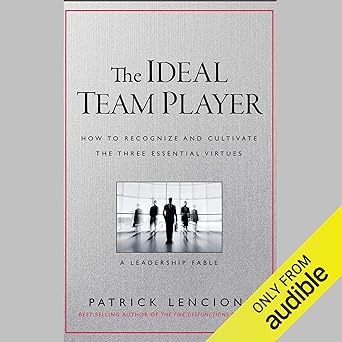
  • The Ideal Team Player: How Humility, Hunger, and People Smarts Shape Leadership

    The Ideal Team Player: How Humility, Hunger, and People Smarts Shape Leadership

    By D. León Dantes | The Resilient Philosopher | Vision LEON LLC


    Introduction: Real Teams Need Real Virtues

    In today’s fast-paced world, collaboration isn’t just a bonus — it’s a necessity. In The Ideal Team Player, Patrick Lencioni describes three essential virtues for successful teamwork. These virtues are humility, hunger, and people smarts. These qualities don’t just create better employees — they forge resilient leaders.

    Having experienced the beauty and dysfunction of team dynamics firsthand, I found this audiobook not only informative but transformational. It echoes many of the same principles I teach in Leadership Lessons from the Edge of Mental Health. It also reflects concepts from The Resilient Philosopher: The Prism of Reality. This is especially true when leadership begins from within.


    What You Need to Know: The Three Virtues

    Lencioni presents his model through a relatable fictional narrative, making complex dynamics feel personal and memorable. These three virtues serve as the cornerstone of any effective team:

    Humility

    The foundational trait of any true leader. Humility isn’t about thinking less of yourself — it’s about thinking of yourself less. As I wrote in Mastering the Self: The Resilient Mind Vol. 2, humility is the root of personal growth. In a team setting, it builds trust and accountability.

    Hunger

    More than just work ethic — hunger is drive with purpose. It’s the inner fire that makes someone go above and beyond not for recognition, but for contribution. Lencioni aligns with The Resilient Philosopher when he emphasizes this virtue as the engine of transformation.

    People Smarts

    It’s not IQ — it’s EQ. Knowing how to read a room, listen deeply, and respond with intention. In both leadership and life, emotional intelligence creates safety, cohesion, and momentum.


    Lessons for Leaders and Team Members Alike

    Whether you’re leading a startup, guiding a nonprofit, or managing your family, these three virtues apply universally. In my leadership coaching, I’ve seen how integrating humility, hunger, and emotional intelligence transforms not just teams — but lives.

    Lencioni’s approach is narrative-driven, accessible, and immediately actionable. It perfectly complements servant leadership philosophy. In this philosophy, the leader’s role is to uplift others by being a better human first.

    If you’ve ever struggled with toxic team dynamics or inconsistent communication, this audiobook will speak directly to those pain points. It offers tools — but more importantly, it shifts your mindset.


    Final Reflection

    To lead is to serve. And to serve effectively, one must embody humility, stay hungry, and communicate with emotional intelligence. These aren’t just work traits — they are life philosophies.

    The Resilient Philosopher often includes this idea. “To lead is to serve. It means empowering others to lead and rise above.”
    The Ideal Team Player teaches you how to do just that — one virtue at a time.


    📚 Recommended Readings & Audiobooks

    • The Ideal Team Player by Patrick Lencioni
    • Leadership Lessons from the Edge of Mental Health
    • The Resilient Philosopher: The Prism of Reality
    • Mastering the Self: The Resilient Mind Vol. 2

    🎧 Get your audiobook now on Amazon
    Looking to become the kind of leader others want to follow? Start here: Listen to The Ideal Team Player


    📌 Author & Resources

    D. León Dantes
    Author | Philosopher | Leadership Coach
    Founder of Vision LEON LLC
    Host of The Resilient Philosopher Podcast

    📘 Leadership Lessons from the Edge of Mental Health – Buy on Amazon

    📘 Leadership Lessons from the Edge of Mental Health – Listen on Audible

    📘 Mastering the Self: The Resilient Mind Vol. 2 – Buy on Amazon
    📘 The Resilient Philosopher: The Prism of Reality – Buy on Amazon

    📚 Amazon Author Page – D. León Dantes

    🎙️ The Resilient Philosopher Podcast – Listen on Spotify
    📰 The Resilient Philosopher Chronicles – Subscribe on Substack

    📬 LinkedIn Presence:
    Newsletter: The Resilient Philosopher
    The Resilient Philosopher – LinkedIn Page
    Showcase: D. León Dantes

    Silence That Wins: Why the Smartest Leaders Stop Talking First

    Silence That Wins: Why the Smartest Leaders Stop Talking First

  • The Psychology of Leadership: Understanding the Mind Behind Every Leader

    The Psychology of Leadership: Understanding the Mind Behind Every Leader

    D. Leon Dantes – The Resilient Philosopher


    Abstract

    Leadership extends beyond authority and management; it is a psychological and philosophical discipline rooted in self-command, empathy, and service. This paper explores the psychology of leadership through The Resilient Philosopher framework, aligning it with established psychological and leadership theories. Drawing from emotional intelligence research (Goleman, 1998), servant leadership principles (Greenleaf, 1977), and contemporary resilience theory (Luthans, 2002), this work argues that effective leadership requires mastery of the self before mastery over systems.


    Leadership as Psychological Understanding

    In Leadership Lessons from the Edge of Mental Health, I assert that “leadership doesn’t begin with a title; it begins the moment you choose to master yourself” (Dantes, 2025a, p. 11). Leadership is, therefore, psychological stewardship—understanding the cognition, motivation, and emotion of those one leads. Contemporary research supports this notion: authentic leadership and emotional awareness predict both team cohesion and performance (Avolio & Gardner, 2005; Goleman, 1998).

    The psychology of leadership involves decoding the mental and emotional mechanisms that guide behavior. Transformational and servant leaders excel not by control but by cultivating psychological safety and intrinsic motivation (Deci & Ryan, 2000). The Resilient Philosopher expands on this by insisting that leaders first achieve internal equilibrium—self-command—before they can ethically influence others.


    Emotional Intelligence: The Hidden Superpower

    In Leadership Lessons, I describe emotional intelligence (EI) as “the ability to feel, see, adapt, and respond with clarity when others are blinded by emotion” (Dantes, 2025a, p. 12). Daniel Goleman (1998) defines EI as a composite of self-awareness, self-regulation, empathy, and social skills—traits consistently linked to effective leadership outcomes (Boyatzis, 2018).

    Psychologically, EI functions as a moderator between cognition and behavior. Leaders with high EI regulate their own affective states, accurately perceive others’ emotions, and navigate interpersonal conflict with balance. This aligns with my Resilient Philosophy premise that “a servant leader does not lead from impulse—they lead from insight” (Dantes, 2025a, p. 14). Emotional regulation becomes the moral compass of decision-making, transforming reactivity into reflection.


    Self-Command and the Cognitive Architecture of Leadership

    In Mastering the Self: The Resilient Mind Vol. 2, I write that “reaction is the default of the untrained mind; the resilient mind does not rush to respond—it pauses to position” (Dantes, 2025b, p. 6). This mirrors Bandura’s (1991) theory of self-regulation, which holds that human agency arises from self-reflective control over cognition, motivation, and emotion.

    Self-command bridges cognitive-behavioral psychology and existential philosophy. It is the capacity to consciously align thoughts, emotions, and actions with one’s purpose—a process akin to Viktor Frankl’s (1959) logotherapy, which frames meaning as humanity’s primary drive. The Resilient Philosopher interprets this alignment as the foundation of servant leadership consciousness: when leaders integrate inner alignment, they transform influence from manipulation into empowerment.


    Servant Leadership: Psychology in Action

    Robert K. Greenleaf (1977) proposed that the servant-leader “begins with the natural feeling that one wants to serve, to serve first” (p. 13). Empirical research now supports that servant leadership enhances follower trust, engagement, and well-being (Eva et al., 2019).

    In The Resilient Philosopher, I echo this view: “Power is measured not by who you command, but by who you empower” (Dantes, 2025a, p. 55). Servant leadership thus integrates psychology, ethics, and spirituality. It reshapes the traditional power hierarchy into a network of empowerment—a model aligned with emotional intelligence and cognitive empathy.


    The Bias Trap and Metacognitive Awareness

    The cognitive biases that distort perception—confirmation, authority, and negativity bias—can sabotage leadership (Kahneman, 2011). In The Resilient Philosopher, I warn that “leadership collapses begin not with betrayal but with self-deception” (Dantes, 2025a, p. 18).

    Teaching leadership psychology requires cultivating metacognition, or awareness of one’s thinking processes (Flavell, 1979). Leaders must learn to question their assumptions, recognize emotional triggers, and apply reflective reasoning—what I call “strategic solitude,” a practice supported by mindfulness research linking reflection with reduced cognitive bias (Kiken & Shook, 2011).


    The Integration of Philosophy and Psychology

    The Resilient Philosophy bridges Stoic, existential, and humanistic traditions with empirical psychology. Where Stoicism teaches control of emotion through reason (Aurelius, trans. 2019) and hleadership psychology, emotional intelligence, servant leadership, resilience, Vision LEON LLC, The Resilient Philosopher, Mastering the Self, leadership development, mental health, personal growthumanistic psychology emphasizes growth (Rogers, 1961), my approach unites both through resilient self-awareness—the harmony of intellect, emotion, and purpose.

    Resilient leaders embody The Trinity of Life—Honesty, Integrity, and Spirituality—which parallels the triadic model of authentic leadership: self-awareness, internalized moral perspective, and relational transparency (Walumbwa et al., 2008).


    Conclusion: Toward a Psychology of Resilient Leadership

    The future of leadership lies in psychological literacy and philosophical depth. Artificial intelligence may replicate logic, but it cannot replicate meaning. As I wrote in The Resilient Philosopher, “the greatest technology ever created is still the human mind—when trained with purpose” (Dantes, 2025a, p. 110).

    Leadership education must evolve from authority-based instruction to psychological mentorship. When we teach the psyche, we teach humanity itself. And when we lead with resilience, we lead with soul.


    References

    Avolio, B. J., & Gardner, W. L. (2005). Authentic leadership development: Getting to the root of positive forms of leadership. The Leadership Quarterly, 16(3), 315–338. https://doi.org/10.1016/j.leaqua.2005.03.001

    Bandura, A. (1991). Social cognitive theory of self-regulation. Organizational Behavior and Human Decision Processes, 50(2), 248–287. https://doi.org/10.1016/0749-5978(91)90022-L

    Boyatzis, R. E. (2018). The behavioral level of emotional intelligence and its measurement. Frontiers in Psychology, 9, 1438. https://doi.org/10.3389/fpsyg.2018.01438

    Dantes, D. L. (2025a). Leadership lessons from the edge of mental health (2nd ed.). Vision LEON LLC.

    Dantes, D. L. (2025b). Mastering the self: The resilient mind (Vol. 2). Vision LEON LLC.

    Dantes, D. L. (2025c). The resilient philosopher: The prism of reality. Vision LEON LLC.

    Deci, E. L., & Ryan, R. M. (2000). The “what” and “why” of goal pursuits: Human needs and self-determination of behavior. Psychological Inquiry, 11(4), 227–268. https://doi.org/10.1207/S15327965PLI1104_01

    Eva, N., Robin, M., Sendjaya, S., van Dierendonck, D., & Liden, R. C. (2019). Servant leadership: A systematic review and call for future research. The Leadership Quarterly, 30(1), 111–132. https://doi.org/10.1016/j.leaqua.2018.07.004

    Flavell, J. H. (1979). Metacognition and cognitive monitoring: A new area of cognitive–developmental inquiry. American Psychologist, 34(10), 906–911. https://doi.org/10.1037/0003-066X.34.10.906

    Frankl, V. E. (1959). Man’s search for meaning. Beacon Press.

    Goleman, D. (1998). Working with emotional intelligence. Bantam Books.

    Greenleaf, R. K. (1977). Servant leadership: A journey into the nature of legitimate power and greatness. Paulist Press.

    Kahneman, D. (2011). Thinking, fast and slow. Farrar, Straus and Giroux.

    Kiken, L. G., & Shook, N. J. (2011). Mindfulness and emotional responding: Examination of trait mindfulness and reactivity to emotional stimuli. Emotion, 11(4), 743–751. https://doi.org/10.1037/a0024367

    Luthans, F. (2002). Positive organizational behavior: Developing and managing psychological strengths. Academy of Management Executive, 16(1), 57–72. https://doi.org/10.5465/AME.2002.6640181

    Rogers, C. R. (1961). On becoming a person: A therapist’s view of psychotherapy. Houghton Mifflin.

    Walumbwa, F. O., Avolio, B. J., Gardner, W. L., Wernsing, T. S., & Peterson, S. J. (2008). Authentic leadership: Development and validation of a theory-based measure. Journal of Management, 34(1), 89–126. https://doi.org/10.1177/0149206307308913

  • Philosophy: Key to Emotional Intelligence Over IQ

    Philosophy: Key to Emotional Intelligence Over IQ

    By D. León Dantes | Vision LEON LLC | The Resilient Philosopher

    Introduction: Intelligence Without Reflection Is an Empty Vessel

    In today’s world, we celebrate intelligence as if it were the highest virtue. We measure IQ scores, degrees, and data-driven efficiency—but rarely question the moral compass that directs this intellect. Emotional intelligence (EI), on the other hand, asks not how much we know, but how deeply we understand.

    In The Resilient Philosopher: The Prism of Reality, I wrote that “awareness without philosophy becomes arrogance disguised as understanding.” Intelligence can analyze—but only philosophy can synthesize the moral, emotional, and spiritual dimensions of being human.

    That is why I believe philosophy—not intelligence quotient—is the true foundation of emotional intelligence, and why servant leadership was born from it.


    1. Philosophy Is the Discipline of Awareness

    Emotional intelligence begins with self-awareness, but awareness without reflection is chaos. Philosophy teaches us to question our thoughts, our reactions, and our motives. It invites stillness before judgment and reason before emotion.

    In Mastering the Self: The Resilient Mind Vol. 2, I described this as the quiet power of alignment—the ability to govern emotions through understanding, not suppression. The Stoics called it reasoned calm, and it remains the anchor of psychological resilience.

    Philosophy doesn’t teach you what to feel; it teaches you to understand why you feel. It transforms reaction into reflection—and reflection into wisdom.


    2. The Trinity of Life and the Emotional Core

    In my philosophical framework, The Trinity of Life—honesty, integrity, and spirituality—defines the foundation of emotional maturity.

    • Honesty builds self-awareness: the courage to face our internal truth without denial.
    • Integrity sustains self-regulation: the discipline to act in alignment with our principles, even under pressure.
    • Spirituality expands empathy and connection: the realization that every individual reflects our own humanity.

    Together, these form the philosophical architecture of emotional intelligence. They remind us that emotions are not obstacles to overcome but instruments to understand.


    3. Why IQ Alone Fails

    IQ measures cognitive capacity—how quickly one can process information. But philosophy gives meaning to that knowledge.

    IQ calculates outcomes; philosophy contemplates impact.
    IQ solves problems; philosophy asks why the problem exists at all.

    As I wrote in Leadership Lessons from the Edge of Mental Health:

    “Leadership is not a set of instructions delegated to others. It is a mirror reflecting your resilience, humility, and willingness to grow alongside those you lead.”

    That reflection is born not from intellect but from emotional intelligence—an intelligence forged by empathy, humility, and reflection.


    4. Emotional Intelligence as Applied Philosophy

    Philosophy becomes emotional intelligence the moment it is lived. This is what I call applied reflection—the practice of transforming thought into awareness, and awareness into action.

    In The Resilient Philosopher, I wrote:

    “Question everything, even yourself.”

    This is not skepticism—it’s consciousness. To question oneself is to remain emotionally honest and mentally humble. When philosophy is applied, it teaches us to lead not from intellect, but from emotional awareness.

    When we live philosophically, we lead empathetically. That is the root of servant leadership.


    5. Servant Leadership Is Emotional Intelligence in Action

    Servant leadership is not about leading with authority; it’s about leading with empathy. It requires emotional intelligence—not just intelligence.

    A servant leader does not seek control; they seek connection. They don’t manipulate emotions—they understand them. Their strength lies not in dominance, but in the ability to regulate their own emotions and guide others with compassion and clarity.

    This is why I often write that servant leadership cannot exist without emotional intelligence. You can be intelligent and still lack understanding. You can be successful and still fail to connect. But emotional intelligence transforms leadership into service and service into purpose.

    It’s not about being right—it’s about being aware.


    6. The Birth of The Resilient Philosopher

    The Resilient Philosopher was not born from intellect—it was born from emotional intelligence. From pain, introspection, and the discipline of reflection. It emerged when philosophy met empathy and created a framework for resilient leadership.

    In my darkest moments, philosophy gave me structure, but emotional intelligence gave me understanding. The fusion of both birthed the vision that became Vision LEON LLC—a philosophy that leadership begins not with authority, but with awareness.

    When you lead from emotional intelligence, you serve. When you lead from ego, you demand. The Resilient Philosopher exists to remind the world that leadership without empathy is noise, and philosophy without emotion is hollow.

    This union—of mind, heart, and soul—is what defines resilient leadership.


    7. Leadership Reimagined: Philosophy as the Compass of Empathy

    In The Resilient Philosopher: The Prism of Reality, I wrote:

    “The way you let others treat you sets the tone for how they treat themselves in your presence.”

    This reflection is rooted in philosophy but expressed through emotional intelligence. A servant leader doesn’t control through intellect—they influence through understanding. They don’t speak to impress; they listen to empower.

    Philosophy guides the servant leader’s reason. Emotional intelligence guides their heart. Together, they become the compass of ethical leadership.


    8. The Future of Leadership: From Knowledge to Wisdom

    The world doesn’t need more intelligent leaders—it needs wiser ones. Wisdom is intelligence purified through emotional awareness. It is what turns vision into empathy, intellect into understanding, and leadership into legacy.

    As I often remind readers in The Resilient Mind:

    “Feelings inform, but they do not command. Become fluent in the language of emotion, and you free yourself from unconscious reaction.”

    That is emotional intelligence at work—and philosophy at its finest.


    Conclusion: Servant Leadership Is Philosophy in Motion

    Philosophy is not abstract—it is applied awareness. Emotional intelligence is not modern—it is ancient philosophy practiced through empathy and restraint.

    Servant leadership lives where both intersect. It is the ultimate form of awareness: the ability to understand the needs of others while maintaining the discipline of self.

    This is why The Resilient Philosopher exists—not to intellectualize life, but to humanize it. To remind us that leadership begins in service, and service begins in emotional intelligence.


    📚 References

    • Dantes, D. L. (2025). Leadership Lessons from the Edge of Mental Health. Vision LEON LLC.
    • Dantes, D. L. (2025). Mastering the Self: The Resilient Mind Vol. 2. Vision LEON LLC.
    • Dantes, D. L. (2025). The Resilient Philosopher: The Prism of Reality. Vision LEON LLC.

    📘 Related Works

    🎙️ The Resilient Philosopher Podcast — Available on Spotify and Podbean
    📕 Featured in The Resilient Mind Series — Vision LEON LLC

  • Vision LEON LLC – Home of The Resilient Philosopher

    Vision LEON LLC – Home of The Resilient Philosopher

    Rethinking Power: Why Shared Leadership Is the Future

    At Vision LEON LLC, we believe leadership is more than a title — it is a way of life. Our mission is to empower individuals, foster collaboration, and inspire a lifelong commitment to growth, action, and excellence. Leadership is not about power or authority; it is about service, resilience, and the courage to do what is right.


    Who We Are

    LEON stands for Leadership, Empowerment, Organizational, Network — the pillars that shape everything we do. Our community is built on the belief that great leaders are forged through consistent learning, radical self-awareness, and leading by example.

    Whether you are just beginning your leadership journey or are a seasoned professional seeking to deepen your impact, Vision LEON LLC is here to guide you toward growth, transformation, and a legacy worth leaving.


    Our Guiding Principles

    At Vision LEON LLC, we live and teach by principles rooted in The Resilient Philosopher philosophy:

    • Every day is a great day to learn something new
      Growth thrives on curiosity. Leaders who commit to learning become unstoppable forces of change.
    • Remove the excuses, and all that’s left are reasons
      Accountability is the key to progress. When excuses are gone, solutions emerge.
    • Truth is like a prism
      Every perspective reveals a unique truth. Empathy and reflection lead to clarity and stronger relationships.
    • There are no bad days, only mindsets
      Great days, good days, and okay days are all part of the journey. Challenges are opportunities in disguise.
    • Live to love life
      Passion and enthusiasm drive true leadership. When you love what you do, you inspire others to do the same.
    • In the world of the blind, the person with one eye has the advantage
      Even limited insights can lead to significant breakthroughs. Perspective and resourcefulness are invaluable.
    • There’s no bigger prison than the one we create in our minds
      Free yourself from limiting beliefs. Mental resilience and confidence unlock new possibilities.
    • Failure equals success
      Every failure is a stepping stone to growth. Leaders embrace mistakes as opportunities to learn and improve.
    • The best way to teach is by understanding what the student wants to learn
      Effective leadership starts with empathy. Understanding others’ motivations builds trust and engagement.
    • Leadership is a verb, not a noun
      Leadership is about action, not position. True leaders inspire through what they do, not just what they say.
    • We lead by example, not by title
      Actions speak louder than titles. Leadership is earned through integrity, consistency, and respect.
    • All glory is for the team; all mistakes are for the leader to grow with
      Success is shared, but accountability is personal. Leaders grow by owning challenges and celebrating their teams.

    Our Vision

    We envision a world where leaders embrace action, empathy, and accountability to drive positive change. Through our blog, podcast (The Resilient Philosopher), and leadership training programs, we are creating a global network of empowered individuals who lead by example and inspire others to rise.


    Join the Movement

    Leadership is a journey, not a destination — and we are here to walk it with you.

    • Explore Our Blog: Dive into our latest reflections on leadership, empowerment, and mental resilience.
    • Listen to the Podcast: Tune into The Resilient Philosopher for actionable insights and thought-provoking reflections.
    • Work With Us: Learn about our leadership training programs and workshops designed to transform individuals and organizations.

    Together, we can inspire change — one leader at a time.


    Let’s Connect

    What does leadership mean to you? Join the conversation and share your thoughts with us on LinkedIn or Facebook.


    Author & Resources

    Author: D. Leon Dantes – The Resilient Philosopher
    Company: Vision LEON LLC
    Books:

    Podcast: The Resilient Philosopher on Spotify

  • Leading With the Brain, Heart, and Soul

    Leading With the Brain, Heart, and Soul

    Introduction

    Neuroleadership is more than a trending term — it is a science-backed approach to becoming a better leader. By understanding how the brain works, we can improve decision-making, regulate emotions, and build an environment where trust and collaboration thrive.

    In The Resilient Philosopher: The Prism of Reality, I wrote:

    “Your beliefs are the architecture of your life. You cannot build a temple of integrity on the blueprints of borrowed ideology.”

    This is where neuroleadership becomes powerful. It helps us design that architecture consciously, leading with clarity and purpose instead of fear or impulse.


    What Is Neuroleadership?

    Neuroleadership applies neuroscience to four core areas of leadership:

    • Decision-Making & Problem-Solving – Training your prefrontal cortex to recognize and avoid mental shortcuts that lead to poor decisions.
    • Emotional Regulation – Developing the ability to stay calm under pressure and model stability for your team.
    • Collaboration & Influence – Building trust by activating the brain’s reward circuits rather than triggering fear responses.
    • Change Management – Leading others through the brain’s natural resistance to uncertainty and transition.

    In The Resilient Philosopher, I call this the “mirror of leadership”:

    “Leadership is not a title. It is the echo of your presence in the lives of others — the lingering tone of your words, your decisions, your silence.”


    The Brain–Heart Connection in Leadership

    When leaders create fear, the brain activates survival mode. Creativity shuts down, trust erodes, and collaboration suffers. When leaders create safety and clarity, the brain releases dopamine and oxytocin, which improve motivation, learning, and connection.

    This reflects one of the five pillars of The Resilient Philosopher:

    “To lead is to serve, by empowering others to lead and rise above.”


    The Resilient Philosopher’s Perspective

    Leadership begins within. You cannot create clarity for others if your own inner world is in chaos. In my book, I wrote:

    “The home is the gym for emotional discipline. Every conflict is a rep. Every apology is a stretch. Every silence is a test of your presence.”

    Neuroleadership thrives when leaders are emotionally regulated, aligned with their values, and willing to transform discomfort into growth.


    Practical Steps to Apply Neuroleadership

    Here are five actionable ways to apply neuroleadership today:

    1. Audit Your Triggers – Notice what activates your fight-or-flight response and pause before reacting.
    2. Listen More Deeply – Safety is communicated more through tone and presence than words.
    3. Model Emotional Sovereignty – Your calm nervous system regulates the team’s nervous system.
    4. Reward Curiosity – Celebrate small wins and encourage risk-taking.
    5. Practice Reflection – As I write in my book, “Every habit questioned is a revolution.”

    Reflection Exercises for Leaders

    Turn insight into action with these two exercises from The Resilient Philosopher:

    • The Inner Mirror Exercise
      Ask yourself: “Which part of me am I afraid to meet — and what wisdom might they hold if I dared to listen?”
      Journal about the emotions or habits you avoid and how they might influence your leadership decisions.
    • The Alignment Check
      Ask: “Am I leading myself with the same courage, humility, and discipline that I expect from others?”
      Identify one area where you are out of alignment and create a plan to close the gap this week.

    Leadership Beyond Titles

    Neuroleadership reminds us that leadership is not about control, but stewardship. As I write in my book:

    “Leadership is not about being feared. It is about being respected. And respect comes from transparency, not tyranny.”

    This is where science and philosophy meet — in the daily decisions that build trust and shape culture.


    Why This Matters Now

    In a time when anxiety is rising and teams are more fragmented, neuroleadership helps leaders create psychological safety, inspire resilience, and focus their teams on solutions rather than fear.


    Author & Resources

    Written by D. Leon Dantes, Chief Creative Executive at Vision LEON LLC, author of The Resilient Philosopher: The Prism of Reality, Leadership Lessons from the Edge of Mental Health, and Mastering the Self: The Resilient Mind Vol. 2.

    📚 Get the Book: The Resilient Philosopher: The Prism of Reality on Amazon
    🎙 Podcast: The Resilient Philosopher Podcast on Spotify
    Newsletter: Subscribe to The Resilient Philosopher Chronicles for weekly leadership insights and reflections.


    Final Reflection

    Neuroleadership provides the science. The Resilient Philosopher provides the compass. Together, they form a way of leading that is both clear and deeply human — a leadership model designed to endure and transform lives.