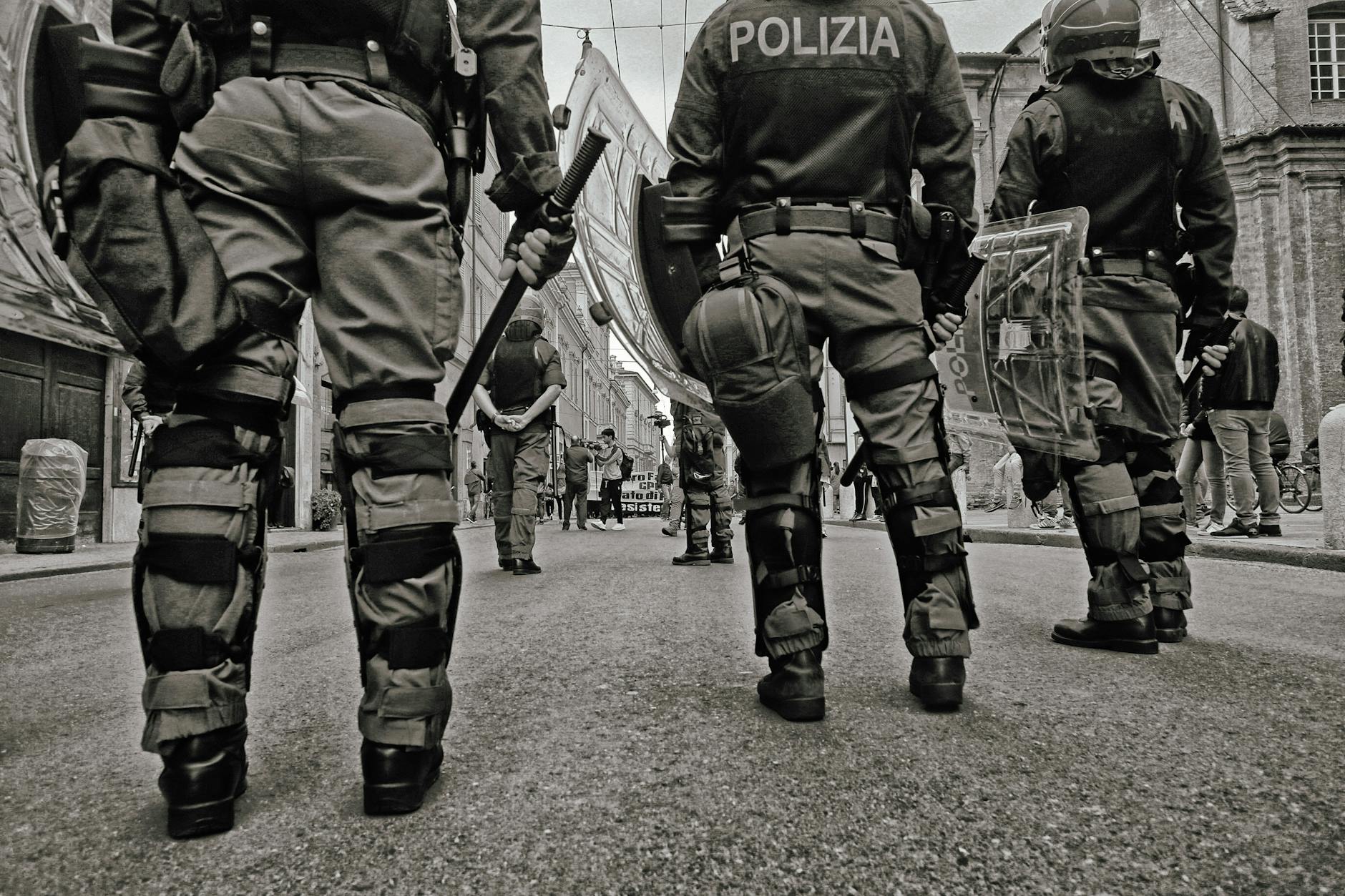
Tag: governance

  • Stewardship After the Noise

    Stewardship After the Noise

    The Resilient Philosopher | D. L. Dantes

    “If we reflected as much as we project, maybe we would be more productive.”
    D. L. Dantes

    The first three articles in this series diagnose a cultural drift that is easy to feel but hard to name. Definitions collapsed, and with them collapsed our ability to distinguish entertainment from authority, visibility from competence, and performance from stewardship. Once that confusion becomes normal, it does not stay inside social media. It migrates into parties, into institutions, into workplaces, and into government, because culture is the training ground for governance. The result is a society that keeps rewarding the loud while starving the capable. That is how fragile systems become normal, and normal systems become fragile.

    The fourth article is the correction, not in the form of slogans, but in the form of practice. Stewardship is not a talking point. Stewardship is a discipline that protects participation, builds successors, and keeps power aligned with purpose. This is where my published work matters, because the principles in my books were never written to win arguments. They were written to build leaders who can hold clarity under pressure. They were also written for those who can carry responsibility without turning it into ego. The only durable antidote to the noise is the cultivation of self leadership that can survive the noise.

    Leadership Begins Where the Camera Can’t Follow

    A culture addicted to optics will keep mistaking visibility for capacity. Stewardship begins in the places that do not trend, and it shows up in decisions that no one applauds. That is why leadership has to start internally, because internal instability always leaks outward. When leaders cannot regulate themselves, they cannot regulate systems. When they cannot be honest with themselves, they cannot be honest with the public. When they cannot hold discomfort, they cannot negotiate reality.

    My books return to one principle repeatedly, because it is the first gate. “Before you can lead anyone else, you must learn to lead yourself.” (Leadership Lessons from the Edge of Mental Health). This is not motivational language. It is systems logic. A leader who cannot manage impulse will manage people through control. A leader who cannot manage fear will manage organizations through intimidation. A leader who cannot manage ego will treat accountability as an attack. That is how fragile leadership becomes contagious.

    This is also why clarity is not a soft skill, it is a currency. “Leadership is not about confidence; it is about clarity.” (Mastering the Self). Confidence can be manufactured. Clarity cannot be faked for long. Clarity forces tradeoffs into the open. Clarity makes budgets real. Clarity makes consequences visible. A society that rewards performance will elect confident people who cannot explain tradeoffs. A society that rewards stewardship will elevate leaders who can translate complexity into accountable action.

    Influence Without Dependency

    In the earlier articles I reclaimed the word influence as a verb, not a title. That matters even more here, because influence is the channel through which leaders shape participation. Influence can either produce independence or produce dependency, and the difference is ethical. A leader is not measured by how many people agree with them. A leader is measured by what kind of people they produce. If leadership produces weaker citizens, weaker employees, and weaker successors, then the leader has built a kingdom, not a system.

    This is why the discipline of emotional sovereignty matters. “You cannot lead others if you are led by your reactions.” (Mastering the Self). Reactions create volatility. Volatility creates mistrust. Mistrust shrinks participation. When participation shrinks, everything collapses into survival thinking, and survival thinking is the easiest place for manipulation to thrive. A serving leader does not need to dominate the room. A serving leader stabilizes the room. That stability becomes permission for others to think, speak, and build.

    Influence also has an exposure test. “Influence built on emotional need is always manipulative.” (Mastering the Self). If the leader needs applause, the leader will eventually purchase it with distortion. If the leader needs followers, the leader will eventually punish dissent. If the leader needs to be seen as right, the leader will eventually treat truth as a threat. In contrast, the steward can tolerate being disliked because the steward is serving a mission, not a mirror.

    The Civic Standard Is Competence, Not Charisma

    The pipeline problem is not merely a party problem. It is a public education problem, not in degrees, but in civic literacy. A competent public can recognize competence. An untrained public will confuse confidence with credibility and slogans with plans. When that happens, incompetence does not need to hide. Incompetence can campaign openly, because the crowd is trained to reward theater.

    In my work I return to the idea that clarity is what leadership trades in. “People follow clarity, not charisma.” (Mastering the Self). Charisma is a tool. It can be used for good, but it can also be used as camouflage. Clarity is harder. Clarity forces leaders to describe the mechanism. Clarity forces them to admit constraints. Clarity forces them to state what they will stop doing in order to do what they promise. That is what receipts sound like. That is why the public should stop voting for smoke.

    Competence also requires a relationship with truth that can survive pressure. “Truth became a threat, not a value.” (Leadership Lessons from the Edge of Mental Health). When truth becomes a threat, the system becomes defensive. When the system becomes defensive, accountability becomes dangerous. When accountability becomes dangerous, the only people who thrive are performers and power brokers. This is how leadership becomes a brand, and governance becomes a stage. A stage is fragile because it is built to hold attention, not to hold weight.

    Stewardship Creates Successors, Not Dependents

    The practical correction is not to demand perfection from leaders. The practical correction is to demand successor development. A leader who cannot produce successors is not stewarding the institution, they are occupying it. A party that cannot produce leaders is not failing because the people are unworthy. It is failing because the pipeline is not being built intentionally. That is why competitive renewal matters, not as punishment, but as an accountability ritual that keeps stagnation from becoming normalized.

    My books treat legacy as something broader than position. “To be remembered through action is intentional.” (The Resilient Philosopher). That line matters in politics, in organizations, and in families, because it reframes leadership away from permanence. The steward does not cling to the chair because the steward is not trying to be immortal. The steward is trying to build a structure that continues without them. That is what maturity looks like. That is what self care looks like too, because serving leadership is supposed to be sustainable.

    This is also why discipline is not punishment, it is protection. “If your words are clear, you do not need to be loud.” (Mastering the Self). Loudness is often an attempt to force certainty. Clarity is the act of carrying uncertainty without lying about it. When leaders can do that, they do not need to manipulate. They can speak plainly. They can negotiate. They can admit limits. They can still lead.

    AI, Automation, and the Return of Human Stewardship

    Automation is a stress test because it accelerates the consequences of fragile leadership. If corporations replace workers without building transition pathways, participation shrinks and the consumer base weakens. If the consumer base weakens, demand weakens. If demand weakens, layoffs multiply. A society that tries to patch that with money alone will quickly discover something. Money does not rebuild dignity. It does not restore skill or belonging. The solution is productive reattachment, not dependency, and productive reattachment requires leadership competence.

    This is where human stewardship becomes non negotiable. Data can optimize, but data cannot carry conscience. Tools can scale, but tools cannot replace the moral center of a society. In my work, I repeatedly focus on the responsibility of leaders to maintain ethics under pressure. Pressure is what reveals character. The future will reward those who can integrate technology without sacrificing people. A leader who treats humans as overhead will eventually destroy the system that makes profit possible.

    The correction is not nostalgia. The correction is stewardship. Stewardship involves aligning power with purpose. It also builds pipelines of competence. Additionally, it protects participation, ensuring the system remains stable and human. That is the full arc of this series. Definitions restore competence. Competence restores trust. Trust restores participation. Participation restores stability. Stability allows innovation without collapse.

    Closing Reflection

    The loudest era will always try to convince you that the loudest people should lead. The most dangerous era will always try to convince you that attention is the same as authority. But leadership is not a title and it is not an aesthetic. Leadership is the ability to carry responsibility without turning it into ego. Leadership is the ability to build successors without feeling replaced. Leadership is the ability to hold truth when the crowd wants comfort. Stewardship is the proof that leadership is real.

    If we want institutions that can survive pressure, we have to rebuild the standard that produces leaders. That standard is not celebrity. It is competence. It is discipline. It is clarity. It is successor development. It is the refusal to confuse influence with manipulation. The system will not be saved by louder voices. It will be saved by clearer ones, and clarity begins inside the person who is willing to lead themselves first.

    References

    Dantes, D. L. (2025). The Resilient Philosopher. Vision LEON LLC.
    Dantes, D. L. (2025). Mastering the Self. Vision LEON LLC.
    Dantes, D. L. (2025). Leadership Lessons from the Edge of Mental Health. Vision LEON LLC.

  • The Fragility of Trust: How Economy and Government Interconnect

    The Fragility of Trust: How Economy and Government Interconnect

    The Resilient Philosopher | D. L. Dantes

    “If we reflected as much as we project, maybe we would be more productive.”
    D. L. Dantes

    People talk about government as if it is separate from the economy. They also talk about the economy as if it is separate from government. That separation is convenient, but it is not accurate. The two are mirrors of each other because both are systems built on trust, incentives, and participation. When government becomes fragile, the economy becomes fragile. Uncertainty spreads through households and markets. It spreads in the same way through institutions. When the economy becomes fragile, government becomes fragile because desperation turns policy into a battlefield instead of a stewardship exercise. Fragility is contagious because the same people live inside both systems.

    The most dangerous part of instability is that it is not limited to the period in which it happens. Instability creates a long shadow. It delays investment, erodes participation, and breaks the social habits that hold productivity together. Recovery takes years not because people are weak, but because systems are slow. A damaged bridge does not heal itself because you want traffic to move again. It has to be rebuilt. The same is true of trust, and trust is the infrastructure that every economy runs on.

    Instability Compounds and Recovery Gets Taxed

    Every time a society tolerates prolonged dysfunction, it pays for it twice. It pays during the dysfunction and it pays during the recovery. When wages do not match the cost of living, participation shrinks. People still work, but they work in survival mode. They stop taking risks that could grow the economy. They stop moving. They stop investing. They stop training. They stop planning. That is not laziness. That is what happens when the margin disappears. A country does not become weaker only because the numbers look bad. A country becomes weaker because citizens cannot participate with stability.

    This is where crime, records, and long-term damage enter the conversation. When people fall into petty crime or desperation decisions, the record follows them longer than the struggle. A record closes doors. Closed doors reduce employability. Reduced employability reduces the tax base and increases social cost. This creates a feedback loop that punishes the system for failing to protect participation. I am not excusing harm. I am explaining systemic leakage. A society that blocks people from re-entering productive life is not creating safety. It is creating permanent inefficiency.

    The Consumer Base Is Not a Luxury, It Is the Engine

    There is a myth that only the top drives the economy. The top can drive investment, but the base drives continuity. The majority of citizens buy essentials and sustain daily demand. If the base loses purchasing power, businesses lose consistent customers. If businesses lose consistent customers, they freeze hiring, cut hours, and cut investment. When that happens, wages fall behind, and the base loses more purchasing power. This is how an economy can spiral even when the stock market looks strong. A market can be rising while participation is shrinking. A society that confuses those signals will be surprised by recession. They will describe it as sudden, even though it was built slowly.

    This is why leadership has to be measured by the ability to protect participation. Participation is not only about people showing up to work. Participation is about people having enough stability to plan, train, and contribute beyond survival. A leader who cannot understand that will keep celebrating numbers while ignoring the human infrastructure that generates those numbers.

    AI and Automation as a Stress Test

    AI is not the first technology to disrupt labor. But it may be the fastest. It may affect the white-collar layer. This feels unfamiliar to a society that thought automation was mainly physical. If corporations replace workers faster than the system can reattach people to productive work, the consumer base shrinks. If the consumer base shrinks, demand shrinks. If demand shrinks, profits shrink. If profits shrink, more layoffs follow. That is not ideology. That is a demand loop.

    The public conversation often jumps to the idea that the government can simply send money to stabilize consumption. That is a temporary patch, not a system. If displacement becomes wide enough, the generosity of the patch will not matter. The patch has to be funded, and it does not restore dignity or skill. A society cannot permanently replace work with transfers without either increasing debt risk, increasing inflation risk, or increasing social division. There is a reason humans want to be useful. A stable economy is not only the circulation of money. It is the circulation of purpose.

    The Non-Welfare Solution Is Productive Reattachment

    If we want stability without dependency, the goal is not to pay people for nothing. The goal is to pay people to rebuild capability. That is what stewardship looks like in policy form. The first lever is training pipelines that are tied to real labor demand and paid pathways. Paid apprenticeships help reattach people to work. Accelerated credentials offer new opportunities. Partnerships between employers and local institutions support workforce development without treating people like problems. The second lever is mobility and licensing reform so people can move toward opportunity without bureaucratic traps. The third lever is competition policy. Concentrated markets can extract value from the base. They do this without being forced to innovate or lower prices.

    The fourth lever is automation accountability. I am not talking about banning innovation. I am talking about requiring transition planning. A corporation that extracts labor cost through automation should be expected to invest in redeployment. It should also invest in retraining. This is especially true if it benefits from public infrastructure and public stability. That is not punishment. That is reciprocity. If society provides the environment where profits are possible, then the system must ensure the consumer base remains intact. This will prevent it from being hollowed out. This consumer base makes those profits real.

    Competence Is a Civic Skill, Not a Political Brand

    This is why leadership competence matters so much right now. The future will not be managed by slogans. It will be managed by people who understand incentives, constraints, budgets, and systems. If the public continues to choose performance, theater will govern the systems. This will happen during a period when theater cannot carry the load. A fragile government cannot manage technological displacement well because it cannot negotiate durable policy. A fragile government cannot stabilize markets well because it cannot sustain credibility. A fragile government also cannot maintain trust. Trust is the only currency that holds complex systems together when uncertainty is high.

    A competent society does not need everyone to be an economist. But it does need the public to recognize competence when it sees it. It needs voters to demand receipts, to demand tradeoffs, and to demand implementation plans. It needs parties to produce successors and to maintain pipelines of leaders who can govern, not merely campaign.

    Closing Reflection

    Fragility is contagious because systems are connected through people. When citizens lose stability, institutions lose legitimacy. When institutions lose legitimacy, the economy loses confidence. When the economy loses confidence, citizens lose stability again. That is the loop that turns discomfort into crisis. It is also the loop that makes recovery so slow after prolonged dysfunction. The longer instability is tolerated, the longer the shadow becomes.

    We must prevent the next great recession from becoming the next great collapse. To do this, we have to stop treating civic competence as optional. We have to stop rewarding performance and start rewarding stewardship. We have to protect participation, not through dependency, but through productive reattachment. Work is not only income. Work is membership in the system. A society that forgets that will keep trying to patch holes with money. It will also ignore the structure that is cracking underneath.

  • The Christian Nation Myth: A Threat to Pluralism and Liberty

    The Christian Nation Myth: A Threat to Pluralism and Liberty

    The Resilient Philosopher | D. L. Dantes

    “As the Government of the United States of America is not in any sense founded on the Christian religion…”
    Treaty of Tripoli, Article 11 (1797)

    The phrase Christian nation is often used as if it is a harmless description. For some people it means a cultural memory. For others it means a moral aspiration. For others it is a political demand. The issue is not that citizens are Christian. It is not that Christians vote. It is also not that Christians argue for policies shaped by conscience. The problem starts when the nation is treated as a religious identity. At that point, the state feels pressured to act like a church.

    This article is not an attack on Christianity. It is a warning about confusion. A free nation can’t survive if civic belonging depends on creed. Pluralism collapses the moment the state starts sorting citizens by theology. That is why the Constitution draws a boundary. It protects free exercise and blocks establishment. The government can’t be both neutral and confessional at the same time.

    What people mean when they say Christian nation

    Some people use the phrase to mean that Christian ideas influenced American culture. That is historically plausible in the broad sense. Many early Americans were Christian. Christian moral language was common in public life. But influence is not the same as foundation, and culture is not the same as law. When the phrase is used as a political claim, it usually means something more than history. It implies that Christianity should be privileged as the default civic identity.

    That move matters. Once a faith becomes the default civic identity, dissent becomes deviance. A minority religion becomes suspicious. A nonreligious citizen becomes a second class participant in the nation’s moral story. The state is no longer protecting rights. It is managing belonging.

    The Treaty of Tripoli as a clarity test

    The Treaty of Tripoli line is often argued over, but it remains useful as a clarity test. It signals that the United States was not formed as a confessional state with Christianity as its legal foundation. That aligns with the broader constitutional structure. The Constitution includes no religious test for office. Additionally, the First Amendment restricts establishment.

    You do not need this sentence alone to defend religious liberty. You need the discipline behind it. A government that is not founded on a religion can still protect religion. In fact, that is how it protects religion best, by refusing to make one creed the currency of citizenship.

    From cultural pride to legal preference

    “Identity becomes dangerous when it needs an enemy to feel real.”
    D. L. Dantes, The Resilient Philosopher: The Prism of Reality

    Here is the pivot that changes everything. A citizen can be proud of a tradition. A citizen can argue that their moral framework is good for society. A citizen can persuade and serve and build communities. Those are legitimate forms of influence.

    The constitutional problem appears when cultural pride becomes legal preference. That is when public institutions are pressured to show doctrine as identity. They are pushed to fund or favor one faith. Religious conformity is treated as civic virtue. That is also where theological ideology in governance becomes functional establishment, even if no one uses the word theocracy.

    The hidden cost: fragmentation inside the faith

    A Christian nation claim also hides an internal problem. Christianity is not one church. It is many denominations, many interpretations, and many competing moral priorities. If the state privileges Christianity, it must decide which Christianity gets privileged in practice. That does not create unity. It creates a struggle for the throne.

    The conflict is not only between Christians and non Christians. It is between Christians and Christians. Whoever wins the political moment gets to define what counts as family. They decide what counts as moral education, what counts as acceptable speech, and what counts as legitimate citizenship. That is not religious renewal. That is sectarian capture.

    The leadership standard: conscience without conquest

    Leadership in a pluralistic society requires a difficult maturity. It requires the ability to hold conviction without turning conviction into domination. That maturity is what separates persuasion from coercion, influence from control, and moral seriousness from moral empire.

    A free nation is not one where everyone agrees. A free nation is one where disagreement does not disqualify belonging. That is why the First Amendment is not a technical detail. It is a leadership ethic written into law. It protects conscience by refusing to let any one conscience become the state’s conscience.

    Closing reflection

    This series began by defending the boundary. Then it explained why neutrality is protection, and why law becomes dangerous when it turns into theology. This article adds the identity layer, because the phrase Christian nation is not only about religion. It is about who belongs, who is trusted, and who is treated as the nation’s moral default. When national identity becomes religious identity, the state faces a permanent temptation. It enforces unity through privilege and punishment. This is how a free nation starts resembling a confessional regime. It resembles this even while claiming it is only restoring values.

    The final article will close the arc by separating religious liberty from religious rule. The healthiest influence of faith is not control. It is persuasion, service, and example. A society can be deeply religious and still refuse establishment, because the refusal is not hostility. It is humility. If the state can create one faith today, what stops it from establishing a different faith tomorrow?

    Source Notes

    Treaty of Tripoli (1797), Article 11.
    U.S. Constitution, Amendment I.

  • The Dangers of Mixing Religion and Government in Society

    The Dangers of Mixing Religion and Government in Society

    The Resilient Philosopher | D. L. Dantes

    “Religion & Govt. will both exist in greater purity, the less they are mixed together.”
    James Madison, Letter to Edward Livingston (1822)

    There is a point where moral conviction stops being persuasion and becomes enforcement. That shift can feel righteous to the people holding power, because it is easy to confuse certainty with legitimacy. But a free society survives on a different discipline. It requires the humility to admit that the state is not a church, and law is not a sermon.

    This is the moment the series has been building toward. Neutrality is not hostility, but neutrality is not the end of the story. The real danger begins when governance starts to speak in sacred vocabulary. Once policy is framed as a divine mandate, disagreement stops being a civic act. It becomes moral deviance.

    The mechanism: from values to vows

    Every citizen has values. Every community has moral instincts. That is normal. The problem begins when the state takes one group’s moral vocabulary and treats it as the nation’s vow. When law becomes theology, the state is no longer arguing for public order. It is declaring spiritual order. It is implying that compliance is virtue and dissent is flaw. That is not merely a policy shift. It is a transformation of what citizenship means.

    A government can survive disagreement. It can’t survive a permanent purity test, because purity tests convert neighbors into suspects. They turn civic life into surveillance. They reward performance over character, and they make hypocrisy a rational survival strategy. A society that trains people to act goodness to avoid punishment eventually becomes their reality. They can’t tell goodness from fear.

    Who interprets becomes who rules

    Religious law is never just law. It is interpretation. The real question is not whether a society has religious values. The real question is who has the authority to define what God requires in practice. Once the state begins to enforce theology, interpretation becomes the highest form of political power. Courts, agencies, legislatures, and executives are then forced to act like doctrinal tribunals.

    Government turns into a tribunal. It decides which actions are moral. It determines which words are acceptable, which families are valid, and which citizens are trustworthy. That is why Madison’s warning is not anti religion. It is pro integrity. Mixing government with religion makes government hungry for sacred legitimacy, and it makes religion dependent on force. Both lose purity. Both lose credibility.

    Coercion creates compliance, not conscience

    “Power does not only control bodies. It attempts to control meaning.”
    D. L. Dantes, The Resilient Philosopher: The Prism of Reality

    A citizen can comply while privately rejecting the claim. That is the predictable outcome of moral law enforced by state power. It produces behavior that looks virtuous, but it does not produce virtue. This is where leadership becomes ethical or authoritarian. Ethical leadership persuades and invites. Authoritarian leadership coerces and demands, and it relies on fear because fear is faster than trust.

    Fear does not build a resilient society. Fear builds silence. Silence builds resentment. Resentment eventually builds rupture. That is not because people hate morality. It is because people know when they are being controlled, and they adapt by hiding instead of growing.

    The dissent problem: heresy as policy disagreement

    In pluralistic societies, disagreement is normal and necessary. It is how errors are corrected. Theological governance can’t tolerate ordinary disagreement, because disagreement threatens the sacred narrative that justifies power. That is why theocratic tendencies often slide into censorship, loyalty oaths, and social exclusion. A divided religious coalition becomes a divided nation when the state enforces sacred truth.

    The result is predictable. Faith becomes partisan. Politics becomes holy war. The citizen becomes a believer by necessity rather than conviction. Once identity becomes creed and creed becomes law, the state no longer protects the boundary between soul and system. It erases it.

    The leadership standard: restraint under certainty

    If you believe your worldview is true, the temptation is to prove it by law. But if truth needs coercion to survive, it is no longer truth being defended. It is power being protected. Restraint is not compromise of conviction. It is the recognition that government has a limited role and that conscience is not a commodity.

    A leader with integrity accepts that the state can protect a space for faith, but it can’t manufacture faith. It can uphold rights, but it can’t enforce devotion without corrupting devotion. This is why restraint is not weakness. It is the highest form of strength in a pluralistic society. It refuses the easy path of domination. Instead, it chooses the harder path of legitimacy.

    Closing reflection

    Neutrality is the boundary, but boundaries only matter when they are tested. This article describes the consequences when that boundary is crossed. Once law starts wearing the language of theology, government stops protecting conscience. Instead, it starts managing it. In that environment, policy disputes are no longer treated as disagreements between citizens. They are treated as moral defects, and eventually as threats that must be contained. That is how a civic system becomes doctrinal. This is also how a pluralistic society learns to fear its own diversity.

    The next article takes the argument one step further. It shows how religious identity can be fused into national identity. This fusion pressures public institutions to become instruments of conversion rather than instruments of service. A nation can survive deep disagreement when disagreement is permitted to stay civic. It can’t survive when disagreement is renamed as spiritual disloyalty. The state will always be tempted to enforce unity by force once it believes unity is sacred. If the state can create one faith today, what stops it from establishing a different faith tomorrow?

    Source Notes

    U.S. Constitution, Amendment I.
    Madison, J. (1822). Letter to Edward Livingston.

  • Authority Without Accountability

    Authority Without Accountability

    The Resilient Philosopher

    Public discourse often collapses authority into a single shape. Police, federal agents, immigration enforcement, and even the military are spoken about as if they are interchangeable. They are not. The distinction between them matters, not politically, but ethically and constitutionally.

    When those distinctions blur, power stops being restrained by purpose. It becomes defined by convenience.

    To understand what is happening, we must first define what these institutions actually are, not what the noise suggests they are.

    What Police Are Meant to Be

    Police are municipal or state agents of civil order. Their authority is local, geographically limited, and grounded in community presence.

    They exist to respond after laws are broken, to investigate, to maintain order, and ideally to de escalate conflict. Their legitimacy depends on visibility, identification, and proximity to the people they serve. Police operate among the population, not above it.

    They are constrained by:

    • local and state law
    • constitutional protections
    • judicial oversight
    • community accountability

    When policing fails, it usually fails through escalation, fear, or loss of restraint. But structurally, police are meant to function within a civic relationship. That relationship is imperfect, but it is foundational.

    What Federal Agents Are

    Federal agents are not community based. They are mission based.

    Their authority comes from Congress and is limited to specific federal statutes. They investigate crimes that cross state lines, involve federal property, or implicate national interests. Their jurisdiction is national, but their mandate is narrow.

    Federal agents are insulated from local politics, but they are still bound by:

    • federal law
    • judicial review
    • defined scopes of investigation
    • identification and chain of command

    They are not general enforcers. They are specialists.

    This distinction matters because federal power was intentionally designed to be limited, not omnipresent.

    What ICE Actually Is

    Immigration and Customs Enforcement occupies a fundamentally different space.

    ICE does not primarily enforce criminal law. Immigration violations are civil matters. Yet ICE operates with tactics, equipment, and authority that resemble criminal enforcement.

    ICE arrests.
    ICE detains.
    ICE uses force.
    ICE conducts operations that resemble raids.

    But the underlying violations are often administrative, not criminal.

    This creates a structural contradiction.

    Civil law is being enforced with criminal force.

    Status Versus Behavior

    Police and federal agents respond to behavior. Something was done. A law was broken. Evidence exists. Process follows.

    ICE enforcement centers on status.

    Who someone is allowed to be.
    Where someone is permitted to exist.
    What documentation they possess.

    This shift from behavior to identity changes the ethical landscape entirely.

    When enforcement is based on behavior, restraint is easier to justify. When enforcement is based on status, restraint becomes inconvenient.

    That is why identity based enforcement demands the highest ethical safeguards. Instead, it has been granted some of the loosest.

    Anonymity and the Collapse of Accountability

    Visibility is not cosmetic. It is ethical.

    When an agent carries authority, a weapon, and legal protection, identification is not optional. It is the mechanism by which accountability remains possible.

    Masked enforcement does not protect democracy. It protects detachment.

    When power is anonymous:

    • fear replaces legitimacy
    • compliance replaces consent
    • accountability is deferred to internal review
    • abuse becomes harder to trace

    A system that requires anonymity to function is already signaling a lack of ethical confidence.

    Militarized Appearance Without Military Constraint

    Armed forces operate under strict legal and ethical codes. They are identifiable. Their ranks are visible. Their authority is constrained by rules of engagement and military law.

    When civilian agencies adopt military aesthetics without military accountability, the result is performative power without restraint.

    This is not security. It is psychological conditioning.

    It trains the public to accept war posture in civilian space while stripping away the safeguards that normally accompany it.

    It also trains the agent to see the environment as hostile rather than civic.

    That shift is subtle, but it is corrosive.

    Why Recruitment Standards Matter

    It is difficult to enter many federal agencies because those roles require discretion, judgment, and ethical interpretation.

    It is comparatively easier to enter ICE and border enforcement roles because those positions prioritize execution over interpretation.

    This is not an insult to individuals. It is a structural reality.

    When systems need rapid expansion, they select for compliance and endurance, not philosophical restraint. Reliability becomes more valuable than reflection.

    History shows that when obedience is prioritized over judgment, ethical drift follows.

    The Constitutional Tension

    The Constitution was designed to prevent concentrated power. Civil enforcement was never meant to bypass criminal safeguards by redefining the nature of the offense.

    When civil violations are enforced through detention, force, and fear, constitutional protections are not violated outright. They are eroded through reinterpretation.

    That erosion is more dangerous than open violation because it becomes precedent.

    Exceptional authority does not remain exceptional.

    The Ethical Question That Remains

    This is not about whether enforcement is legal. It is about whether it is legitimate.

    Legitimacy requires:

    • proportionality
    • transparency
    • accountability
    • moral symmetry

    When enforcement is detached from community, shielded from visibility, and justified through identity rather than behavior, legitimacy collapses quietly.

    What emerges is authority without accountability.

    And authority without accountability does not need to be cruel to become dangerous. It only needs to become normal.

    The Resilient Philosopher Podcast Community

  • Leadership in Economics: Rethinking Public Service Impact

    Leadership in Economics: Rethinking Public Service Impact

    The Resilient Philosopher


    Abstract

    This paper examines the growing convergence between leadership theory, economic systems, and governance in both the United States and abroad. Drawing on empirical research, policy analysis, and economic data, it explores how the adoption of business models within government institutions has altered the nature of public service, accountability, and democratic representation. By integrating cross-national comparisons, the analysis highlights the economic, political, and psychological implications of privatized governance and offers a neutral examination of how leadership structures evolve when profit replaces purpose as the central motive.


    Introduction: The Transformation of Governance

    In the twenty-first century, governance has increasingly adopted the structure and logic of private enterprise. From the language of “efficiency” and “performance metrics” to the implementation of public-private partnerships and corporate lobbying, governments around the world have integrated business methodologies into public administration. The stated goal has often been efficiency, but the result has been a transformation in how leadership functions within democratic systems.

    Political leaders are now measured by short-term economic growth rather than long-term civic health. Policies are evaluated in terms of return on investment rather than ethical or social outcomes. The concept of leadership, once defined by service and stewardship, is frequently redefined as brand management. This shift raises an essential question: can a government designed to serve the public remain democratic when it operates like a corporation?


    Section I: From Service to Management—The Rise of the Corporate State

    The idea of “running a government like a business” has deep roots in American political rhetoric. Proponents argue that applying private-sector efficiency can reduce waste and improve performance. However, evidence suggests that while certain operational efficiencies may improve, the moral and civic functions of government are compromised in the process.

    Political economist Wendy Brown (2015) observes that neoliberal governance reframes citizens as economic actors and the state as a service provider, leading to the erosion of democratic accountability. Governments that adopt market logic often prioritize cost-effectiveness over moral responsibility, shifting focus from equality to competition.

    This shift is not unique to the United States. The United Kingdom’s post-Thatcher reforms and the European Union’s austerity programs similarly embraced managerial governance. In both contexts, public institutions became quasi-corporate entities, guided by market performance rather than civic welfare.

    According to the OECD, public administration reforms that emphasized “value for money” and “customer choice” led to measurable declines in citizen trust between 1995 and 2019 (OECD, 2020). While efficiency improved in procedural terms, citizen engagement and perception of fairness declined—suggesting that leadership detached from empathy undermines democratic legitimacy.


    Section II: Lobbying, Investment, and Political Influence

    Corporate influence in policymaking has long been a defining feature of modern governance. According to OpenSecrets (2025), the securities and investment industry alone spent over $88.9 million on lobbying in the United States in a single year. Total lobbying expenditures across all industries reached approximately $4 billion annually.

    Lobbying does not operate exclusively through campaign donations; it functions as a parallel governance mechanism. Studies from the London School of Economics and Transparency International demonstrate that corporate lobbying affects not only legislation but also regulatory enforcement, shaping laws to favor investors over citizens (LSE, 2021).

    In global terms, similar patterns emerge. The European Commission’s Transparency Register documents more than 12,000 active lobbying entities, many of which represent multinational corporations rather than local constituencies. In developing economies, foreign direct investment and trade agreements often embed corporate interests within governance structures, limiting national sovereignty.

    The intersection of finance and politics blurs accountability. Political leaders become accountable to donors and investors rather than voters. In this structure, leadership is transactional, not transformational.


    Section III: Wall Street, Wealth Concentration, and Economic Cycles

    The concept that “Wall Street profits from both winners and losers” is supported by historical data. Research from Harvard Business Review (Kochhar & Fry, 2018) found that the 2008 financial crisis dramatically accelerated wealth inequality in the United States. Wealthier households, holding diversified assets, recovered rapidly after the crash, while lower- and middle-income households stagnated.

    Similarly, The Century Foundation reports that during post-recession recoveries, the top 10% of households consistently regain lost wealth within three years, while the bottom 50% experience negligible or negative net change (Baradaran, 2020).

    Globally, the World Inequality Database confirms that wealth recovery after crises disproportionately favors capital holders. The COVID-19 pandemic provided another case study: between 2020 and 2022, billionaire wealth increased by $3.9 trillion, while global poverty rose by over 70 million people (Oxfam, 2022).

    These outcomes reveal a structural issue: when markets crash, ownership consolidates. As small investors exit, institutional investors buy assets at reduced prices, amplifying the concentration of power. Wall Street—and financial markets globally—depend on transaction volume and volatility, not social stability.


    Section IV: The Ethics of the “Government-as-Business” Model

    A government designed to generate profit rather than justice risks undermining its own legitimacy. When citizens are treated as customers, civic duty becomes optional. A democracy cannot be sustained solely by transactional relationships.

    Political theorist Sheldon Wolin (2008) described this as “inverted totalitarianism,” a state where corporate and governmental power merge under the guise of democracy. In such a system, citizens retain the illusion of participation while real decision-making occurs through economic leverage.

    The American healthcare system illustrates this principle. Members of Congress receive healthcare coverage through the Federal Employees Health Benefits Program (FEHB), subsidized by taxpayers (CRS, 2022). Meanwhile, approximately 27 million Americans remain uninsured, and healthcare costs continue to rise faster than inflation (KFF, 2024). Both major political parties have accepted campaign contributions from the healthcare industry, limiting structural reform.

    The result is not necessarily corruption in the criminal sense—it is systemic incentive alignment. Profit-seeking behavior drives policy inertia. Leadership becomes management of public perception, not public good.


    Section V: Education, Critical Thinking, and Economic Systems

    The health of any democracy depends on the intellectual independence of its citizens. Research from Pew Research Center (2023) and OECD Education Data (2021) shows a decline in civic literacy and critical thinking skills among younger generations in advanced economies.

    The emphasis on standardized testing, marketable skills, and credentialism has created a form of “academic capitalism.” As sociologists Sheila Slaughter and Gary Rhoades (2004) argue, universities have increasingly adopted corporate models, focusing on research funding and commercialization rather than intellectual development.

    This trend mirrors the broader economic shift: education, once a public good, is now a private investment. Citizens are encouraged to acquire knowledge for employability rather than enlightenment. The consequence is a reduction in collective reasoning capacity—a society well-trained but poorly informed.

    Globally, similar patterns exist. In China, centralized curriculum reforms emphasize technical proficiency and ideological conformity. In Europe, budget constraints have forced universities into private partnerships. In the developing world, educational inequality perpetuates dependence on foreign capital. Across contexts, the erosion of critical thinking aligns with economic dependency.


    Section VI: Comparative Global Perspectives on Corporate Governance

    In Europe, post-2008 austerity policies reshaped governance into a managerial form. Nations like Greece, Spain, and Italy implemented reforms dictated by external creditors such as the International Monetary Fund and the European Central Bank. Sovereignty became conditional upon financial compliance.

    In Asia, neoliberal reforms transformed public institutions into corporate hybrids. Singapore’s model of technocratic governance—often praised for efficiency—relies on public-private integration, where ministers often hold board positions in state-linked corporations. While this model achieves stability, it challenges the separation of state and market.

    In Latin America, the relationship between government and business is more volatile. Countries like Brazil and Mexico oscillate between populism and privatization, producing cycles of growth and corruption. The World Bank has observed that public-private partnerships in infrastructure projects often benefit investors while delivering inconsistent social returns (World Bank, 2020).

    These comparisons reveal a shared trajectory: governments worldwide are adopting business frameworks as organizing principles. Efficiency replaces empathy, and profitability becomes a proxy for progress.


    Section VII: Leadership Ethics and the Economics of Trust

    Leadership is fundamentally a moral act. The transformation of government into a business enterprise has ethical implications that transcend economics. Research in behavioral economics demonstrates that public trust declines when people perceive leaders as self-interested.

    According to the Edelman Trust Barometer (2024), trust in government globally fell to 42%, with business trust remaining higher at 63%. This inversion indicates that citizens view corporations as more reliable than public institutions—a reversal of the traditional social contract.

    However, business trust is contingent, not absolute. When corporations engage in social responsibility initiatives, public approval rises. This suggests that moral leadership, even within profit-driven entities, retains intrinsic value.

    Leadership scholars such as Robert Greenleaf (1977) proposed “servant leadership” as a model that balances authority with humility. Although developed for organizational contexts, it applies equally to governance. Servant leadership prioritizes empathy, awareness, and ethical responsibility—qualities absent in purely economic models of governance.


    Section VIII: Economic Cycles, Policy Inertia, and Leadership Fatigue

    Economic systems inherently cycle through boom and bust phases, but political systems often fail to adapt. The International Monetary Fund (IMF) found that policy responses to crises increasingly favor capital stabilization rather than income redistribution (IMF, 2023).

    After the 2008 financial collapse, quantitative easing and low-interest policies restored market liquidity but did little to rebuild household wealth. The COVID-19 pandemic produced similar patterns. Emergency relief programs temporarily reduced poverty, but inflation and asset inflation later offset those gains.

    Leadership fatigue emerges when public officials continually manage crises without addressing structural inequities. Citizens, in turn, lose faith in institutions. The outcome is political polarization and civic disengagement—a pattern observed across both democratic and autocratic states.


    Conclusion: Redefining Leadership Beyond Economics

    The integration of business models into governance has produced measurable efficiencies but also profound moral consequences. Governments that adopt market logic risk transforming citizens into consumers and leadership into administration.

    The evidence demonstrates that when economic incentives dominate, social equality declines, wealth concentrates, and civic trust erodes. These outcomes are not the result of malice but of systemic alignment between economic and political power.

    To restore balance, leadership must be redefined as stewardship rather than strategy. Political leaders should measure success not by GDP or market growth but by literacy, trust, and human development. Economies exist to serve societies, not the reverse.

    The future of governance depends on whether societies can reintroduce moral purpose into economic logic. Leadership in the coming century must reconcile efficiency with empathy, and intelligence with integrity. Only then can public service reclaim its original meaning: the service of people, not profit.


    Works Cited

    Baradaran, Mehrsa. “A Tale of Two Recoveries: Wealth Inequality after the Great Recession.” The Century Foundation, 2020.

    Brown, Wendy. Undoing the Demos: Neoliberalism’s Stealth Revolution. Zone Books, 2015.

    Congressional Research Service. “Congressional Health Benefits.” CRS Report R46789, 2022.

    Edelman. 2024 Edelman Trust Barometer. Edelman Data & Intelligence, 2024.

    Harvard Business Review. Kochhar, Rakesh, and Richard Fry. “How the Financial Crisis Drastically Increased Wealth Inequality in the U.S.” Harvard Business Review, 2018.

    IMF. World Economic Outlook: Policies for Resilient Growth. International Monetary Fund, 2023.

    Kaiser Family Foundation (KFF). “Key Facts about the Uninsured Population.” KFF, 2024.

    London School of Economics. “The Political Economy of Lobbying and Financial Regulation.” LSE Research Paper, 2021.

    OECD. Government at a Glance 2020: Trust and Governance. OECD Publishing, 2020.

    Oxfam International. Inequality Kills: The Unprecedented Rise of Global Wealth during COVID-19. Oxfam, 2022.

    OpenSecrets. “Lobbying: Securities & Investment.” Center for Responsive Politics, 2025.

    Pew Research Center. “Public Knowledge and Civic Literacy in 2023.” Pew Research, 2023.

    Slaughter, Sheila, and Gary Rhoades. Academic Capitalism and the New Economy. Johns Hopkins University Press, 2004.

    Transparency International. “Lobbying in the European Union.” TI Report, 2021.

    Wolin, Sheldon S. Democracy Incorporated: Managed Democracy and the Specter of Inverted Totalitarianism. Princeton University Press, 2008.

    World Bank. Public-Private Partnerships for Infrastructure Development: Global Report 2020. World Bank Group, 2020.

    World Inequality Database. “Global Inequality Report 2022.” WID, 2022.