Tag: authoritarianism

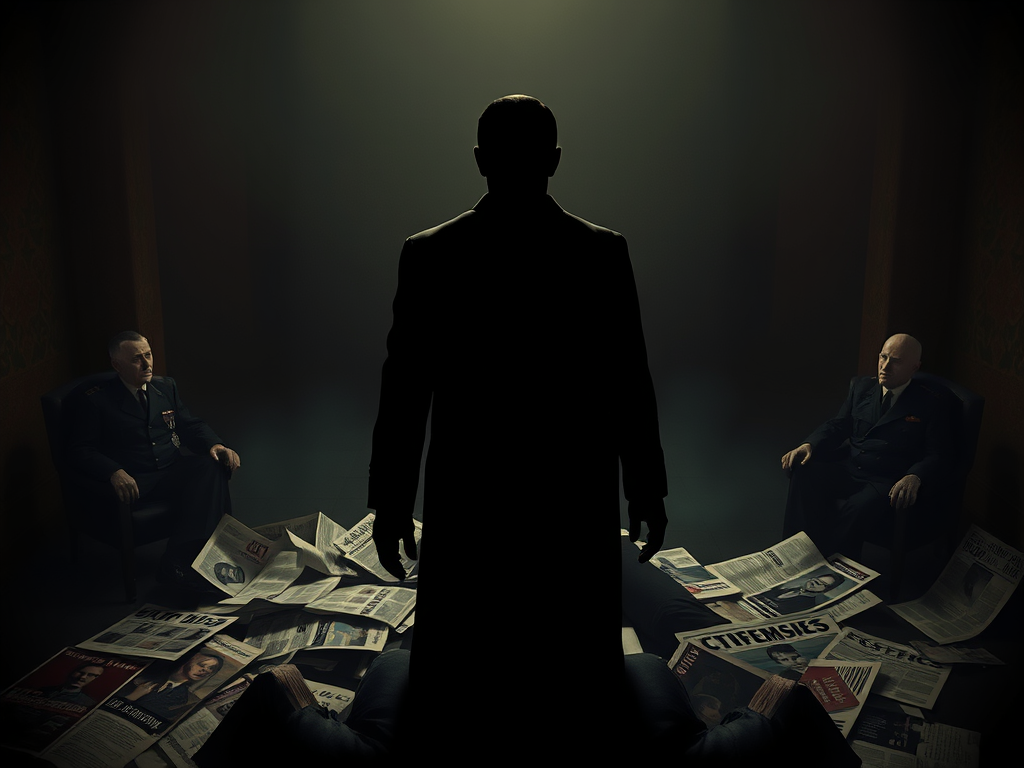
  • When Cruelty Becomes Acceptable: The Escalation of Extremes

    When Cruelty Becomes Acceptable: The Escalation of Extremes

    History does not fail because people are unaware of cruelty. It fails because cruelty becomes acceptable.

    There is a dangerous misconception that extreme ideologies collapse under their own weight. In reality, they rarely do. They evolve. They intensify. And when they no longer shock, they demand more.

    Extremes are not defined by how they begin, but by how they grow once they are normalized.

    Extremism Does Not Stabilize

    No ideology reaches a point where it says, this is enough.

    The first boundary crossed always feels justified. It is framed as necessary, temporary, or exceptional. Once crossed, that boundary loses its power. What was once unthinkable becomes reasonable. What was once extreme becomes insufficient.

    At that point, escalation is not optional. It is required for the ideology to remain alive.

    If an ideology does not intensify, it fractures. So it pushes further, seeking a sharper edge, a clearer enemy, a deeper demonstration of loyalty.

    This is not malice. It is momentum.

    When the Creators Become the Obstacle

    One of the most consistent patterns in history is this. The people who create an ideological space often become threats to it later.

    They remember limits.
    They remember context.
    They remember why restraint existed.

    That memory makes them dangerous.

    Cults that outlive their founders do not become more moderate. They become more rigid. Leaders who hesitate are replaced. Moderates are expelled. Dissent is reframed as betrayal.

    The ideology no longer serves the people. The people serve the ideology.

    This pattern is visible across history, regardless of culture or belief system.

    Christianity, Empires, and the Normalization of Cruelty

    Early Christianity was rooted in humility, service, and restraint. Once it aligned with empire, cruelty was no longer a contradiction. It became discipline. Violence became salvation. Dissent became heresy.

    The theology did not change first. Tolerance for cruelty did.

    The same pattern appears with empires and monarchies. Authority initially justified as protection becomes entitlement. Force justified as order becomes domination. Those who question excess are framed as destabilizers.

    Once cruelty is framed as necessary, it no longer requires moral defense.

    How Cruelty Becomes a Bond

    Cruelty does not sustain itself through hatred alone. It sustains itself through belonging.

    Participating in harm becomes proof of loyalty. Shared cruelty becomes a social bond. Refusal becomes a threat to group cohesion.

    This is why people who once felt protected by an ideology eventually feel hunted by it. The system no longer needs supporters. It needs examples.

    The moment cruelty becomes communal, restraint becomes suspicious.

    The Removal of Ethical Ceilings

    Every system has an ethical ceiling, whether explicit or implicit. It is the point beyond which behavior is no longer permitted.

    When exceptions are introduced repeatedly, that ceiling erodes.

    What begins as a rare measure becomes standard procedure. What begins as necessity becomes habit. What begins as protection becomes identity.

    Once the ceiling is removed, there is no stable endpoint. The system cannot return to moderation because moderation now feels like weakness.

    This is how cruelty stops being shocking and starts being procedural.

    The Illusion of Control

    Supporters of extreme measures often believe they will remain protected by their alignment. History offers no such reassurance.

    Systems that normalize cruelty do not stop at their original targets. They expand inward. They require new enemies to justify their existence.

    Those who helped normalize the system are often the least prepared to face it when the focus shifts.

    Cruelty does not recognize loyalty. It recognizes opportunity.

    Why This Pattern Matters Now

    This is not a prediction. It is pattern recognition.

    History shows that when anonymity, exceptional authority, and moral asymmetry become normalized, escalation follows. Not immediately, not dramatically, but inevitably.

    The most dangerous moment is not when cruelty appears. It is when cruelty no longer requires explanation.

    At that point, the system no longer needs leaders, justification, or ideology. It only needs continuation.

    The Quiet Warning

    Extremes do not arrive declaring themselves permanent. They arrive declaring themselves necessary.

    Once accepted, necessity becomes expectation. Expectation becomes entitlement. Entitlement becomes enforcement.

    This is how systems drift from protection to control without announcing the transition.

    The lesson history offers is not that cruelty is inevitable. It is that cruelty is incremental.

    And once a society accepts cruelty as normal, it must either escalate or collapse.

    There is no neutral ground once that threshold is crossed.
    The Resilient Philosopher Podcast Community

  • Fear and Dark Psychology: Manipulating Political Power

    Fear and Dark Psychology: Manipulating Political Power

    The Resilient Philosopher

    There is a reason people fall for the same patterns of manipulation over and over again. There is a reason entire nations can be persuaded to surrender their freedom without a single shot being fired. When leaders understand the shadows of the human mind, and citizens remain thirsty in a desert of misinformation, tyranny does not arrive with force. It arrives with applause.

    I have spent years studying how nations rise and fall, how dictatorships take form, and how ordinary people become obedient under the weight of collective fear. What I found is uncomfortable for many, but clarity is never supposed to comfort us. Truth is supposed to awaken us.

    When I look at figures like Hitler, Mussolini, and Fidel Castro, I see leaders who understood the psychological architecture of human vulnerability. They knew how to shape perception, how to control information, how to divide neighbors, and how to turn fear into the fuel that powers obedience. Some were strategic thinkers. Some were dark psychologists. Some were simply opportunists with enough charisma to hijack a nation’s insecurities and turn them into a weapon.

    And then there are modern leaders like Donald Trump. A man who does not operate from intellectual depth, nor from the calculated strategies of historical dictators. Instead, he stands as a reflection of narcissism elevated by a system that rewards spectacle over substance and fear over truth.

    Today, misinformation spreads faster than logic, and people become obedient even when they recognize the deception. When ignorance is fed by fear, it becomes a collective stupidity that blinds entire generations.

    This is the heart of dark psychology in politics.

    The Shadow Play of Manipulation

    Dark psychology is not about intelligence. It is about understanding the shadows of human nature. Hitler and Castro were different kinds of students. Hitler admired Mussolini not because of philosophy, but because Mussolini demonstrated how a leader could emotionally fuse nationalism, victimhood, and unity into a single psychological fire.

    Castro on the other hand mastered psychological control. He built a country where neighbors reported one another, where children grew up conditioned to protect the ideology even if it meant betraying a parent. He knew that people will conform when the cost of truth becomes too high. He perfected the art of silencing dissent by turning the population into his surveillance system. Every word, every breath, every whisper was a risk. That is how dark psychology becomes a culture.

    Trump does not operate at that level. His narcissism prevents him from understanding the emotional subtleties of control. He has tyrannical tendencies, but he lacks the psychological discipline that historical dictators wielded. His influence comes not from strategy, but from emotional resonance with societal frustrations. His power is a reflection of the nation’s anger, not his intellect.

    This is why he divides. Division protects narcissistic leadership. Unity threatens it.

    Fear as the Oldest Political Technology

    book 2

    Every generation believes it is living in the most dangerous moment in history. That is the cognitive dissonance that keeps people obedient. When someone claims that God is ending the world this year, they are using fear to validate their worldview. The same pattern repeats in politics.

    When rumors spread that a massive caravan of migrants is marching toward the United States, people feel fear. But if a hundred thousand people were walking into a sovereign nation together, that would not be immigration. That would be a declaration of war. Yet instead of questioning the logic, fear took over. That fear drove people toward leaders who promised to be strong enough to protect them.

    Fear always works because fear does not seek logic. Fear seeks comfort.

    And comfort often disguises itself as certainty, even when certainty is an illusion.

    The Mirage of Misinformation

    The most dangerous part of misinformation is not the lie itself. It is the obedience that grows out of exhaustion. When the noise becomes too loud, even those who see through the illusion become silent. They surrender just to escape the chaos.

    Ignorance does not grow by accident. Ignorance grows by design.

    When misinformation becomes the foundation of public conversation, the nation begins to split. Fear travels through families, workplaces, communities. Neighbors begin to view each other as suspects. Rumors become truth. Truth becomes offensive. And clarity becomes dangerous.

    Right now, I hear that a new government hotline may allow neighbors to report undocumented immigrants or criminal activity. This may sound like security, but it also mirrors old patterns in totalitarian systems. Stalin did it. Castro did it. Hitler used neighbors to expose dissenters. When fear becomes a civic duty, unity is destroyed.

    Governments fear unity because unity creates accountability.

    A divided people are easier to control than a united population.

    The Four Philosophers Who Warned Us

    Nietzsche once warned that when you stare into the abyss, the abyss eventually stares back. He understood how fragile the human mind becomes when faced with fear and unanswered questions. Dostoevsky understood human vulnerability in the face of oppression. And Dietrich Bonhoeffer, the theologian philosopher murdered by Hitler, stood against manipulation even when speaking truth meant his life would end.

    These three understood what I call the path of The Resilient Philosopher. Awareness is the only true defense against manipulation. To see clearly, I must look at fear without allowing it to shape my conclusions. I must challenge illusion even when others cling to it. And I must remain committed to clarity, because clarity is the essence of freedom.

    If these philosophers kept their light alive in times darker than ours, then we have no excuse to surrender ours today.

    Why We Need More Voices of Clarity

    Right now we live in a desert of misinformation. People are thirsty, but instead of seeking the oasis, they run toward the mirage that comforts their illusions. Truth is not beautiful. Truth is not soothing. Truth is water. It keeps me alive and aware. It forces me to think clearly even when the world embraces the comfort of collective ignorance.

    What we face today is not a battle between political parties. It is a battle between awareness and obedience. Between clarity and illusion. Between The Resilient Philosopher within us and the comfortable lie that demands our silence.

    The question is not whether dictators still exist. The question is whether we still have the courage to think freely.

    And I believe we do.

    Because every moment of clarity begins with one person willing to speak truth in a world full of noise.


    Call to Action

    If this reflection gave you clarity, share it with someone who is tired of fear based narratives and ready to think beyond the noise. Leadership begins when we choose awareness over obedience. Continue exploring these ideas with me at Vision LEON LLC and on The Resilient Philosopher podcast, where we challenge illusions and build a stronger foundation for personal and collective resilience.

    Peer Reviewed References

    • Arendt, H. (1951). The Origins of Totalitarianism. Harcourt.
    • Cialdini, R. (2006). Influence: The Psychology of Persuasion. Harper Business.
    • Kelman, H. C. (1973). Violence without moral restraint: Reflections on the dehumanization of victims and victimizers. Journal of Social Issues.
    • Pratkanis, A., & Aronson, E. (2000). Age of Propaganda: The Everyday Use and Abuse of Persuasion.
    • Post, J. M. (2010). Leaders and Their Followers in a Dangerous World. Cornell University Press.
    • Zimbardo, P. (2008). The Lucifer Effect. Random House.
  • The Comfortable Lie and the Alpha Delusion: How Insecurity Masquerades as Power

    The Comfortable Lie and the Alpha Delusion: How Insecurity Masquerades as Power

    By D. León Dantes | Vision LEON LLC | The Resilient Philosopher


    Introduction: When the Truth No Longer Sells

    The age of facts has been overthrown by the age of feeling. Objective truth now competes with curated fiction—and fiction is winning. We do not live in an information age; we live in an affirmation age. And in this new terrain, there is a dangerous illusion rising—a delusion cloaked in confidence, fueled by insecurity, and sold as leadership.

    It is the lie of the “alpha.”


    Philosophy Is the Mirror You Walk Through

    Philosophy is not an abstract conversation reserved for old men and dusty books. It is the architecture of your life—the silent framework of every decision you make. Whether you realize it or not, you live by a philosophy. And if you haven’t chosen one, someone else has chosen it for you.

    You were given the beliefs of your parents, the system of your schooling, the scripts of your society. And most people stop there. They remain programmed by authority and call it adulthood. But real adulthood, as Viktor Frankl wrote in Man’s Search for Meaning, “is the moment you stop asking what you expect from life—and start asking what life expects from you.” That question is philosophical. That question is leadership.


    Indoctrination Wears a Smile

    Schooling is not the same as thinking. Education becomes indoctrination the moment it rewards obedience over inquiry. And in today’s polarized climate, it’s not just institutions doing the indoctrinating. It’s social tribes, political factions, and algorithmic echo chambers. As Robert Cialdini demonstrated in Influence: The Psychology of Persuasion, humans are wired for consistency and social proof—so once we adopt a belief, we cling to it even when it no longer serves us. This is why so many become parrots of ideas they never challenged.

    A free mind is dangerous. A loyal mind is marketable.


    The Alpha Delusion: A Costume for the Insecure

    What does it mean to be an alpha?

    In evolutionary biology, an alpha was the dominant male in a primate group—but that dominance was not based on screaming, stomping, or social media posts. It was based on competence, stability, and protection of the group. Today, the term has been hijacked by insecure men projecting power they do not possess. They speak louder, not wiser. They intimidate instead of inspire. They hide their fear of irrelevance behind curated dominance.

    As Carl Jung warned, “The brighter the persona, the darker the shadow.” A man who must declare himself “alpha” is broadcasting his shadow—the part of himself he cannot accept. His ego is fragile, not strong. His leadership is theatrical, not transformational.


    The Comfortable Lie: Why Conspiracies Seduce the Mind

    People don’t just believe in conspiracies because they’re gullible. They believe because conspiracies offer something comforting: a simple explanation for their pain. It’s easier to believe that a “deep state” is behind your failures than to accept personal responsibility. It’s easier to blame a shadowy cabal than to ask yourself, Where did I go wrong?

    Occam’s Razor, the principle that the simplest explanation is usually the right one, gets thrown away in favor of elaborate webs of imagined enemies. This is not critical thinking—it is emotional outsourcing.

    And worse, it’s addictive.

    As philosopher Hannah Arendt observed in The Origins of Totalitarianism, mass movements thrive not by convincing people of lies, but by making them comfortable with contradiction. “Before they seize power, totalitarian movements use conspiracy theories to make truth relative and reason irrelevant.”


    The Cult of the Strongman

    There’s a reason why false messiahs rise so easily. The insecure seek saviors. They don’t want to be led toward growth; they want to be told who to hate. They don’t seek freedom; they seek a master who flatters their prejudice.

    Leadership, in its truest form, is not domination—it’s responsibility. But followers who have been mentally and emotionally broken by fear or failure often confuse control with strength. They follow louder voices instead of wiser ones.

    True leadership is not the man who stands above others. It’s the man who builds others to stand beside him.


    Psychological Seduction: Obedience in Exchange for Identity

    The reason cult-like movements gain momentum is because they offer something no textbook or truth can easily provide: belonging. And belonging, when mixed with trauma or unresolved ego, becomes a powerful currency. In obedience, people find identity. In slogans, they find certainty.

    But this obedience has a cost: the loss of the self.

    Erich Fromm, in Escape from Freedom, described how modern individuals willingly surrender freedom for authoritarian comfort: “Man strives for submission, not autonomy, when freedom becomes unbearable.” This is the root of the alpha delusion—not a desire to lead, but a desire to be told what leadership looks like.


    Real Hierarchy Is Functional, Not Narcissistic

    In well-designed systems—whether in organizations or social dynamics—hierarchy is not about ego. It’s about roles, accountability, and fluid leadership. You don’t need one supreme “alpha” barking orders. You need team leads, group leaders, and supervisors who are interchangeable when necessary. This is what creates resilience. This is what builds trust.

    An insecure structure requires constant display of power. A secure structure distributes power.


    Final Reflection: We All Walk With a Limp

    You don’t walk like anyone else because you’re not meant to. We all carry our wounds differently. We all apply more pressure to one side of our life than the other. You’re not supposed to follow another man’s footsteps perfectly—because that would mean denying your own journey.

    The lie of perfection—of the flawless alpha, of the one true ideology, of the conspiracy that explains all—is seductive. But it will trap you. And once trapped, you stop thinking.

    If there is one truth I hold above all others, it is this:

    Leadership is not what you declare. It’s what you live.
    And a resilient mind does not need a savior. It needs courage.


    🔗 The Seal of the Resilient Philosopher

    (Insert logo image)


    🔁 Call to Action

    💡 Want to explore truth without tribalism?
    🔹 Read my latest book: The Resilient Philosopher: The Prism of Reality
    🔹 Listen to Season 3 of The Resilient Philosopher podcast
    🔹 Subscribe and reflect deeper at visionleon.com


    🧾 REFERENCES

    • Dantes, D. León. The Resilient Philosopher: The Prism of Reality (2025)
    • Dantes, D. León. Leadership Lessons from the Edge of Mental Health (2025)
    • Frankl, Viktor. Man’s Search for Meaning
    • Jung, Carl. Psychological Types
    • Fromm, Erich. Escape from Freedom
    • Arendt, Hannah. The Origins of Totalitarianism
    • Cialdini, Robert. Influence: The Psychology of Persuasion
    • Marcus Aurelius. Meditations
    • Occam, William of. Summa Logicae (referenced via Razor principle)
  • Reviving the Republic: Unity and Leadership in Governance

    Reviving the Republic: Unity and Leadership in Governance

    Introduction

    The experiment of the constitutional republic was never meant to glorify kings, chiefs, emperors, or dictators. It was designed to prevent them. The founding vision was clear: no individual should rise above the people they serve. Leadership was meant to be an act of service, not superiority.

    Yet as division grows and loyalty shifts from principle to personality, the foundation of the republic trembles. What began as an experiment in balanced power has become a stage where partisanship overshadows purpose and rhetoric replaces responsibility.


    The Experiment of Power

    Power, in any form, is both an illusion and a test. A king claims it by birth, an emperor by conquest, a dictator by fear, and a president by the will of the people. Yet the essence remains the same—the struggle between service and control. The difference lies not in the title, but in the intention behind it.

    The constitutional republic was humanity’s answer to this timeless struggle. It rejected the notion of superiority and replaced it with accountability. To call any president a monarch is not only inaccurate—it is an insult to the very document that defines our freedom.

    But this insult is not merely verbal. It comes from neglect, from apathy, from the silence of those who choose not to participate in shaping the destiny of their nation.


    The Silence of the Voter

    Many speak of division, but few acknowledge the silence that enables it. The voters who chose not to vote—the millions who stood aside—hold more power than they realize. Their silence becomes the stage upon which extremism performs.

    Yet within that silence lies the potential for unity. The voters who do not identify with the noise of partisan politics are the key to restoring balance. The power of the republic rests not in the extremes but in the middle—in those willing to listen, reason, and rise.


    Beyond Two Voices

    A republic cannot thrive when it is confined to two opposing ideologies. Two parties divide a nation into sides instead of citizens. True democracy flourishes only when there are multiple perspectives—when three or more major parties share the weight of governance, forcing collaboration rather than domination.

    Diversity of thought does not weaken a nation; it strengthens it. The founders never intended for politics to become a binary contest. Leadership was to be stewardship, not strategy. A republic thrives not in who governs, but in how governance represents all people.


    The Republic and the Democracy Within It

    A republic is founded upon a constitution that limits power through law. A democracy functions within that republic as the voice of the people choosing their representatives. But those representatives were never chosen to serve a party—they were chosen to serve the nation.

    When elected officials become representatives of ideology instead of the people, the republic begins to dissolve. The difference between a republic and a democracy is not found in the right to vote, but in the purpose of that vote. A democracy allows for selection; a republic ensures accountability through principle.

    When parties overshadow people, the system decays. At that moment, only two paths remain: abolish the dominance of parties or expand representation to many. The strength of a nation lies not in conformity but in the diversity of conscience, bound by one constitution.


    Principles Before Parties

    Imagine if representatives ran on their principles instead of partisan ideology. Leadership would again reflect integrity rather than allegiance. When principles guide decision-making, politics becomes a service to the people, not a contest for control.

    The health of a republic depends on the wisdom of its representatives—individuals who stand for their convictions even when those convictions are unpopular. When leaders are guided by morality and reason instead of the pursuit of victory, democracy regains its balance, and the republic reclaims its soul.


    Restoring Balance Between Federal and State Responsibility

    One of the greatest misconceptions of modern governance is that unity requires centralization. In truth, balance comes from shared responsibility. To reduce federal spending and strengthen the republic, states must reclaim their rightful role as caretakers of their residents.

    The federal government should exist not to dominate, but to protect. Its highest duty is to ensure that every state upholds the constitutional rights of its citizens. The states, in turn, must govern with accountability, compassion, and respect for those same principles.

    For example, universal healthcare can be achieved at the state level. Each state can design a system that fits the unique needs of its people while using federal funding to ensure that benefits are shared nationwide. In this way, compassion becomes policy, and equality becomes practice—not through central mandates, but through cooperative governance.

    When states come together in congress—not as factions but as partners—they create laws that reflect the diversity of the nation. The federal structure then becomes what it was always meant to be: an enforcer of justice, a guardian of liberty, and a servant to the people.

    In this balance, the republic finds stability again. The people are empowered, the states are responsible, and the federal government ensures that freedom remains equal across all boundaries.


    Leadership as Service, Not Power

    The moment a leader believes they are superior, they cease to lead. Leadership is not about control—it is about listening. The greatest leaders empower others to lead. The republic was founded upon that idea: that no single voice should dominate, and that all voices should contribute to the common good.

    Servant leadership reminds us that the highest form of power is humility. To lead is to serve. When a government forgets this, it becomes a shadow of the very tyranny it was created to resist.


    The Call to Reflection and Unity

    The division in our nation is not the result of one side’s actions but of a collective loss of memory. We have forgotten that the constitution was written not to empower leaders, but to protect citizens. We have mistaken governance for authority and politics for philosophy.

    It is time to remember that every citizen—every voice—matters. The republic depends not on those who shout the loudest, but on those who choose to listen and act with integrity. The call is not to fight one another, but to find common ground, to restore reason and purpose, and to lead ourselves before asking others to lead us.

    Unity will not come from the top. It will rise from within the people—through dialogue, reflection, and the courage to think beyond parties and pride.


    Final Reflection

    The republic was never a promise of perfection. It was a challenge—to remain human amidst power. No kings, no chiefs, no emperors, and no dictators were ever meant to rule a free people. The constitution is the bridge between authority and morality, between freedom and accountability.

    To rebuild that bridge, we must first listen. Not to those who shout for dominance, but to those who whisper of wisdom. In the quiet reflection of the people lies the rebirth of the republic.


    Quote from The Resilient Philosopher

    “The experiment of the constitutional republic was never meant to crown superior leaders, but to prevent them. No kings, chiefs, emperors, or dictators were ever to govern a free people. The division we witness today is not political—it is the slow collapse of the republic’s original constitution.”
    — D. Leon Dantes, The Resilient Philosopher: The Prism of Reality


    Closing Thought

    As a nation, we must not wait for another leader to unite us. We must lead ourselves through reflection, compassion, and truth. The republic is not lost—it is simply waiting for its people to remember why it was created.


    Written by: D. Leon Dantes
    Vision LEON LLC | The Resilient Philosopher

    logo8
  • When Leadership Becomes Tyranny: Recognizing the Silent Dictatorship at Work

    When Leadership Becomes Tyranny: Recognizing the Silent Dictatorship at Work

    By D. León Dantes | The Resilient Philosopher | Vision LEON LLC

    “A uniform or a title does not make a tyrant—but silence does.”
    The Resilient Philosopher

    We often think of tyranny as a political disease—something that festers under authoritarian regimes or in nations where democracy has crumbled. But tyranny is not confined to governments. It shows up in different place at work like, boardrooms, break rooms, and performance reviews. It wears business casual. It hosts “team-building” events. And it hides behind words like loyalty, professionalism, and company culture.

    The most dangerous dictator may not be the one on the ballot, but the one signing your paycheck—without ever listening to your voice.


    🧠 From Capitol to Cubicle: The Philosophical Pattern

    In The Resilient Philosopher: The Prism of Reality, I explored how tyranny follows a pattern: the concentration of power, the suppression of dissent, and the worship of image over integrity. This pattern is mirrored in toxic work environments, where leadership is replaced by control, and culture is replaced by conformity.

    “Mental health deteriorates not only from trauma—but from subtle, daily erasures of self.”
    Leadership Lessons from the Edge of Mental Health


    🚩 Signs of a Tyrannical Workplace

    1. Silencing of Truth-Tellers

    Just as nations imprison journalists or suppress protests, workplaces silence whistleblowers and label critics as “disruptive.”
    In a healthy workplace, feedback is a gift.
    In a toxic one, feedback is a threat.

    2. Mandatory Positivity

    You are expected to smile, even when burned out. Toxic managers hide behind slogans like “We’re a family” while overworking, gaslighting, or isolating those who express concern.
    Forced positivity is emotional fascism.

    3. Power Without Accountability

    Managers who can make decisions that ruin livelihoods, yet remain untouchable—this is tyranny. Promotions are often based on obedience, not leadership.
    The higher you go, the less truth reaches you.

    4. Psychological Coercion

    Guilt-based incentives, passive-aggressive check-ins, performance threats wrapped in “just doing my job.”
    This is manipulation dressed as motivation.


    💥 The Mental Health Cost

    In The Resilient Mind Vol. 1, I explained that burnout is not weakness—it’s sustained betrayal by your environment. Tyrannical work cultures:

    • Drain purpose
    • Suppress innovation
    • Increase depression and anxiety
    • Create physical illness through chronic stress

    “If leadership does not protect mental health, it is not leadership—it is legalized abuse.”
    The Resilient Philosopher


    🔄 Why It Happens: The Cycle of Workplace Tyranny

    Much like governments, organizations follow cycles:

    1. A visionary founder builds with passion.
    2. Bureaucracy replaces empathy.
    3. Image replaces integrity.
    4. The workforce begins to revolt—or breaks down.

    And just like political systems, if workers don’t speak, tyrants rise quietly.


    🕊️ A Resilient Alternative: Leadership That Liberates

    In my books, I teach that true leadership is about:

    • Mutual respect, not fear
    • Accountability for all, not selective punishment
    • Clarity of mission, not manipulation of metrics
    • Well-being over ego

    Great leaders don’t need submission. They create psychological safety. They don’t demand loyalty—they earn it.

    “A healthy workplace feels like purpose, not survival.”
    Leadership Lessons from the Edge of Mental Health


    🧩 Final Reflection: Tyranny Has Many Forms

    Not all dictators need soldiers.
    Some use emails.
    Some weaponize silence.
    Some smile while they crush your spirit in performance reviews.

    But we must remember: a paycheck is not permission to erase who you are.

    To every manager, executive, or aspiring leader—ask yourself:
    Are you building a kingdom of fear?
    Or are you empowering a republic of voices?

    Because leadership is not a title.
    It’s a mirror.

    And that mirror is always watching.


    ✍️ Author & Resources

    D. León Dantes
    Author of The Resilient Philosopher: The Prism of Reality
    & Leadership Lessons from the Edge of Mental Health
    Founder of Vision LEON LLC | Host of The Resilient Philosopher

    🧠 Further Reading

  • America’s Constitutional Crisis in 2025: Cuba’s Lessons, U.S. Cases, and Why Free Speech Still Matters

    America’s Constitutional Crisis in 2025: Cuba’s Lessons, U.S. Cases, and Why Free Speech Still Matters

    Introduction

    America is entering a constitutional crisis unlike any before. The First Amendment — our nation’s firewall for freedom — is under coordinated stress from government power, corporate compliance, and public polarization.

    I’ve lived through what happens next. In Cuba, neutrality was punished, dissent imprisoned, and history rewritten. I see the same pattern forming here. If America fails to push back, we will lose not just free speech, but the very soul of our republic.


    The Fragility of Free Speech

    The First Amendment is the foundation that protects every other right. Without it:

    • The Second Amendment cannot be defended.
    • The Fourth and Fifth can be rewritten without resistance.
    • The Fourteenth loses force because dissenters are silenced.

    As I wrote in The Resilient Philosopher: The Prism of Nationalism, “We say we value free speech. But in practice, we value comfort. And comfort dies when someone steps out of the role”

    The Resilient Philosopher: The ….


    A Personal Warning from Cuba

    In Cuba, my father and his brothers went to prison for being neutral — for holding religious beliefs without swearing loyalty to Fidel Castro.

    • Textbooks glorified communism and vilified the United States.
    • Writing anything critical of the government meant arrest.
    • The Castro family lived in wealth while citizens queued for survival.

    That is authoritarianism: silence dissent, rewrite history, capture commerce, demand loyalty.


    Recent Cases in 2025: America’s Warning Signs

    CaseWhat HappenedWhy It Matters
    Mahmoud Khalil (Columbia University)Student activist detained and threatened with visa loss for political protest.Punishes dissent through immigration power — neutrality and protest treated as threats.
    Harvard vs. Federal GovernmentFederal funding suspended to force ideological compliance; court ruled it unconstitutional.Funding weaponized to control speech — legal precedent barely preserved liberty.
    Melissa McCoul Firing (Texas A&M)Dismissed for teaching a novel with a nonbinary character.Curriculum policed by ideology; academic freedom shrinks.
    Thomas Alter Termination (Texas State)Fired for speaking at a socialist conference.Speech punished even when legal under Brandenburg v. Ohio.
    UC System LawsuitUniversities sued to stop federal overreach in protest regulation and DEI policy enforcement.Federal leverage threatens institutional autonomy and student voice.
    Charlie Kirk Death FalloutAcademics and employees fired or suspended for off-duty posts about his assassination.Chilling effect: even personal speech outside work is penalized under political pressure.

    These cases reveal the creeping normalization of punishing speech that disrupts consensus — just as my book warns about the spell of allegiance that demands conformity over conscience

    The Resilient Philosopher: The ….


    The Authoritarian Script

    Authoritarian regimes, whether in Havana, Moscow, or Berlin, follow the same pattern:

    1. Demonize opposition — dissenters are branded as enemies.
    2. Criminalize neutrality — silence becomes treason.
    3. Monopolize speech — control education, media, and symbols.
    4. Capture commerce — tie survival to loyalty.
    5. Disarm resistance — remove any means of pushback.
    6. Eliminate opposition — jail, exile, or execute dissenters.

    This is why today’s situation is more dangerous: the mechanisms are digital and instantaneous. Algorithms silence faster than prisons ever could.


    Manufactured Unity and Emotional Theater

    False unity is powerful because it feels good. Politicians say, “Unite for the nation” — but what they mean is “Stop asking questions.”

    As I wrote: “Unity is manufactured through fear, maintained by distraction, and weaponized through performance”

    The Resilient Philosopher: The …. When unity demands silence, it’s no longer democracy — it’s emotional blackmail in patriotic colors.


    The Resilient Philosopher’s Call to Action

    Leadership must answer this moment with courage:

    • Defend universality: Free speech must protect all — even voices we disagree with.
    • Educate relentlessly: Teach citizens what the First Amendment truly covers.
    • Resist revisionism: History must be faced honestly, not rewritten for comfort.
    • Break the spell: Allegiance without thought is submission, not patriotismThe Resilient Philosopher: The ….
    • Support legal challenges: Courts remain a critical check; use them before precedent erodes.

    Conclusion

    America is at a crossroads. We can choose to defend the First Amendment now, or watch as silence becomes survival and loyalty replaces liberty.

    “The flag is not your identity. It is your test”

    The Resilient Philosopher: The …. The test is here — and history will remember if we passed.


    Author & Resources

    Written by D. Leon Dantes, The Resilient Philosopher — Chief Creative Executive of Vision LEON LLC, author of The Resilient Philosopher: The Prism of Nationalism , Mastering the Self: The Resilient Mind Vol. 2, and Leadership Lessons from the Edge of Mental Health.